


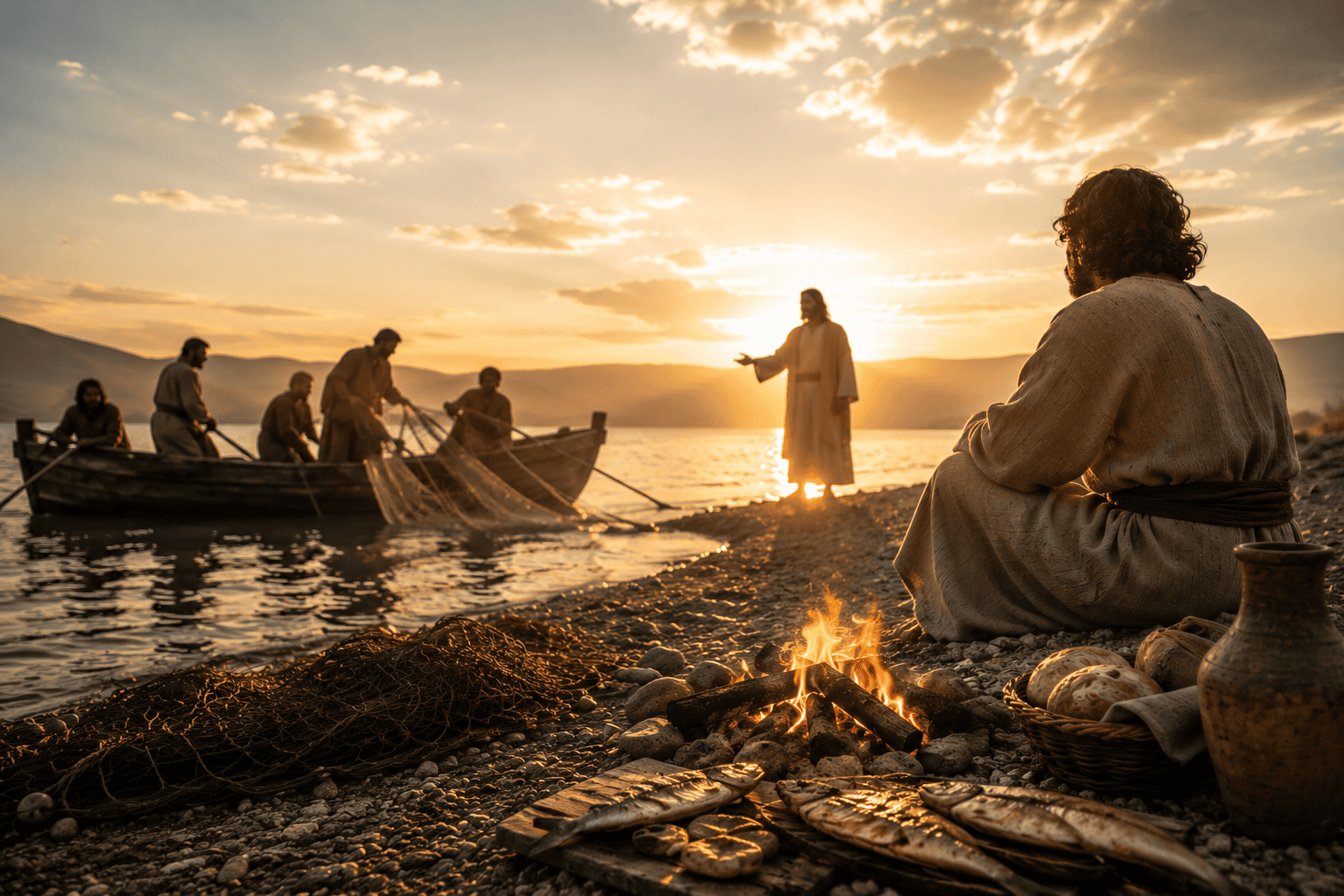
Juan 21: La peregrinación | Hacia dónde apunta la brújula
“Señor, tú lo sabes todo; tú sabes que te amo.”
— Juan 21:17
Habían sido unas semanas muy largas: el arresto, el patio y la Cruz.
Luego llegó la tumba vacía y la noticia de que Jesús estaba vivo.
Pedro había visto al Señor, pero aún cargaba con un peso del que no lograba desprenderse. El fracaso tiene la particularidad de permanecer con nosotros. A veces el recuerdo se desvanece. Otras veces nos persigue a lo largo de la vida, molestándonos, carcomiéndonos y atormentándonos.
Revivimos lo sucedido. Nos preguntamos qué podríamos haber hecho de otra manera. Recordamos la persona que creíamos ser antes de que nuestras acciones nos mostraran algo diferente.
Pedro creía conocerse a sí mismo. Estaba seguro de que no le fallaría a Jesús, ni esta vez ni nunca. Jesús le dijo que lo negaría, pero Pedro no podía ni imaginarlo.
“Aunque tenga que morir contigo, no te negaré.”
— Mateo 26:35
No creo que Peter estuviera fingiendo. Creo que cada palabra que dijo era sincera.
Amaba a Jesús. Creía que su lealtad se mantendría firme. Creía que Pedro conocía a Pedro.
Entonces, junto a una hoguera de carbón en el patio, una sirvienta lo reconoció.
Pedro negó conocer a Jesús. Lo negó tres veces, y el gallo cantó.
Entonces, la certeza que Pedro había depositado en sí mismo se derrumbó.
Lucas nos dice que Jesús se volvió y miró a Pedro. Pedro recordó lo que Jesús le había dicho, salió y lloró amargamente (Lucas 22:61–62).
Jesús conocía a Pedro mejor de lo que Pedro se conocía a sí mismo.
El hombre llamado Roca descubrió cuán fácilmente puede desmoronarse la confianza humana. Sin embargo, Jesús no le retiró ese nombre. No abandonó al hombre que lo llevaba.
Juan 21 comienza después de la Resurrección, pero antes de que Pedro y los discípulos comprendan plenamente lo que significa que Jesús esté vivo. Saber algo y comprenderlo completamente no son lo mismo.
Peter estaba perdido en algún punto entre el perdón y el propósito.
Me encanta que haga algo inconfundiblemente humano.
“Simón Pedro les dijo: ‘Me voy a pescar’”.”
— Juan 21:3
Volviendo a lo que sabía
Pedro no pronuncia ningún discurso ni se explica.
Simplemente dice: "Me voy a pescar".“
Quizás necesitaba trabajar o pensar. Me pregunto si regresó al agua porque era el único lugar que aún tenía sentido para él.
Comprendo esa sensación. Cuando la vida nos supera, solemos recurrir a lo conocido. Lavamos los platos. Trabajamos con las manos. Recorremos el mismo camino. Nos sentamos en la misma silla. Volvemos a hacer algo que sabemos hacer porque muchas otras cosas se han escapado de nuestro control. Yo lo he hecho muchas veces.
Pedro conocía bien la pesca. Conocía la barca, las redes y la fuerza del agua contra el casco. Sabía cómo la oscuridad se cernía sobre el lago. Conocía el ritmo de lanzar y recoger la caña. Mucho antes de convertirse en apóstol, Pedro había sido pescador en el mar de Galilea. Aquel trabajo formaba parte de él.
Entonces, cuando Pedro dice que va a pescar, los otros discípulos responden:
“Iremos con ustedes.”
— Juan 21:3
Esa breve respuesta me dice algo sobre Pedro y los hombres que le siguieron.
Juan nombra a siete discípulos que estaban juntos: Pedro, Tomás, Natanael, los hijos de Zebedeo y otros dos. Pedro anuncia lo que va a hacer, y los demás suben a la barca con él.
Jesús no le otorgó a Pedro la capacidad de liderazgo de la nada. Esa cualidad ya estaba presente en él. La gente, de forma natural, lo miraba y respondía a sus acciones.
Pero eso también significaba que la dirección de Peter importaba.
El liderazgo no es simplemente la capacidad de lograr que otros nos sigan. Es la responsabilidad de saber hacia dónde los estamos guiando.
Pedro sabía guiar a los hombres hasta un bote.
Jesús lo estaba preparando para guiar a la gente hacia Cristo.
Salieron a pescar durante toda la noche, pero no pescaron nada.
Ni un solo pez.
Conocemos el agotamiento de trabajar sin ver ningún resultado. Te preparas, lanzas, tiras y vuelves a intentarlo. Toda nuestra experiencia nos dice que, tarde o temprano, algo debería funcionar.
A veces no.
¿Cuántos de nosotros hemos experimentado esa misma sensación?
Intentamos que un negocio prospere. Intentamos mantener unida a una familia. Intentamos proteger a un niño de cualquier error. Intentamos reparar una relación. Intentamos recuperar nuestra salud. Intentamos gestionar cada riesgo, prever cada problema y planificar cada resultado. Lo sé porque soy yo.
Echamos la red como siempre lo hemos hecho. Trabajamos toda la noche. A veces volvemos exhaustos.
Peter conocía el mar. Pero no podía controlarlo.
Pedro amaba a Jesús. Pero no podía discernir adónde debía conducir el camino de Jesús.
A Pedro se le confiaría el rebaño. Pero el rebaño siempre pertenecería a Cristo.
No creo que la noche vacía haya sido en vano.
A veces, nos volvemos más receptivos a las enseñanzas cuando las redes en las que confiábamos regresan vacías. Nuestro vacío no obliga a Dios a actuar, pero puede hacernos más dispuestos a escuchar cuando Él habla.
Al amanecer
“Al amanecer, Jesús se presentó en la playa; sin embargo, los discípulos no lo reconocieron.”
— Juan 21:4
Mañana.
Juan podría haber dicho simplemente que Jesús se le apareció. En cambio, lo sitúa en la orilla al amanecer.
A lo largo de su Evangelio, Juan utiliza la luz y la oscuridad de maneras que trascienden las horas del día. Su Evangelio comienza proclamando que la luz brilla en la oscuridad y que la oscuridad no la ha vencido (Juan 1:5). Nicodemo se acerca a Jesús de noche (Juan 3:2). Judas se retira de la cena, y Juan escribe: “Y era de noche” (Juan 13:30). María Magdalena llega al sepulcro cuando aún está oscuro (Juan 20:1).
El encuentro de Pedro en la orilla comienza al amanecer.
¿Qué significa eso?
Pienso en lo que simboliza la mañana y me pregunto si Juan nos muestra un nuevo comienzo para Pedro. La negación ocurrió en la oscuridad. Las redes vacías no se llenaron durante la noche. Jesús aparece al amanecer.
La mañana es el primer movimiento de un nuevo día. El desayuno es la comida que rompe el ayuno. Tras la oscuridad, la espera y el trabajo infructuoso, Cristo está en la orilla esperando para romper el ayuno con ellos.
Jesús llama a sus discípulos y les pregunta si tienen algún pescado.
Responden con una sola palabra sincera:
“"No."”
— Juan 21:5
No hay excusas, ni explicación de lo mucho que trabajaron, ni intento de hacer que los goles sin recibir goles parezcan un éxito.
No es una historia de peces muy elaborada.
Sin adornos.
Simplemente la verdad.
La palabra simple: No.
Cuando finalmente admitimos que estamos vacíos, sentimos un pequeño alivio. Ya no tenemos que fingir.
Pienso en un niño que le lleva un juguete roto a sus padres. El niño no puede arreglarlo, pero los padres sí.
Cuando reconocemos nuestra vacuidad, nos abrimos más a la presencia de Dios y a lo que Él puede hacer en nosotros. Los discípulos no pueden ofrecerle a Jesús lo que no tienen. Pero pueden comenzar justo donde están.
Entonces les da una instrucción precisa:
“Echa la red al lado derecho de la barca y encontrarás algo.”
— Juan 21:6
Jesús no les dice simplemente que lo intenten de nuevo. Les dice dónde lanzar la caña.
Hacia el lado derecho.
Me parece especialmente interesante. Habían pasado toda la noche confiando en su conocimiento del agua. Ahora, una figura que aún no reconocen les da una instrucción directa.
Podrían haberlo ignorado e insistido en que ellos eran los pescadores.
En cambio, lanzaron la red.
“Así que echaron la caña, y ahora no podían recogerla debido a la cantidad de peces.”
— Juan 21:6
La red se llena. La enseñanza de Jesús logra lo que su experiencia no pudo. Lo mismo ocurre con nosotros.
Esta escena recuerda una pesca milagrosa anterior en Lucas 5. Después de otra noche infructuosa, Pedro le dice a Jesús:
“¡Maestro, hemos trabajado toda la noche y no hemos pescado nada! Pero si me lo pides, echaré las redes.”
— Lucas 5:5
A tu palabra.
Esa fue una de las primeras muestras del corazón de Pedro. No comprendía del todo a Jesús, pero confiaba en Él lo suficiente como para actuar.
Ahora, casi al final del Evangelio de Juan, Pedro está de nuevo en la barca. Una vez más, la abundancia lo recibe. La primera pesca marcó su vocación. Esta la renueva.
Peter había dedicado los años transcurridos entre esas dos capturas a aprender lo que costaría "confiar en Tu palabra".
Juan reconoce; Pedro se mueve.
El discípulo a quien Jesús amaba dice:
“¡Es el Señor!”
— Juan 21:7
Juan reconoce a Jesús primero.
Pedro llega primero a Él.
Eso parece ser cierto para ambos. Juan ve. Pedro actúa.
En cuanto Pedro oyó que era el Señor, se puso su manto exterior y se arrojó al mar. Los demás se quedaron en la barca, llevando la pesca a la orilla.
Pedro sigue siendo Pedro. Sigue moviéndose con rapidez. Sigue amando intensamente. Sigue yendo hacia Jesús con todo su ser.
La gracia no ha borrado su personalidad. Jesús no está reemplazando a Simón con alguien ajeno al hombre que Andrés le presentó. Está dando forma a lo que ya existía.
La impulsividad de Pedro podía llevarlo a cometer errores, pero también podía convertirlo en el primero en salir de la barca. Su fuerza podía transformarse en autosuficiencia, pero también podía servir al rebaño. Su instinto protector podía resistirse a la Cruz, pero también podía convertirse en un pastor valiente. Su liderazgo podía hacer que los hombres volvieran a aguas conocidas, o podía guiar a los fieles de regreso a Cristo.
La arcilla sigue siendo arcilla mientras el alfarero la moldea.
El pastor ya estaba esperando
Cuando los discípulos llegan a la orilla, encuentran algo esperándolos:
“Había allí una hoguera de carbón, con pescado encima y pan.”
— Juan 21:9
Jesús ya tiene comida. El fuego arde. El pescado y el pan están preparados. El Señor resucitado está preparando el desayuno.
Entonces Él dice:
“Trae algunos de los peces que acabas de pescar.”
— Juan 21:10
Jesús no necesita sus peces para alimentarlos. Él ya les ha provisto. Sin embargo, los invita a traer lo que pescaron, obedeciendo su palabra.
Dios provee, pero también nos invita a participar.
En la alimentación de la multitud, Jesús podría haber provisto la comida sin la contribución de nadie. En cambio, le trajeron los panes y los peces de un muchacho (Juan 6:8-13). Jesús recibió lo que le ofrecieron, dio gracias y alimentó a miles.
Ahora, en esta orilla, los discípulos vuelven a llevarle pescado a Jesús. Su contribución es importante, pero todo comienza con la provisión y la guía de Jesús.
Nosotros no creamos la gracia. Respondemos a ella. Nosotros no iniciamos la obra de Dios. Nos unimos a la obra que Él ya ha comenzado.
El pastor prepara la comida antes de decirle a Pedro que alimente al rebaño.
Jesús no le pide a Pedro que haga algo que Él mismo no esté dispuesto a hacer. Antes de ordenarle a Pedro que apacentara a sus ovejas, Jesús alimenta a Pedro.
“Yo soy el buen pastor. El buen pastor da su vida por las ovejas.”
— Juan 10:11
Jesús no pastorea desde la distancia. Busca, llama, protege, alimenta y da su vida.
El futuro ministerio de Pedro no será una labor independiente. Pedro pastoreará bajo la tutela del Pastor que ya lo ha dado todo por el rebaño.
El fuego de carbón
John podría haber dicho que había un incendio. En cambio, nos dice que era un incendio de carbón.
La palabra aparece solo una vez más en el Evangelio de Juan. Cuando Pedro entró en el patio la noche del arresto de Jesús, los sirvientes y oficiales estaban reunidos alrededor de una hoguera de carbón porque hacía frío. Pedro se quedó con ellos y se calentó (Juan 18:18).
Además de ese fuego, Pedro negó a Jesús tres veces.
Ahora arde otra hoguera de carbón en la orilla.
No podemos saber con exactitud qué olió, recordó o sintió Pedro a menos que el Evangelio nos lo revele. Sin embargo, el olfato está profundamente ligado a la memoria, y la repetición de Juan nos invita a relacionar ambas escenas.
Un incendio fue testigo de la negación. El otro, de la restauración.
Ante el primer fuego, Pedro dijo: “Yo no soy”. Ante el segundo, dirá: “Tú sabes que te amo”.”
Pedro le había fallado a Jesús junto a una brasa, pero Jesús no evitó ese recuerdo. Se encontró con Pedro junto a otra.
“Ven a desayunar.”
— Juan 21:12
Jesús restaura a Pedro en medio de un fuego que solo podía haber provocado vergüenza. Transforma el escenario del fracaso en un lugar de comunión.
La gracia no siempre borra el recuerdo. A veces entra en el recuerdo y cambia en qué se permite que se convierta la herida.
El fuego de carbón ya no pertenece solo a la peor noche de Peter.
Cristo lo ha reclamado para la mañana.
¿Me amas?
Después del desayuno, Jesús se dirige a Pedro. No lo llama Roca.
Él dice:
“Simón, hijo de Juan, ¿me amas más que estos?”
— Juan 21:15
Simón, hijo de Juan.
El nombre se remonta a los orígenes.
Cuando Andrés llevó a Simón ante Jesús por primera vez, Jesús lo miró y le dijo:
“Tú eres Simón, hijo de Juan; serás llamado Cefas.”
— Juan 1:42
Ahora, junto al agua, Jesús se dirige de nuevo a Simón por su nombre de pila y por el nombre de su padre.
Quizás Pedro necesitaba presentarse ante Jesús sin título ni cargo.
Simplemente Simon.
El hombre que Jesús había conocido desde el principio, el hombre que había fallado y aun así era amado.
“¿Me amas más que a estos?”
Jesús podría estar preguntando si Pedro lo ama más que los demás discípulos, recordando la afirmación anterior de Pedro de que, aunque todos los demás se apartaran, él permanecería. Podría estar preguntando si Pedro lo ama más que a las barcas, las redes, los peces y la vida anterior que los rodeaba.
Lo escucho de forma más amplia: ¿Me amas más que a todo lo que sabes? ¿Más que al trabajo que entiendes? ¿Más que a tu lugar entre los demás? ¿Más que a tu necesidad de tener razón? ¿Más que al futuro que planeaste? ¿Más que a tu propia manera de amarme?
Peter responde:
“Sí, Señor; tú sabes que te amo.”
— Juan 21:15
Jesús responde:
“Alimenten a mis corderos.”
Vuelve a preguntar:
“Simón, hijo de Juan, ¿me amas?”
— Juan 21:16
Peter responde:
“Sí, Señor; tú sabes que te amo.”
Jesús dice:
“Cuida de mis ovejas.”
Entonces la pregunta se repite por tercera vez.
“Simón, hijo de Juan, ¿me amas?”
— Juan 21:17
Juan nos dice que Pedro se entristece porque Jesús se lo pregunta por tercera vez.
Quizás cada pregunta lo trae de vuelta al patio. Una negación. Una segunda negación. Una tercera negación. Jesús le da a Pedro la oportunidad de expresar su amor y demostrar que el fracaso no era la verdad más profunda en su corazón.
El dolor de Peter también puede provenir de descubrir que ya no puede usar su propia certeza como prueba. Antes había declarado lo que jamás haría. Ahora conoce la debilidad del “nunca lo haré”.”
¿No nos pasa a todos?
Su tercera respuesta es diferente:
“Señor, tú lo sabes todo; tú sabes que te amo.”
— Juan 21:17
Pedro no dice: "Me conozco a mí mismo" ni "Mis acciones futuras lo demostrarán".“
Él pone la respuesta en Jesús.
Peter se retira de la ecuación.
Él hace de Jesús la respuesta.
Su confianza ya no reside en el juicio que Pedro tiene de sí mismo, sino en el conocimiento absoluto que Cristo tiene de él.
Antes de la negación: Sé lo que voy a hacer.
Después de la negación: Señor, Tú lo sabes todo.
Mi oveja
Después de cada declaración de amor, Jesús le da a Pedro una responsabilidad.
Alimenta a mis corderos.
Cuida de mis ovejas.
Alimenta a mis ovejas.
Una palabra merece nuestra atención:
Mi.
Las ovejas no son de Pedro. La Iglesia no es propiedad de Pedro. Las personas que se le han confiado no se convierten en objetos que él pueda administrar, controlar o utilizar para aumentar su propia importancia.
Siguen siendo las ovejas de Cristo.
Esa pequeña palabra protege tanto al rebaño como al pastor.
Pedro liderará con verdadera autoridad, pero nunca con la suya propia. Alimentará a los demás porque Cristo primero lo alimentó a él, y guiará al rebaño porque él mismo siempre es guiado.
Aquí es donde Ezequiel 34 le da a Juan 21 una mayor relevancia.
A través de Ezequiel, Dios condena a los pastores de Israel que se apacentaron a sí mismos en lugar de a las ovejas. No fortalecieron a los débiles, no sanaron a los enfermos, no vendaron a los heridos, no trajeron de vuelta a los extraviados ni buscaron a los perdidos. El rebaño se dispersó porque no había un pastor fiel (Ezequiel 34:1-6).
Entonces Dios hace una promesa:
“He aquí, yo mismo buscaré a mis ovejas y las encontraré.”
— Ezequiel 34:11
Continúa:
“Yo mismo seré el pastor de mis ovejas, y las haré descansar.”
— Ezequiel 34:15
Dios mismo buscará, rescatará, alimentará y pastoreará.
En Juan 10, Jesús se apropia de ese lenguaje divino de pastor:
“Yo soy el buen pastor; conozco a mis hijos y ellos me conocen a mí.”
— Juan 10:14
Luego, en Juan 21, el Buen Pastor confía su rebaño a Pedro. Pedro no reemplaza a Jesús.
Él sirve bajo su mando.
Esto no es simplemente un título.
Es un sacrificio.
Al leer Ezequiel, me di cuenta de que un pastor fiel no puede descuidar a su propio bienestar a costa del rebaño. Debe aprender a cuidar de todos los animales en cada etapa de su vida: corderos y ovejas, débiles y fuertes, quienes comienzan en la fe y quienes llevan años caminando. El rebaño debe ser alimentado, protegido, guiado y amado.
Años después, Pedro escribe a otros pastores:
“Apacienta el rebaño de Dios que está a tu cargo, no por obligación, sino voluntariamente; no por ganancias deshonestas, sino con entusiasmo; no como si dominaras a los que están a tu cargo, sino siendo ejemplos para el rebaño.”
— 1 Pedro 5:2–3
Pedro aprendió la advertencia de Ezequiel a través del ejemplo de Cristo. Comprendió que el pastoreo no es dominación, sino servicio.
También comprendió que todo pastor humano sigue siendo responsable ante otro:
“Y cuando el Pastor supremo se manifieste, recibiréis la corona de gloria que no se marchita.”
— 1 Pedro 5:4
El Pastor Principal continúa guiando tanto al rebaño como a aquellos a quienes se les ha confiado su cuidado.
Nadie carga con otra persona sola. Los padres son pastores. Los sacerdotes y pastores son pastores. Los maestros, funcionarios políticos, empresarios y gerentes son pastores para aquellos cuyas vidas se ven afectadas por sus decisiones. Los amigos pueden ser pastores entre sí. Los escritores tienen una responsabilidad hacia las personas que reciben sus palabras.
Sin embargo, ninguno de ellos nos pertenece.
Nuestros hijos, empleados, lectores y comunidades le pertenecen.
Incluso nuestras propias vidas le pertenecen.
No se nos pide que garanticemos el final. Se nos pide que seamos fieles a aquellos que Él pone ante nosotros.
He dedicado años a intentar garantizar el futuro de mis hijos, el éxito de mi negocio y la seguridad de mi familia. He planificado para cada variable, gestionado los riesgos y tratado de prepararme para cualquier posibilidad. Créanme cuando les digo que intento planificarlo todo.
He intentado ser la respuesta en lugar de señalar la respuesta.
La historia de Peter me recuerda que el amor no nos otorga la propiedad de nada.
A veces, el amor debe soltar el control.
La vida que él ofrecería
Después de preguntarle a Pedro tres veces sobre el amor y confiarle el rebaño, Jesús le dice a Pedro cuál será el precio final de seguirlo.
“Cuando eras joven, te ceñías y caminabas adonde querías; pero cuando seas viejo, extenderás tus manos, y otro te ceñirá y te llevará adonde no quieras ir.”
— Juan 21:18
Entonces John explica:
“Dijo esto para indicar con qué muerte glorificaría a Dios.”
— Juan 21:19
En Mateo 16, Pedro intentó impedir que Jesús fuera a la cruz. Amaba a Jesús, pero creía que amar significaba protegerlo del sufrimiento. Intentó reescribir el plan de redención porque no podía aceptar a un Mesías que debía sufrir y morir.
Jesús lo reprendió:
“Sois un estorbo para mí, porque no estáis del lado de Dios, sino de los hombres.”
— Mateo 16:23
El corazón de Pedro pertenecía a Cristo, pero su mente aún estaba en proceso de renovación.
Ahora bien, en Juan 21, Jesús le dice a Pedro que su propio camino incluirá sufrimiento y muerte.
Pedro no discute.
Algo en su interior ha cambiado.
Pedro sigue amando a Jesús incondicionalmente, pero está aprendiendo a amar sin controlar el desenlace.
Mientras leía esto, mi mente volvió a una historia que Peter habría conocido desde su infancia.
Abraham e Isaac.

En Génesis 22, veo un patrón que me ayuda a comprender la rendición.
Abraham sube a la montaña con Isaac, la leña y el fuego. Se le pide que encomiende a Dios al hijo a través del cual la promesa debía continuar. Abraham no puede comprender todos los detalles ni controlar el resultado. Solo sabe que debe confiar en Aquel que hizo la promesa.
Dios detiene la mano de Abraham y provee el sacrificio (Génesis 22:9–14).
La entrega de Pedro es diferente. No se le pide que ofrezca a otra persona.
Se le está pidiendo que se ofrezca como voluntario.
Sus planes.
Su voluntad.
Su autosuficiencia.
Su necesidad de proteger a Jesús a su manera.
Finalmente, su vida.
Jesús no le pide a Pedro que obtenga la redención mediante su muerte. El sacrificio de Cristo es completo y suficiente. El martirio de Pedro no añadirá nada a la obra salvadora de la Cruz.
En cambio, la vida de Peter se convertirá en una respuesta al amor que ha recibido.
Pablo expresa este llamado en Romanos:
“Presenten sus cuerpos como sacrificio vivo, santo y agradable a Dios, que es su culto racional.”
— Romanos 12:1
Un sacrificio vivo se ofrece en la fidelidad cotidiana: alimentar a los corderos, cuidar de las ovejas, renunciar al control y aceptar que la obediencia puede llevarnos adonde no hubiéramos elegido ir.
La ofrenda de Pedro no comenzó el día de su muerte.
Todo comenzó cuando dejó de decirle a Jesús lo que debía suceder y empezó a confiar en Jesús respecto a lo que sucedería.
El fuego y el altar
Durante la misa, vi al sacerdote levantar el incensario, el recipiente que contiene carbón encendido e incienso.
Mientras lo balanceaba, el incienso se elevó.
Las Escrituras a menudo asocian el incienso con la oración que se eleva ante Dios:
“Que mi oración sea contada como incienso ante ti.”
— Salmo 141:2
El Apocalipsis también presenta incienso con las oraciones de los santos que ascienden ante Dios (Apocalipsis 8:3–4).
Mientras lo veo ascender, veo otra capa.
El incienso simboliza la oración, pero también nos recuerda que nos entregamos a Dios. En la Misa, no repetimos el sacrificio de Cristo ni ofrecemos un sacrificio aparte del suyo. Nos unimos a su perfecta entrega. Ponemos nuestras oraciones, nuestro trabajo, nuestro sufrimiento, nuestro amor y nuestra vida ante Él.
El carbón en el incensario me hace recordar el fuego de carbón de Peter.
¿Podría considerarse el fuego de la orilla como un altar?
No literalmente. Pero espiritualmente, algo se ofrece allí.
Peter ofrece su certeza, su orgullo y su necesidad de dirigir el resultado.
Ofrece el futuro que él mismo podría haber elegido.
Entonces Jesús le dice que un día su propia vida glorificará a Dios.
El fuego de carbón no solo devuelve a Pedro a lo que era antes de la negación, sino que lo prepara para convertirse en una ofrenda viva.
Es una transformación.
¿Acaso no estamos destinados a la misma transformación?
Sígueme
Después de decirle a Pedro cómo iba a morir, Jesús dice:
“"Sígueme."”
— Juan 21:19
La llamada ha vuelto a su forma más simple.
Sígueme.
Nota: primero hay que entenderlo todo.
No: garantiza que nunca volverás a fracasar.
No: controlar lo que les sucederá a los demás.
Simplemente sígueme.
Pedro se vuelve y ve a Juan. Inmediatamente, le pregunta:
“Señor, ¿qué será de este hombre?”
— Juan 21:21
Incluso después de la recuperación, Peter sigue siendo Peter. Mira a su alrededor y quiere saber cómo se desarrollará la historia de otra persona.
Jesús responde:
“Si es mi voluntad que él permanezca hasta que yo venga, ¿qué te importa a ti? ¡Sígueme!”
— Juan 21:22
A Pedro no se le da el camino de Juan, ni a Juan el de Pedro. El mismo Cristo llama a ambos, pero el discipulado es personal. Compararnos con los demás nos distrae de Aquel a quien seguimos.
Quizás esta sea la lección final de Pedro en el Evangelio: no puede controlar el camino de otro discípulo, ni tampoco puede controlar su propio final.
Él es responsable de una sola cosa:
Seguir a Cristo.
El mandato no está dirigido únicamente a Pedro. Se extiende más allá de la orilla, al padre que no puede controlar el futuro de su hijo, al pastor que no puede obligar al rebaño a escuchar, al empresario que no puede prever todos los giros de la vida, a la persona cuya salud ha cambiado, a la persona que ha fracasado y a cada uno de nosotros que compara constantemente una peregrinación con otra.
Sígueme.
Hacia dónde apunta la brújula
La brújula de Pedro una vez apuntó hacia su propia fuerza.
“Jamás te negaré.”
Apuntaba hacia la protección.
“Esto jamás te sucederá a ti.”
Apuntaba a la acción: la espada, el bote, las redes, el intento de arreglar lo que no entendía.
Jesús no destruyó esas cualidades. Las formó.
La confianza de Pedro se convirtió en dependencia de Cristo.
Su instinto protector se convirtió en instinto de pastor.
Su impulsividad se convirtió en disposición.
Su liderazgo se convirtió en servicio.
Su amor aprendió a rendirse.
El nombre que Jesús le dio el primer día había sobrevivido a todos los fracasos.
Roca.
El nombre no había sido retirado del patio. Pedro seguía siendo el hombre al que Cristo había llamado. Pero su vocación necesitaba ser restaurada. Tenía que aprender a vivir ese nombre sin depender de sus propias fuerzas.
En el primer encuentro, Jesús le dijo a Simón en quién se convertiría.
En Cesarea de Filipo, Jesús reveló la responsabilidad que conlleva ese nombre.
Junto al fuego de carbón, Jesús devolvió a Pedro al trabajo.
Alimenta a mis corderos.
Cuida de mis ovejas.
Alimenta a mis ovejas.
Entonces la brújula se estabilizó en su dirección verdadera.
Cristo.
Necesitaba seguir la Respuesta.
La brújula nunca le indicó a Pedro una vida sin sufrimiento. Le indicó a Pedro que se acercara a Cristo.
Al final, esa era la única dirección que necesitaba.
Es la única dirección que necesitamos.
Referencias y notas
Para quienes deseen profundizar, estas fuentes dieron forma a esta reflexión.
Sagrada Escritura
John 21:1–22 · Matthew 16:13–23 · Matthew 26:31–35 · Luke 22:54–62 · Luke 5:1–11 · John 1:5, 42 · John 3:2 · John 6:8–13 · John 10:11–16 · John 13:30 · John 18:18 · John 20:1 · Ezekiel 34:1–16 · 1 Peter 5:2–4 · Romans 12:1 · Psalm 141:2 · Revelation 8:3–4.
Una nota sobre la reflexión
The compass, daybreak, and fire imagery are meditations on Peter’s encounter with Christ.
Continuar con la reflexión
Continúe con la oración final y las referencias bíblicas completas en el página complementaria.
Entrada anterior de la serie
- El primero llamado
- Los pescadores del mar de Galilea
- Pedro: El hombre al que Jesús llamó Roca
- Pensar como Dios
- Pedro, el hombre al que Jesús llamó Roca
- El nombre restaurado
Deja un comentario