


Una nota sobre estos materiales de archivo
Esta página conserva apuntes de estudio elaborados durante cursos anteriores. Es posible que las definiciones, los ejemplos, los enlaces y los requisitos didácticos hayan cambiado. Se proporciona como referencia educativa e histórica; se recomienda a los lectores verificar la información con los textos actuales del curso y fuentes autorizadas.
- ¿Se puede separar mediante un proceso físico? Si es así, es una mezcla. Si no, es una sustancia pura.
- ¿Cómo se determina si una sustancia pura es un compuesto o un elemento? Si se puede descomponer, es un compuesto. Si no, es un elemento.
- Los dígitos distintos de cero siempre son significativos.
- Los ceros que se encuentran entre valores distintos de cero son significativos.
- Un cero final o ceros finales solo son significativos si hay una parte decimal.
- Un cero no cuenta como cifra significativa cuando aparece: al principio de un número o al final de un número sin decimales.
 La densidad es una propiedad física que relaciona la masa de una sustancia con su volumen.
 La masa se suele expresar en gramos (g) y el volumen en mililitros (mL) o centímetros cúbicos (cc). Otra forma visual de recordar la fórmula es usar el triángulo de densidad.
 La gravedad específica es una magnitud que compara la densidad de una sustancia con la densidad del agua a la misma temperatura.

- Las unidades del numerador (g/mL) cancelan las unidades del denominador (g/mL).
- La gravedad específica de una sustancia es igual a su densidad, pero no contiene unidades.
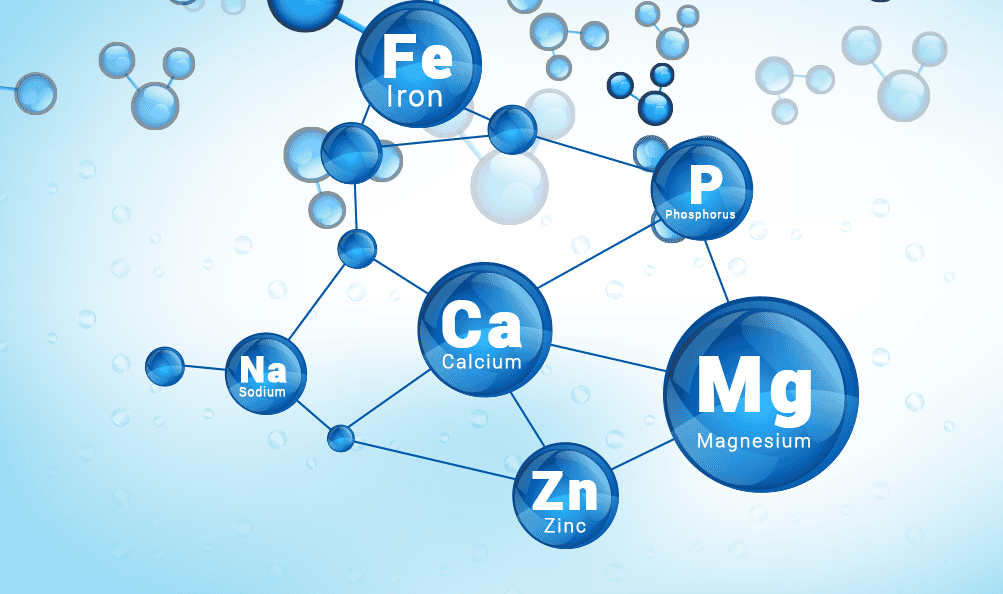
 — Actualmente se conocen 118 elementos. Noventa de ellos se encuentran en la naturaleza y veintiocho pueden ser preparados por científicos en un laboratorio. Hay cuatro no elementos que son los componentes básicos de la vida: nitrógeno, carbono, hidrógeno y oxígeno. Estos cuatro elementos constituyen aproximadamente 961 TP3T de la masa del cuerpo humano. Tres de estos elementos se encuentran en moléculas biológicas como proteínas, carbohidratos, lípidos y ácidos nucleicos: carbono, hidrógeno y oxígeno. Solo las proteínas y los ácidos nucleicos contienen nitrógeno. Hay otros siete elementos que se denominan minerales principales o macronutrientes. Encontramos sodio, potasio y cloro en los fluidos corporales. El magnesio y el azufre se encuentran en las proteínas. Mientras que el calcio y el fósforo se encuentran en los dientes y los huesos. El fósforo se encuentra en todos los ácidos nucleicos, como el ADN. Necesitamos al menos 100 mg de cada macronutriente en nuestra dieta diaria. Los oligoelementos o microelementos generalmente requieren menos de 1 mg en nuestra dieta. Estos micronutrientes tienen funciones específicas en nuestras vidas. Por ejemplo, el hierro es necesario para la hemoglobina, el zinc para las enzimas y el yodo para la función tiroidea. A continuación se muestran los grupos y periodos de la tabla periódica.
 Además de los grupos y periodos, la tabla periódica se divide en metales, no metales y metaloides. Los metales suelen presentarse como sólidos brillantes a temperatura ambiente y son buenos conductores del calor y la electricidad. El único metal que no es sólido a temperatura ambiente es el mercurio. Los metales se encuentran en el lado izquierdo de la tabla periódica. Los no metales no conducen bien el calor ni la electricidad y no son brillantes. A temperatura ambiente, pueden ser gases, líquidos o sólidos. Se encuentran en el lado derecho de la tabla periódica. Los metaloides están compuestos por siete elementos: boro, silicio, germanio, arsénico, antimonio, telurio y astato. Tienen propiedades intermedias entre los metales y los no metales, y se ubican diagonalmente en el lado derecho de la tabla periódica, desde el boro hasta el astato. Un compuesto es una sustancia pura formada por la combinación química de dos o más elementos. Una fórmula química consta de todos los símbolos de los elementos que se utilizan para crear el compuesto, más un subíndice que expresa la proporción de los átomos de cada elemento.
 Este es un ejemplo de fórmula química. Todo A
 Toda la materia está compuesta de átomos, los cuales a su vez están formados por tres partículas subatómicas: protones, neutrones y electrones. En el centro de cada átomo se encuentran el protón y el núcleo, mientras que los electrones se ubican en la nube electrónica. El núcleo es el centro denso del átomo, donde reside la mayor parte de su masa. Las dos imágenes a continuación muestran ejemplos de cómo se puede escribir el número atómico.


 La tabla periódica se divide en periodos y grupos. Los elementos del grupo principal constan de las dos primeras columnas de la izquierda y las seis columnas de la derecha (1A-8A). 1A está formado por metales alcalinos. 2A está formado por metales alcalinotérreos. Los halógenos se encuentran en 7A, mientras que los gases nobles se encuentran en 8A. Los elementos de transición se encuentran en las 10 columnas cortas del medio (1B-8B). Los elementos de transición interna consisten en lantánidos y actínidos. No tienen un número de grupo asignado. Los lantánidos y actínidos se denominan elementos de tierras raras y se encuentran en el periodo 6. Al observar los diferentes elementos dentro de cada grupo, se encontrará que cada elemento tiene propiedades químicas similares.
 Los electrones ocupan un espacio específico en cada capa o nivel de energía. Como se puede ver arriba, cada nivel se denomina capa. Los electrones en las capas con números más bajos están más cerca del núcleo y tienen un nivel de energía menor que las capas con números más altos. Las capas con números más altos están más lejos del núcleo y contienen un mayor volumen de electrones. Las capas se identifican con las letras s, p, d y f. El orbital s tiene la menor cantidad de energía, mientras que el orbital f tiene el nivel más alto. Las subcapas consisten en orbitales, que son áreas dentro de la subcapa donde hay mayores probabilidades de encontrar electrones. Los orbitales se pueden dividir en espacios orbitales. El orbital s es esférico, mientras que el orbital p tiene forma de mancuerna.


 La capa de valencia es la capa más externa, y los electrones que la contienen se denominan electrones de valencia. Los elementos del mismo grupo tienen una configuración electrónica similar y el mismo número de electrones de valencia. El helio tiene dos electrones de valencia, lo que lo convierte en el único elemento cuyo número de grupo no coincide con el número de electrones de valencia. En los símbolos de puntos de electrones, estos se sitúan en los cuatro lados del símbolo del elemento. Cada punto representa un electrón de valencia. Se coloca un punto en cada lado antes de añadir otro a cualquiera de los lados. La energía de ionización es la energía necesaria para extraer un electrón de un átomo neutro. Véase la imagen a continuación.
 Cuando uno quiere saber qué átomos tienen el mayor tamaño atómico, observará que el mayor tamaño atómico se encuentra en la esquina inferior izquierda de la tabla periódica.
 La teoría cinético-molecular de los gases establece que estos se componen de partículas, átomos y moléculas que se mueven de forma aleatoria. Las partículas de gas no se atraen entre sí, y su tamaño es pequeño en comparación con el espacio que las rodea. La energía cinética aumenta con la temperatura, lo que provoca que las partículas se muevan más rápido. Cuando las partículas de gas chocan entre sí, reaccionan de forma similar a una máquina de pinball. Al chocar contra las paredes de un recipiente, ejercen presión. La ecuación que describe esta presión es Presión = Fuerza / Área (F/A). Una atmósfera (atm) equivale a 760 mmHg, 760 torr, 14,7 psi o 101 325 Pa (pascal).