


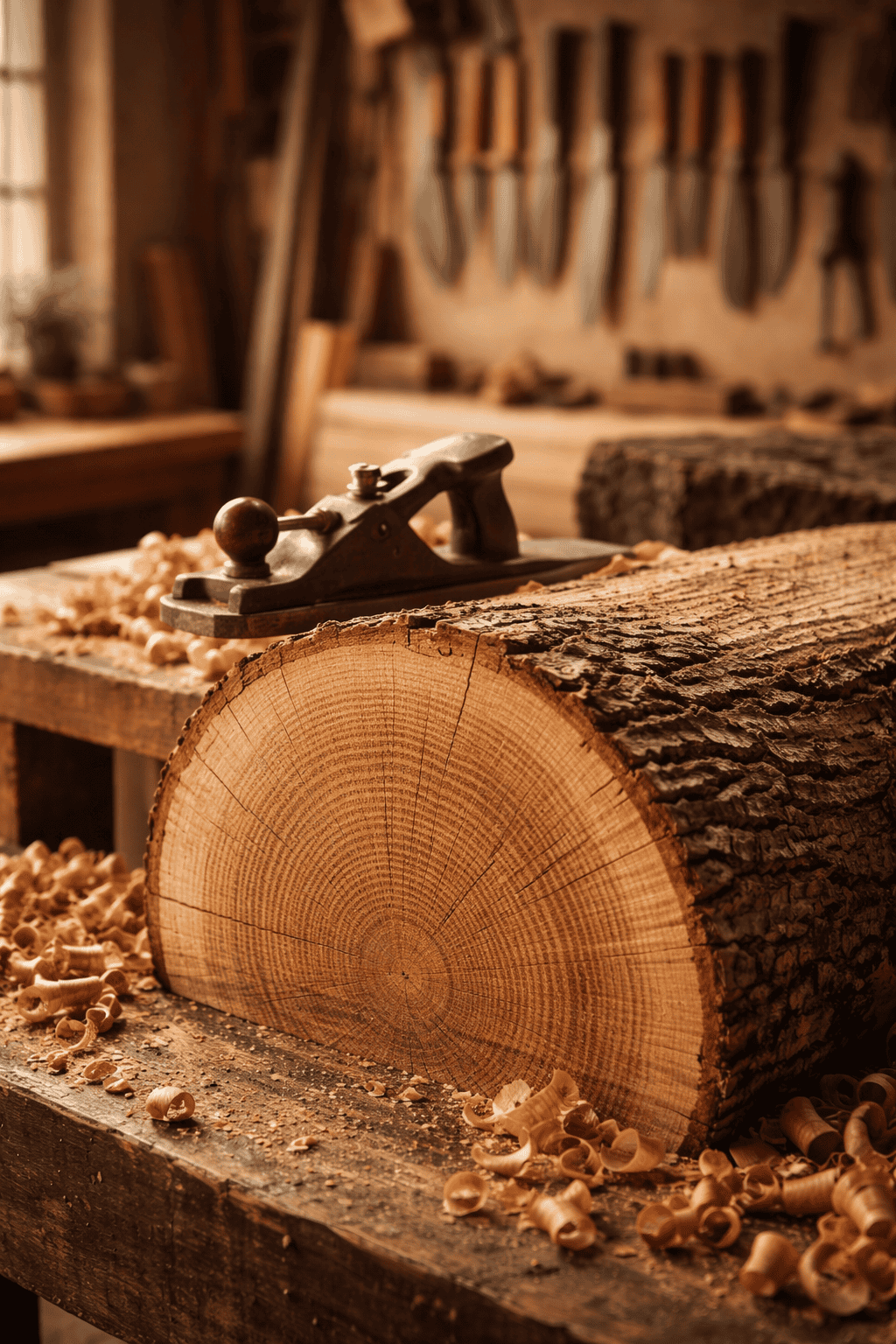
El esqueleto viviente: una base en madera.
La madera rara vez es solo una “cosa”.”
La mayoría de la gente ve una tabla y piensa en pino, roble o algo listo para ser cortado. Pero cuando llevas tiempo trabajando con ella, empiezas a ver algo más. Ves dónde creció, cómo se formó y cómo sigue respondiendo al mundo que la rodea.
La madera no es un material pasivo. Es una estructura biológica en su segunda vida, y continúa comportándose de esa manera mucho después de haber sido procesada y secada.
Hay una satisfacción particular al trabajar con este material: sentir cómo la herramienta se mueve siguiendo la veta, observar cómo la superficie se limpia al seguir su dirección y aprender dónde coopera y dónde ofrece resistencia. Ahí es donde comienza la armonía. No en forzar el material, sino en comprenderlo lo suficientemente bien como para trabajar en armonía con él.
Incluso después de ser cortada y cepillada, la madera nunca olvida del todo que fue un árbol. Su estructura interna está formada por millones de conductos microscópicos que alguna vez transportaron agua desde las raíces hasta las hojas. Estos conductos permanecen activos a su manera, absorbiendo y liberando humedad según cambian las condiciones.
Respira. No rápidamente, sino constantemente.
La veta es la expresión más clara de esa vida. No es solo un patrón en la superficie; es la dirección del crecimiento. Indica cómo se cortará la madera, cómo se mantendrá firme y cómo reaccionará con el tiempo.
Trabajar siguiendo la veta de la madera resulta natural. Las herramientas se deslizan con suavidad. Las superficies se asientan. Trabajar a contrapelo es diferente. El material se resiste, se desgarra y te recuerda que tiene su propia estructura.
Esa relación te enseña rápidamente que hay una manera correcta de abordarla.
También se puede apreciar la historia del árbol en sus anillos de crecimiento. Los anillos anchos suelen indicar épocas en las que el árbol tuvo todo lo que necesitaba. Los anillos estrechos reflejan periodos de estrés o limitaciones. Estas condiciones aún están presentes en el árbol que tienes delante.
Cada pieza lleva esa historia adelante.
Debido a esta estructura, la madera no permanece estática. Se expande y se contrae con los cambios de humedad, desplazándose a lo ancho mientras se mantiene relativamente estable a lo largo. Una tabla que encaja perfectamente en una estación puede deformarse en la siguiente.
Cuando se ignora ese movimiento, la madera no se rompe, sino que reacciona. Se parte, se tuerce o ejerce presión contra lo que la sujeta. No por debilidad, sino porque sigue comportándose como fue diseñada.
El buen trabajo no lucha contra eso. Lo permite.
Además, la madera posee un equilibrio que se hace más evidente cuanto más se trabaja con ella. Puede soportar peso a lo largo de la veta con una resistencia notable, a la vez que se flexiona lo suficiente como para absorber la tensión sin romperse. Esta combinación es difícil de replicar en otros materiales.
El metal es uniforme y predecible. El plástico es consistente y controlable.
La madera no es ninguna de las dos cosas. Cambia, varía y requiere atención.
Pero ahí reside también su atractivo.
Trabajar con madera no es simplemente darle forma. Es reconocer sus tendencias, respetar sus límites y encontrar satisfacción en trabajar con algo que tiene estructura, memoria y capacidad de respuesta.
Con el tiempo, uno empieza a darse cuenta de que el buen trabajo no es forzado. Es algo natural.
Cuando se comprende el material, lo que se construye con él tiene el potencial de perdurar. Cuando se ignora, incluso una obra bien hecha comienza a fallar.
No dominamos la madera.
Aprendemos a trabajar con ello.
Y en esa relación, existe un aprecio silencioso, no solo por lo que construimos, sino por el material en sí y la vida que sigue transmitiendo.

Deja un comentario