


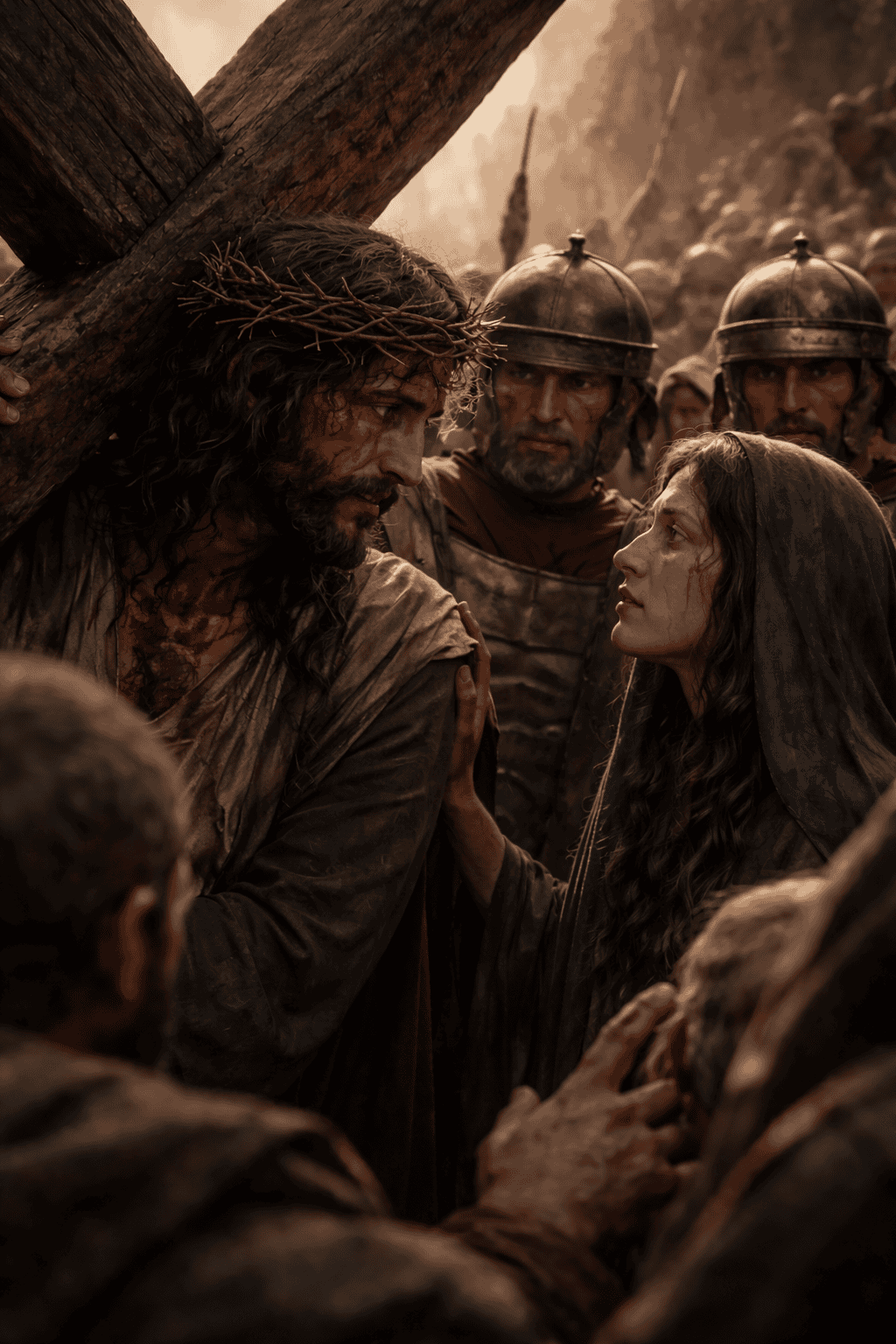
El Viernes Santo es el día más solemne del año litúrgico cristiano. Es el día en que el amor se dejó herir. El día en que el Cordero de Dios —elegido, inmaculado y silencioso— fue ofrecido por la vida del mundo.
Para sentir plenamente este día, debo recordar la noche anterior a la cena de Pascua en el aposento alto. Los himnos habían sido cantados. El pan fue partido y la copa compartida. La mesa quedó atrás. Las palabras fueron pronunciadas. El camino fue trazado. Nada de lo que siguió fue repentino.
Yo era uno de los discípulos. Mis pies aún estaban calientes, pues Jesús me los había lavado hacía apenas unas horas. Salí con él del aposento alto y caminé bajo la brillante luna llena, atravesé la puerta de la ciudad, crucé el valle de Cedrón y entré en el Jardín de Getsemaní. Su nombre significa “prensa de aceitunas”, y aquella noche realmente se sentía así. La presión sobre Jesús era abrumadora.
Se alejó un poco de nosotros, cayó al suelo y oró. Lo oí decir: “Mi alma está muy triste, hasta la muerte”. El sudor caía de su rostro como gotas de sangre sobre la tierra. Repitió una y otra vez: “No se haga mi voluntad, sino la tuya”. No había confusión en él. Ni vacilación. Solo una entrega total. Yo y los demás estábamos tan cansados y abrumados que nos quedamos dormidos allí mismo, bajo los olivos. Pero la ciudad no dormía. En Jerusalén, las familias ya estaban preparando los corderos pascuales para los sacrificios del día siguiente en el Templo. Los sacerdotes también se estaban preparando.
Entonces las antorchas iluminaron la oscuridad. Judas salió de las sombras y lo besó. “Amigo, haz lo que viniste a hacer”. Los soldados agarraron a Jesús. Con miedo y confusión, todos nos dispersamos y corrimos. Yo también corrí. Pedro lo siguió de lejos. Comenzó la larga noche de juicios: primero con el sumo sacerdote, luego con los falsos testigos, después con Pilato, luego con Herodes, y de nuevo con Pilato. Todo fue apresurado y completamente injusto.
Al amanecer, la misma ciudad que unos días antes había gritado “¡Hosanna!” ahora clamaba “¡Crucifícalo!”. Mientras la multitud gritaba “¡Crucifícalo!”, me pregunto si se dieron cuenta —sin saberlo— de que estaban cumpliendo la profecía del Antiguo Testamento. ¿Sabíamos acaso las consecuencias de nuestros actos aquel día? Elegimos a Barrabás, un ladrón, un asesino, un vil prisionero. Lo elegimos a él en lugar de a nuestro Señor. El culpable quedó libre mientras el inocente fue entregado. La ironía aún duele profundamente.
Estuve entre la multitud cuando sacaron a Jesús después de la terrible flagelación. Los soldados romanos lo ataron a un poste, lo desnudaron y usaron ese cruel flagelo: un látigo corto con varias correas de cuero, cada una atada con afilados trozos de hueso de oveja y pequeñas bolas de hierro. Oí el látigo golpear el cuerpo de Jesús, arrancándole la carne como a un cordero preparado para el sacrificio. La sangre salpicaba por todas partes mientras los soldados romanos se reían de su injusto castigo para un hombre que cargaba con mis pecados. Los latigazos le desgarraron la espalda, los hombros y las piernas, dejando temblorosas cintas de carne sangrante. Al final, era una masa desfigurada y exhausta de heridas, apenas capaz de mantenerse en pie. La corona de espinas que le clavaron en la cabeza se le clavó en el cuero cabelludo, y más sangre le corría por la cara.
Colocaron la pesada viga de madera sobre sus hombros en carne viva. Emprendió la dolorosa caminata fuera de las murallas de la ciudad hacia la colina llamada Gólgota, el Lugar de la Calavera. Cada paso era lento y deliberado. Tropezó y cayó la primera vez bajo el peso aplastante de la cruz. Sus piernas cedieron. Los soldados lo levantaron de nuevo.
Su madre y nuestra, María, estaba cerca, con lágrimas corriendo por su rostro y el corazón destrozado, pues sentía su dolor más profundamente que los demás entre la multitud. Porque no podía hacer nada para salvarlo. Pero no se derrumbó. Sus miradas se encontraron y el dolor de ambos se aplastó bajo el peso de nuestros pecados. Él lo sabía y ella lo comprendía.
Entonces Verónica se adelantó entre la multitud. Con el corazón lleno de compasión, secó la sangre y el sudor de su rostro con su velo, pues este era el único regalo que podía ofrecer al hombre que amaba al mundo a pesar de nuestros pecados.
De nuevo cayó debido a la pérdida de sangre y la debilidad. Apenas tenía fuerzas para continuar. Había perdido mucha sangre. Pero luchó por mí. Se levantó de nuevo. Aún débil y apenas capaz de mantenerse en pie, cayó en el empinado camino al Gólgota, casi sin poder levantarse. Su caída se debió al agotamiento.
Algunas mujeres de Jerusalén lloraban por Él, y Jesús se volvió hacia ellas y les dijo: “No lloren por mí; lloren por ustedes mismas y por sus hijos”. Los soldados agarraron a un hombre llamado Simón de Cirene que pasaba por allí. Él no quería participar en esto. Quería seguir con sus asuntos e ignorar lo que sucedía. Pero los soldados lo obligaron a ayudar a cargar la cruz el resto del camino. Se esforzó mucho por no darse cuenta de Jesús. Trató de apartar la mirada. Quería que todo terminara pronto para no tener que admitir que veía su dolor. Ayudó a cargar la cruz a regañadientes.
En la cima de la colina lo desnudaron de nuevo, reabriendo todas las heridas de la flagelación. La poca sangre que nuestro Señor tenía en su cuerpo fluyó una vez más. Al mirarlo, veo la angustia y el dolor en sus ojos. Él sabe lo que debe hacerse. Los soldados arrojaron a nuestro Señor al suelo para poder clavarle los clavos en el cuerpo. Le sacudieron la muñeca para colocarla en su lugar, lo que hizo que el rostro de Jesús mostrara una angustia extrema. Tanto que soportar. Todavía puedo oír la risa de los centuriones mientras balanceaban el martillo en el aire y lo clavaban en sus manos y pies. El sonido es agudo, fuerte y definitivo, resonando por la ladera rocosa. Cada acción que realizaron tenía como propósito que Jesús sintiera el dolor más que nadie. Luego, con tal brutalidad, levantaron la cruz y la dejaron caer en el hoyo con un fuerte golpe que sacudió el suelo. Allí mi Señor colgaba como un criminal común entre otros dos criminales. Todos estaban allí burlándose de Jesús, excepto desde la otra cruz, un criminal común pide ser recordado. Porque conocía sus pecados, solo pidió ser recordado.
Me quedé cerca de la cruz con María, su madre, Juan y los pocos que se quedaron. Los soldados se jugaban la ropa de Jesús al pie de la cruz. Sobre su cabeza estaba el letrero: “Jesús de Nazaret, Rey de los Judíos”, escrito en hebreo, latín y griego para que todo aquel que pasara pudiera leerlo.
Jesús habló con dificultad para respirar. Su voz era débil, pero me acerqué a él entre lágrimas para escuchar cada palabra:
“Padre, perdónalos, porque no saben lo que hacen.” “Hoy estarás conmigo en el paraíso.” “He aquí a tu madre… he aquí a tu hijo.” “Dios mío, Dios mío, ¿por qué me has abandonado?” “Tengo sed.” “Todo está consumado.” “Padre, en tus manos encomiendo mi espíritu.”
Alrededor del mediodía, el cielo se oscureció por completo durante tres largas horas, a pesar de que debería haber sido el momento más luminoso del día. El aire se sentía denso y extraño. Entonces, a las tres en punto —exactamente a la misma hora en que los sacerdotes del Templo sacrificaban los corderos pascuales uno tras otro, con su sangre corriendo por los desagües mientras el pueblo recordaba la liberación de Egipto por Dios— Jesús clamó y entregó su espíritu. En ese preciso instante, la gruesa cortina del Templo se rasgó de arriba abajo. El suelo tembló con un terremoto. Las rocas se partieron. Un centurión romano que estaba allí, un hombre que había visto cientos de crucifixiones, alzó la vista y dijo: “Verdaderamente este era el Hijo de Dios”.”
Bajaron su cuerpo de la cruz. María lo abrazó por última vez mientras lo bajaban sin vida. José y Nicodemo lo depositaron con cuidado en una tumba recién construida, cerca de allí. Una gran piedra cubrió la entrada. Me alejé en la creciente oscuridad, con el corazón destrozado. Mi Rey había muerto. El Cordero había sido sacrificado.
El Viernes Santo no es solo una tragedia. Es una victoria oculta en medio de un sufrimiento terrible. En este día se sacrificó el Cordero, se saldó la deuda, se rompió la maldición, se aplastó la serpiente, se selló la nueva alianza con sangre, se abrieron las puertas del cielo y el amor demostró ser más fuerte que la muerte. Este es el día en que Dios nos mostró cómo es el verdadero amor cuando se niega a cesar.
El Viernes Santo intento bajar el ritmo. Dejo que todo lo demás se calme. Me quedo con María, Juan y los pocos que no huyeron. Me paro mentalmente al pie de la cruz. Siento su peso. Veo la sangre salpicar. Oigo el chasquido del látigo y los golpes del martillo. Veo morir al Cordero inocente en mi lugar, cargando con mis pecados.
Estas preguntas resuenan en mi corazón: ¿Qué me revela la Cruz acerca del corazón de Dios? ¿Dónde necesito permitir que su sacrificio llegue a lo más profundo de mi ser? ¿Qué aspectos de mi vida necesito entregar en sus manos? ¿Cómo me pide que confíe en Él incluso cuando todo parece oscuro?
El Viernes Santo no es el final de la historia. Pero es el lugar donde todo lo que está roto en mí se reúne en los brazos de Cristo. El Cordero fue sacrificado… y de alguna manera, incluso ahora, Él todavía me llama a la Cruz.
Sagrada Escritura (Ignacio / RSV-CE alineada)
Las narrativas de la pasión
- Evangelio de Mateo 26:30–27:66
- Evangelio de Marcos 14:26–15:47
- Evangelio de Lucas 22:39–23:56
- Evangelio de Juan 18:1–19:42
Fundamentos del Antiguo Testamento
- Libro de Isaías 52:13–53:12 (El Siervo Sufriente)
- Libro del Éxodo 12:1–30 (El cordero pascual)
- Salmo 22 (Imágenes de la crucifixión y su cumplimiento)
Eventos clave mencionados en la narración
- Agonía en el huerto (Getsemaní)
Mateo 26:36–46; Lucas 22:39–46 - La traición de Judas
Mateo 26:47–50 - La negación de Pedro
Lucas 22:54–62 - Juicios ante autoridades judías y romanas
Juan 18:12–40; Lucas 23:1–25 - Azotes y burlas
Juan 19:1–3; Mateo 27:27–31 - Vía Crucis (Vía Dolorosa)
Lucas 23:26–32 - La crucifixión y las siete últimas palabras
Lucas 23:33–49; Juan 19:25–30 - Muerte de Jesús (15:00)
Mateo 27:45–50 - Velo del templo rasgado
Mateo 27:51 - El entierro de Jesús
Juan 19:38–42
Contexto histórico y cultural
- Prácticas romanas de crucifixión
- Azotando con el flagrante (Tangas de cuero con hueso/metal)
- Ejecución diseñada para provocar sufrimiento prolongado y humillación pública.
- Fuentes:
- Josefo
- Séneca el Joven
- Cicerón
- Fechas de la Pascua y sacrificio en el templo
- Corderos sacrificados en el Día de preparación (14 de Nisán)
- El sacrificio de la tarde coincide con la muerte de Cristo (alrededor de las 3 PM).
- Véase: Éxodo 12; Juan 19:14
Tradición devocional católica (mencionada en la narración)
- Vía Crucis
(Las caídas de Cristo, Verónica, etc.) - El Camino de la Cruz
La tradición meditativa se desarrolló a lo largo de los siglos para caminar espiritualmente con la Pasión de Cristo.
Temas teológicos presentes
El desgarro del velo = acceso restaurado a Dios (Hebreos 10:19-20)
Cristo como el Cordero pascual (1 Corintios 5:7)
El Nuevo Pacto sellado con sangre (Lucas 22:20)
El Siervo sufriente satisfecho (Isaías 53)
Deja un comentario