


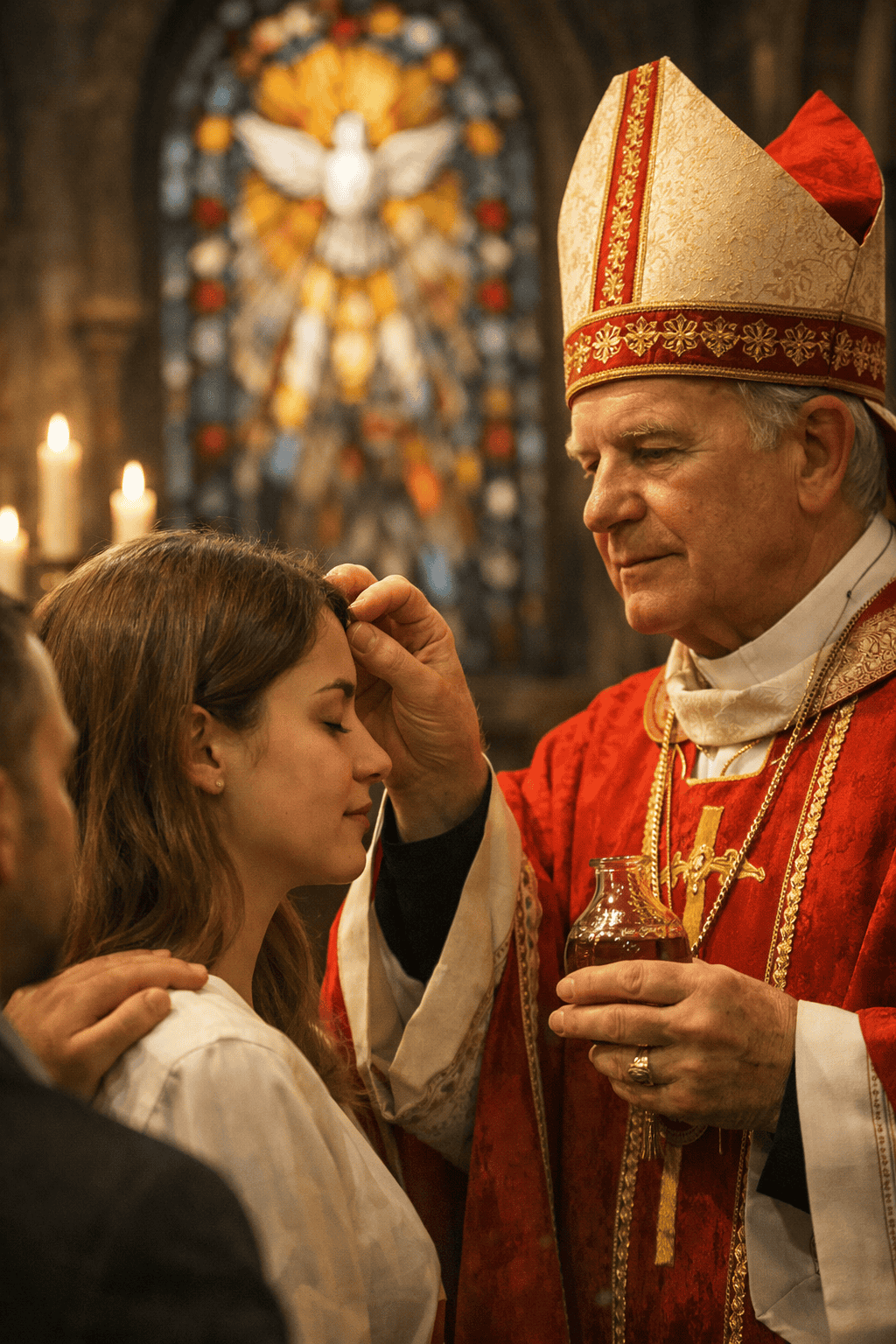
Hoy en día, la Confirmación suele malinterpretarse porque muchas personas la reciben en la edad adulta, a veces durante la adolescencia. Sin embargo, en los primeros siglos de la Iglesia, la Confirmación no estaba separada del Bautismo. Formaba parte del mismo momento de iniciación a la vida cristiana.
Después del bautismo, los apóstoles imponían las manos sobre los recién bautizados y oraban para que recibieran el Espíritu Santo.
Esta práctica aparece claramente en los Hechos de los Apóstoles.
“Entonces les impusieron las manos y recibieron el Espíritu Santo.”
(Hechos 8:17)
Este momento revela algo importante sobre cómo la Iglesia primitiva entendía la iniciación cristiana. El bautismo introducía a la persona en la vida de Cristo, pero la imposición de manos invocaba la presencia fortalecedora del Espíritu Santo.
Otro pasaje describe la misma práctica:
“Cuando Pablo les impuso las manos, el Espíritu Santo descendió sobre ellos.”
(Hechos 19:6)
Estos pasajes se convirtieron en el fundamento bíblico del sacramento que hoy llamamos Confirmación.
En los primeros siglos, el obispo ungía con aceite a los recién bautizados e imponía las manos sobre ellos, orando para que el Espíritu Santo los fortaleciera en la vida cristiana. Este acto simbolizaba el mismo Espíritu que descendió sobre los apóstoles en Pentecostés.
La unción también conllevaba un simbolismo real. En el mundo antiguo, los reyes y sacerdotes eran ungidos con aceite como señal de que habían sido consagrados para una misión específica. Mediante la Confirmación, el cristiano participa de la misión de Cristo.
El Catecismo describe la Confirmación como el sacramento que
“Completa la gracia bautismal.”
(CCC 1285)
Profundiza el vínculo con la Iglesia y fortalece a los fieles para vivir y dar testimonio del Evangelio.
La conexión con la Cuaresma se hace evidente cuando consideramos el camino hacia la Pascua.
La Cuaresma prepara a los fieles para la celebración de la resurrección de Cristo. En la Iglesia primitiva, los catecúmenos eran bautizados en la Vigilia Pascual e inmediatamente ungidos con aceite y sellados con el don del Espíritu Santo. Este momento evocaba el descenso del Espíritu en Pentecostés.
La vida cristiana nunca estuvo destinada a ser vivida únicamente con la fuerza humana.
Los apóstoles mismos lucharon contra el miedo y la incertidumbre hasta que el Espíritu Santo descendió sobre ellos. Solo entonces comenzaron a predicar con valentía.
“Recibiréis poder cuando el Espíritu Santo venga sobre vosotros.”
(Hechos 1:8)
La Confirmación recuerda a los cristianos que el mismo Espíritu que fortaleció a los apóstoles se les da hoy a los fieles.
Referencias
Sagrada Escritura
Hechos 1:8
Hechos 8:17
Hechos 19:6
Catecismo de la Iglesia Católica
CCC 1285–1314
Testimonio de la Iglesia Primitiva
San Hipólito, Tradición Apostólica (Siglo III)
Deja un comentario