
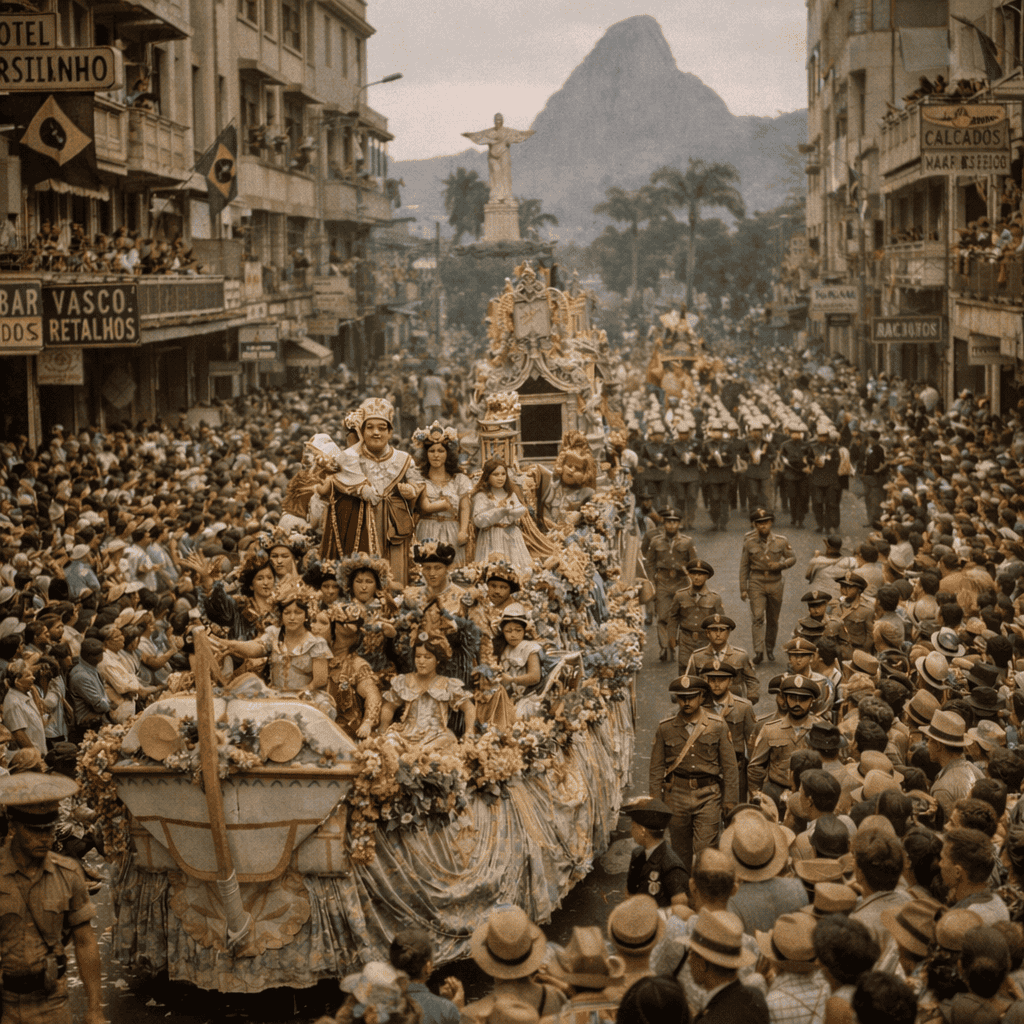
Several 20th-century developments reshaped Mardi Gras:
1. Secularization of Public Life
In earlier centuries, Catholic regions structured public rhythms around the liturgical calendar. Lent affected weddings, meals, and celebrations.
In modern societies, religious observance is largely personal. Mardi Gras remains visible because it is festive. Lent is quieter because it is interior.
2. Mass Media
Television and later digital media expanded the visual reach of Carnival celebrations.
- Rio’s Sambadrome opened in 1984, formalizing large-scale parade competition.
- New Orleans Mardi Gras grew into a globally recognized tourism event.
- Photography, television broadcasting, and social media reward spectacle.
When events become televised, visual elements grow more elaborate.
3. Tourism Economics
Cities began investing in Mardi Gras as a source of revenue and cultural branding. The larger and more visually striking the celebration, the more attention it attracts.
This is a common pattern across many traditional festivals worldwide.
Was Mardi Gras Always Excessive?
Historically, Carnival has always included elements of festivity, masking, satire, and temporary social inversion.
However, in earlier centuries, the celebration ended sharply at midnight on Shrove Tuesday.
Ash Wednesday marked a communal shift into visible austerity.
The feast had a clear boundary because the fast was serious.
Today, that boundary is less socially defined.
What Changed Most Over Time?
The central historical shift is this:
- The fast was once severe and widely observed.
- The feast existed in contrast to that severity.
- The fast gradually softened.
- The feast remained and expanded.
Mardi Gras did not originate as an independent festival. It functioned as a threshold.
When the threshold weakens, the festival becomes more autonomous.
Is Mardi Gras Still Connected to Lent?
Yes, officially.
Mardi Gras remains the day before Ash Wednesday in the Christian calendar. For practicing Catholics, it still marks the final day before Lenten discipline begins.
However, participation in Lent today varies widely. In secular settings, Mardi Gras often operates independently of its liturgical meaning.
The celebration remains visible. The penitential season is quieter and more personal.
Understanding the Evolution
It is not historically accurate to describe Mardi Gras as suddenly changing from sacred to secular. The development has been gradual.
Across centuries:
- Lenten fasting practices changed.
- Public religious observance shifted.
- Urbanization altered community life.
- Media amplified spectacle.
Mardi Gras reflects those structural changes.
The evolution is contextual, not abrupt.
Conclusion
Mardi Gras today stands as one of the most recognizable festivals in the world. Its roots remain tied to the Christian calendar, but its cultural form has expanded beyond that frame.
Historically, the feast only made sense because of the fast that followed.
As fasting discipline softened and religious practice became less communal, the feast remained and grew in visibility.
Understanding Mardi Gras requires understanding Lent.
The festival did not suddenly transform. The surrounding structure evolved.
Pre-Lenten Prayer
Lord, as the brightness of celebration fades and Ash Wednesday approaches, steady our hearts. Where we have filled our days with noise, grant us silence. Where we have sought abundance, teach us simplicity. As Lent draws near, help us lay aside what distracts and turn gently toward what endures. May this season not be hurried, but honest; not dramatic, but sincere. Lead us into repentance that is humble, prayer that is attentive, and hope that is anchored in You. Amen.


Responder a justrojieCancelar respuesta