


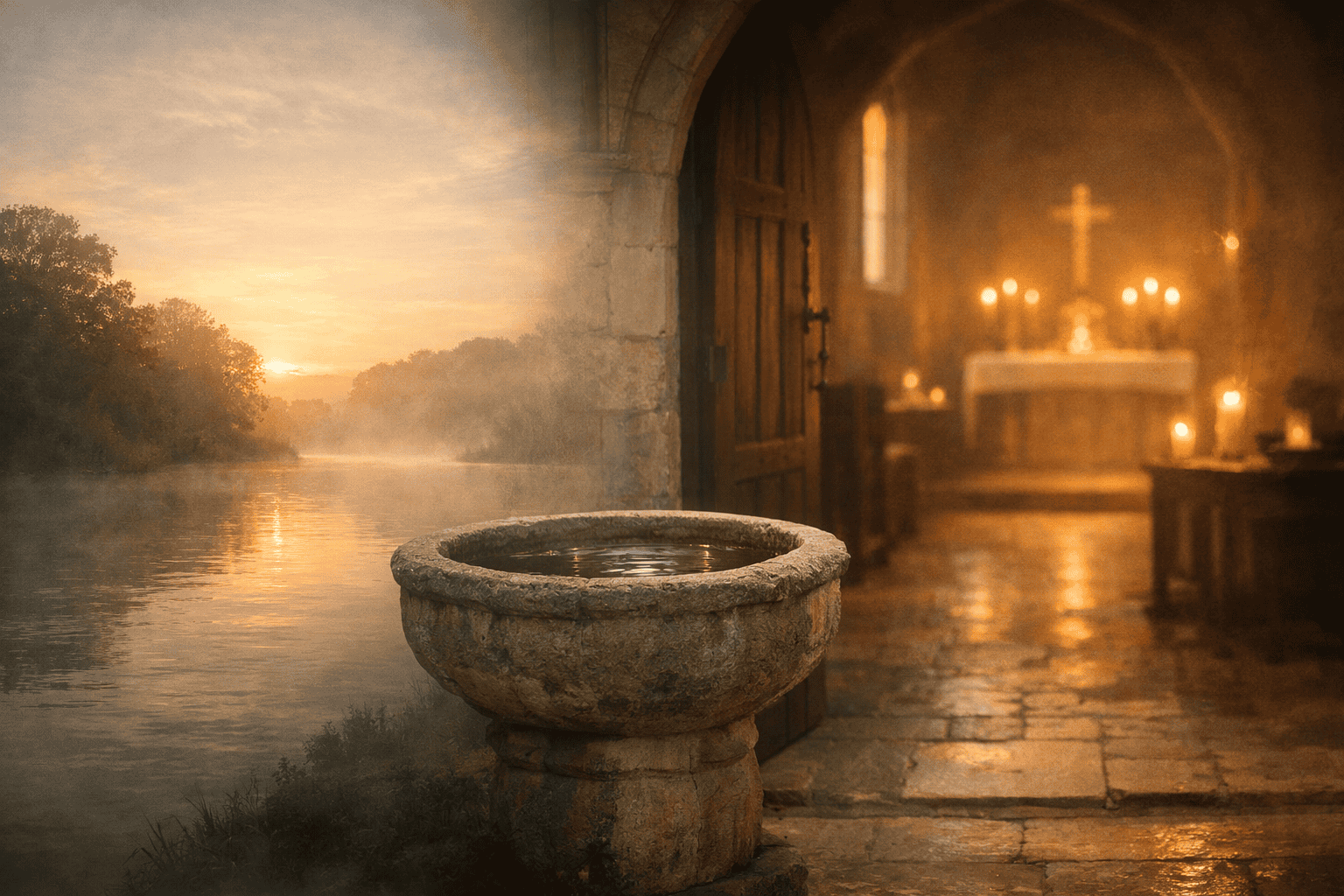
Antes de que Jesús predicara un sermón, antes de que sanara a los enfermos o llamara a los discípulos, se adentró en un río.
El Bautismo del Señor no parece dramático a primera vista. No hay multitudes de ángeles. No hay truenos ni relámpagos. Solo una fila de gente común y Jesús eligiendo estar entre ellos.
Y sin embargo, en ese instante de quietud, el cielo se abre.
Se oye la voz del Padre.
El Espíritu desciende.
El Hijo está de pie en el agua.
La Trinidad se reveló, no en gloria, sino en humildad.
Jesús no entró en el Jordán porque necesitara purificarse. Entró para encontrarse con la humanidad allí donde ya estábamos y para cambiar para siempre el significado de esas aguas.
El agua ya era tierra sagrada.
Mucho antes de Juan el Bautista, el pueblo judío estaba muy familiarizado con la ablución sagrada.
Las inmersiones rituales en agua, a menudo en una mikve, formaban parte de la vida religiosa cotidiana. Estos lavados estaban relacionados con:
- preparación para el culto
- regresar a la pureza ritual
- recuperar el lugar que uno ocupa dentro de la comunidad
El agua ya se entendía como un lugar de retorno, preparación y renovación.
Incluso grupos como los esenios practicaban lavados frecuentes. Creían que la purificación externa solo importaba si el corazón también se volvía a Dios.
Así pues, cuando Juan aparece llamando al arrepentimiento y bautizando en el Jordán, el agua en sí no resulta extraña. Lo sorprendente es el mensaje.
Juan considera que toda la nación necesita arrepentirse y empezar de nuevo. Jesús entra entonces en esas mismas aguas. No confiesa sus pecados. En cambio, reúne en sí mismo todo el anhelo, la lucha y la esperanza de Israel.
El río que antaño marcaba la preparación de los rituales se convierte ahora en un lugar significativo. Es donde Dios mismo irrumpe en la historia humana con plena solidaridad.
Y a partir de ese momento, el agua nunca volverá a ser solo un símbolo.
El bautismo como un cruce, no solo como un lavado.
A lo largo de las Escrituras, el agua no es solo para purificar. Es para cruzar.
La creación comienza con el Espíritu sobre las aguas.
El diluvio lleva al mundo de la corrupción a la renovación.
El Mar Rojo transporta a Israel de la esclavitud a la libertad.
El río Jordán lleva al pueblo a la Tierra Prometida.
Y ahora Cristo está en el Jordán. No escapa del peligro. Al contrario, se adentra en la historia de la fragilidad humana para sanarla desde dentro.
Cuando los cristianos son bautizados, no solo somos lavados.
Hemos cruzado.
De la vida antigua a la nueva.
Del aislamiento al sentido de pertenencia.
De la muerte a la resurrección.
El bautismo se convierte en nuestro paso personal a la vida de Cristo.
Por qué la fuente se encuentra en la puerta
Por eso la Iglesia coloca el agua bendita en la entrada.
Uno no entra a la iglesia y luego piensa en el bautismo.
Para entrar, hay que pasar el bautismo.
Cada vez que mojamos nuestros dedos y hacemos la señal de la cruz, recordamos nuestra conexión inicial con Cristo. Estamos recorriendo el camino de nuestros comienzos.
Agua.
Cruz.
Luego, en la presencia de Dios.
Y dentro de la iglesia, vivimos entre dos lugares sagrados:
La fuente, donde comienza la vida.
El altar, donde se sostiene la vida.
Nacimiento y alimentación.
Entrada y comunión.
La vida cristiana se desarrolla entre estos dos dones.
Y luego, al salir de la iglesia, volvemos a tocar el agua. Nos marcamos de nuevo con la Cruz. Llevamos nuestro bautismo de vuelta al mundo, donde la fe debe vivirse, no solo celebrarse.
Entramos en la gracia.
Regresamos a la vida cotidiana.
Siempre marcados por la misma pertenencia.
Cuando el cuerpo se debilita, Dios se acerca de nuevo.
Y es aquí donde el bautismo se extiende silenciosamente hacia la Unción de los Enfermos.
El bautismo inicia la vida cristiana en la vulnerabilidad.
No venimos sin nada que ofrecer más que a nosotros mismos.
La enfermedad nos devuelve a ese mismo lugar frágil.
Y una vez más, Cristo no permanece distante.
La Iglesia invoca al mismo Señor mediante la unción con aceite, la oración y la imposición de manos. Este es el Señor que estuvo en el Jordán. Ahora la Iglesia le pide que esté junto a la cama del hospital. Le piden que esté presente en la silla del enfermo que está en casa. Buscan su presencia con el cuerpo cansado que ya no puede valerse por sí mismo.
La unción no reemplaza el bautismo. Se nutre de él. Fortalece lo que el bautismo sembró. Consuela lo que el bautismo afirmó.
Las oraciones no dicen: “Ahora Dios finalmente te ve”.”
Dicen: “Que el Señor que ya te ha salvado te resucite”.”
El mismo Cristo que santificó las aguas ahora santifica el sufrimiento.
Un río, muchos cruces
La vida cristiana no es una línea recta. Comienza con el Bautismo del Señor y continúa con el agua bendita a la entrada de la iglesia. Va desde la pila bautismal hasta el altar. El camino incluye la primera unción en la confirmación y termina con la unción final en la enfermedad.
Es una serie de cruces sagradas.
Cada una haciendo eco de la primera.
Cada uno apuntando hacia el último.
No estamos solos para afrontar la debilidad.
No se espera que mantengamos la fe por pura fuerza.
La gracia nos recibe al principio.
La gracia camina con nosotros en el medio.
Grace nos espera en el cruce final.
Y todo comienza con Cristo entrando en un río y diciendo, sin palabras:
Iré adonde tú debas ir.
Para que nunca vayas solo.
Deja un comentario