


La historia no siempre se anuncia con trompetas.
A veces llega en pergamino, llevado por mensajeros, pegado en muros de piedra, leído en voz alta en calles abarrotadas.
César Augusto emitió un decreto para que se inscribiera a personas de todo el mundo.
(Lucas 2:1)
Roma lo llamó administración.
Dios lo llamó cumplimiento.
María y José no se despertaron esa mañana esperando que sus vidas cambiaran. Pero el mundo en el que vivían no era el suyo. Judea era un reino cliente Bajo la autoridad romana: gobernados localmente, controlados imperialmente. Cuando Roma importaba, todos se movían.
José se habría enterado de la noticia como los demás: no en privado, no discretamente. Los decretos se proclamaban en espacios públicos, mercados y sinagogas. El anuncio se habría difundido rápidamente.
Cada hombre debe acudir a su propia ciudad para ser registrado.
Para José, eso significaba Belén.
La ciudad de David.
La ciudad vinculada a su linaje.
Las Escrituras nos dicen simplemente:
“Y José también subió de Galilea, de la ciudad de Nazaret, a Judea, a la ciudad de David, que se llama Belén, porque era de la casa y linaje de David.”
(Lucas 2:4)
La casa y el linaje importaban porque Roma gobernaba a través de registros y orden, pero Dios gobernó a través de promesa.
El Mesías no nació al azar. Nació donde la profecía ya lo había colocado:
“Pero tú, Belén Efrata… de ti saldrá para mí uno que será gobernante en Israel.”
(Miqueas 5:2)
José conocía esta tierra. Conocía sus caminos. Y sabía lo que significaba recorrerlos, especialmente ahora.
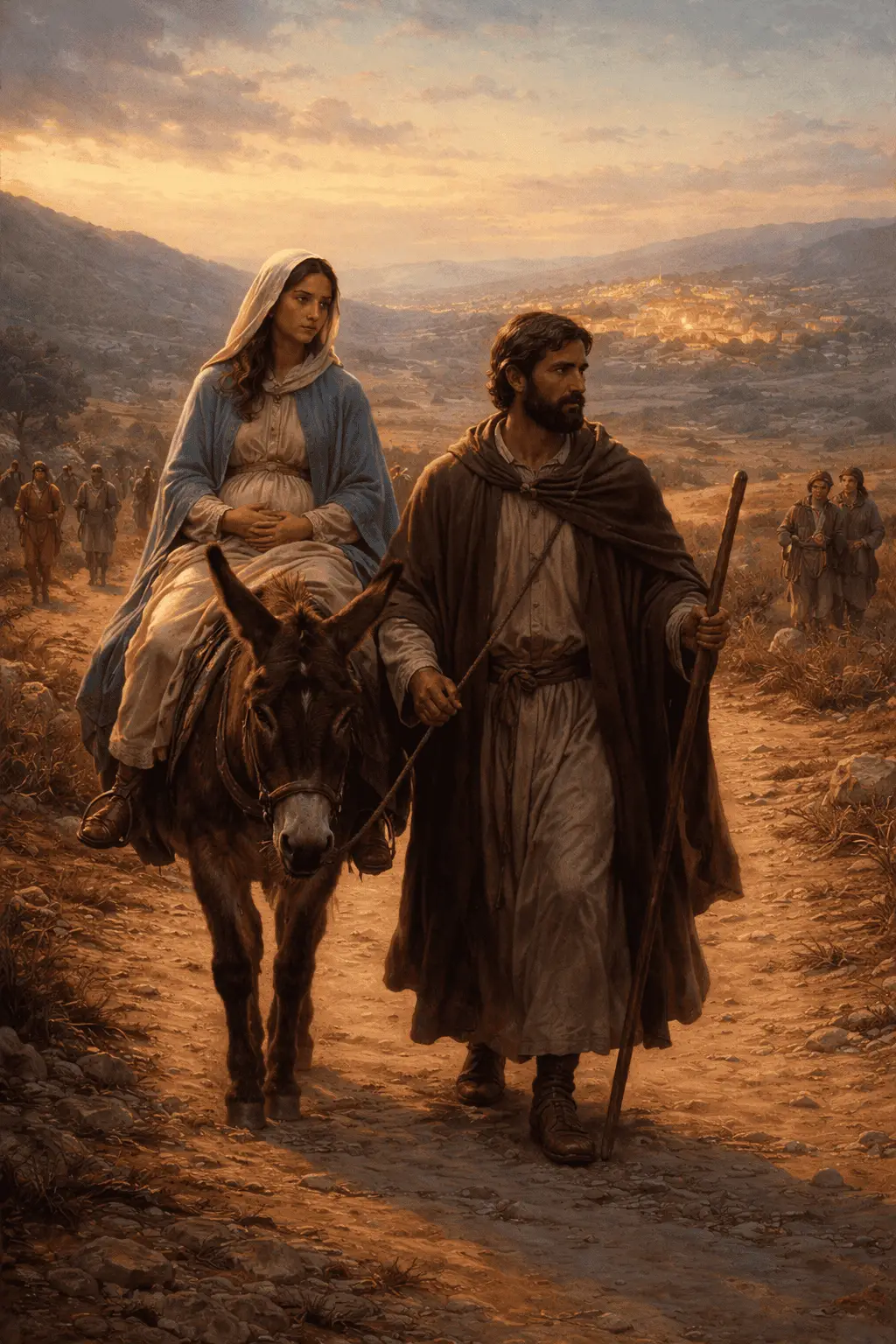
María estaba embarazada.
Las Escrituras no dramatizan esto. No se detienen a explicar lo difícil que sería. Simplemente exponen el hecho y dejan que la gravedad hable por sí misma:
“José fue… con María, su prometida, que estaba encinta.”
(Lucas 2:5)
El trayecto de Nazaret a Belén no fue corto.
Apenas 70–90 millas, dependiendo de la ruta tomada: un viaje de de cuatro a siete días Para viajeros sanos. Más tiempo para una mujer en sus últimos meses de vida. Aún más tiempo si la seguridad exige circular por carreteras más lentas.
Había peligros:
Senderos estrechos, terreno rocoso, bandidos que acechaban a los viajeros en épocas de migración. Las temporadas de censos significaban multitudes: familias, animales, carros, polvo en el aire, voces que se superponían, una creciente impaciencia.
Las carreteras habrían estado llenas de vida y movimiento.
Y María sintió cada paso.
La niña yacía ahora agachada, pesada en su cuerpo. Cada movimiento requería fuerza. Cada kilómetro exigía rendición. Las Escrituras no registran queja alguna. Ninguna vacilación. Solo obediencia silenciosa.
José habría caminado con atención, observando el camino, a la multitud y a ella. La tradición cuenta que ella iba montada en un burro, no por capricho, sino por precaución. La rectitud de José siempre se ha manifestado no en palabras, sino en acciones.
Él ya había soñado.
Ya escuché.
Confianza ya elegida.
Ahora esa confianza tomó la forma de caminar.
Habrían atravesado pueblos repletos de viajeros, calles llenas de voces y urgencia. Posadas abarrotadas. Hogares abarrotados. Todos obedeciendo las órdenes de un imperio, sin saber que Dios las estaba utilizando para traer la salvación.
La historia los impulsaba hacia adelante.
No con crueldad.
Con precisión.
María llevó al Hijo de Dios no en soledad, sino a través del ruido del mundo. A través de multitudes. A través de caminos lisos por siglos de pisadas. A través de un decreto destinado al poder, transformado en obediencia.
Este viaje no fue accidental.
No fue a última hora.
No fue un caos.
Fue la alineación final.
Para cuando llegaran a Belén, el cuerpo de María ya lo sabría. Fuerza y entrega se entrelazaban. El mundo seguía bullendo a su alrededor, pero algo sagrado estaba a punto de suceder en silencio.
La carretera había cumplido su función.
Lo que comenzó con el saludo de un ángel había pasado por el discernimiento, el silencio, la obediencia y ahora el movimiento. El Cielo había hablado. La Tierra había respondido. Y la historia misma se había doblegado para llevarlos exactamente donde debían estar.
No porque Roma lo ordenara.
Pero porque Dios lo había prometido.
Y pronto, muy pronto, el camino llegaría a su fin.
Documentación
Referencias bíblicas
- Lucas 2:1–5 — El decreto de César Augusto, el censo y el viaje a Belén
- Lucas 2:4 — La obligación de José de ir a Belén porque era “de la casa y linaje de David”.”
- Miqueas 5:2 — Profecía de que el gobernante de Israel vendría de Belén
- Génesis 12:1–3 — Las promesas de Dios se desarrollan a través del movimiento y la obediencia.
- Génesis 35:19 — Belén (Efrat) como un lugar ligado a la historia de Israel.
- Salmo 84:5–7 — Bienaventurados aquellos cuya fuerza reside en el camino.
- Isaías 40:3–5 — Dios preparando un camino a través del desierto y de los caminos
Contexto histórico: La práctica del censo romano
- Los censos romanos se realizaban periódicamente para:
- impuestos
- registros de exención militar
- registro de población
- Los decretos solían ser:
- emitido por la autoridad imperial
- publicado públicamente en las ciudades
- comunicado a través de funcionarios locales y sinagogas
- Los requisitos de viaje variaban según la región; en Judea, El linaje ancestral importaba profundamente, lo que hace que el viaje de José sea coherente con la costumbre judía incluso dentro de la administración romana.
- Existe un debate académico sobre la fecha exacta del censo, pero La descripción de Lucas encaja con las prácticas administrativas romanas conocidas. durante el reinado de Augusto
Contexto del Reino del Cliente
- Judea funcionó como un reino cliente bajo la autoridad romana
- Roma gobernaba indirectamente a través de líderes locales (por ejemplo, Herodes).
- Las costumbres judías, las genealogías y los lazos territoriales seguían siendo reconocidos.
- El linaje importaba legal y socialmente, especialmente para:
- reclamaciones de tierras
- impuestos
- identidad dentro de Israel
- El linaje davídico de José explica por qué Belén —y no Nazaret— era el destino requerido.
Geografía y viajes
- De Nazaret a Belén: aproximadamente 90 millas (145 km)
- Tiempo de viaje típico:
- 7–10 días a pie o con un animal
- Más tiempo para quienes viajan con precaución o se encuentran en el último trimestre del embarazo.
- Las carreteras eran:
- abarrotado debido al movimiento del censo
- irregular, polvoriento y expuesto
- ocasionalmente peligroso debido al bandidaje (cf. Lucas 10:30, contexto posterior)
- Es probable que el viaje se realizara a continuación:
- rutas comerciales conocidas
- rutas a través de Samaria o alrededor de ella, dependiendo de la seguridad y la costumbre.
Consideraciones culturales y humanas
- Las Escrituras no registran ninguna queja de María ni de José.
- El embarazo no eximía a las mujeres de las obligaciones de viaje dentro de las unidades familiares.
- Los burros se usaban comúnmente para viajes largos, especialmente para las mujeres.
- El cuidado que José le brindaba a María refleja:
- responsabilidad legal
- atención protectora
- Fuerza silenciosa en lugar de ostentación
Temas teológicos
- Dios obra a través de la historia, no al margen de ella.
- Los decretos imperiales, sin saberlo, sirven a la profecía divina.
- La obediencia a menudo se manifiesta a través de la incomodidad y el desplazamiento.
- La Encarnación entra al mundo a través de:
- fatiga
- multitudes
- incertidumbre
- fiel resistencia
Notas sobre la interpretación
- Las Escrituras no romantizan el viaje.
- Lucas enfatiza:
- movimiento
- obediencia
- fundamentos históricos
- Esta publicación fue escrita intencionalmente:
- sitúa a los lectores dentro de la experiencia vivida.
- Conecta la profecía con el movimiento físico.
- evita especulaciones más allá del texto bíblico.
Navegación de la Serie de Adviento:
- Jesús tiene un árbol genealógico con una historia.
- Una joven en el templo: Los primeros años de María
- José: Un hombre justo en un mundo complicado
- Compromiso, matrimonio y costumbres legales judías
- La Anunciación: Una conversación tranquila en Nazaret
- El sueño de José
- Zacarías: Silencio, Promesa y Preparación
- Elizabeth: La alegría que reconoce la gracia antes que el mundo.
- Juan el Bautista: La voz que reconoció a Cristo antes de hablar
- El regreso de María a Nazaret: Cuando el misterio volvió a casa.
- Cuando la historia los conmovió: El censo y el camino a Belén
- próximo - No hay lugar en la posada: Dios llega sin aplausos
Deja un comentario