


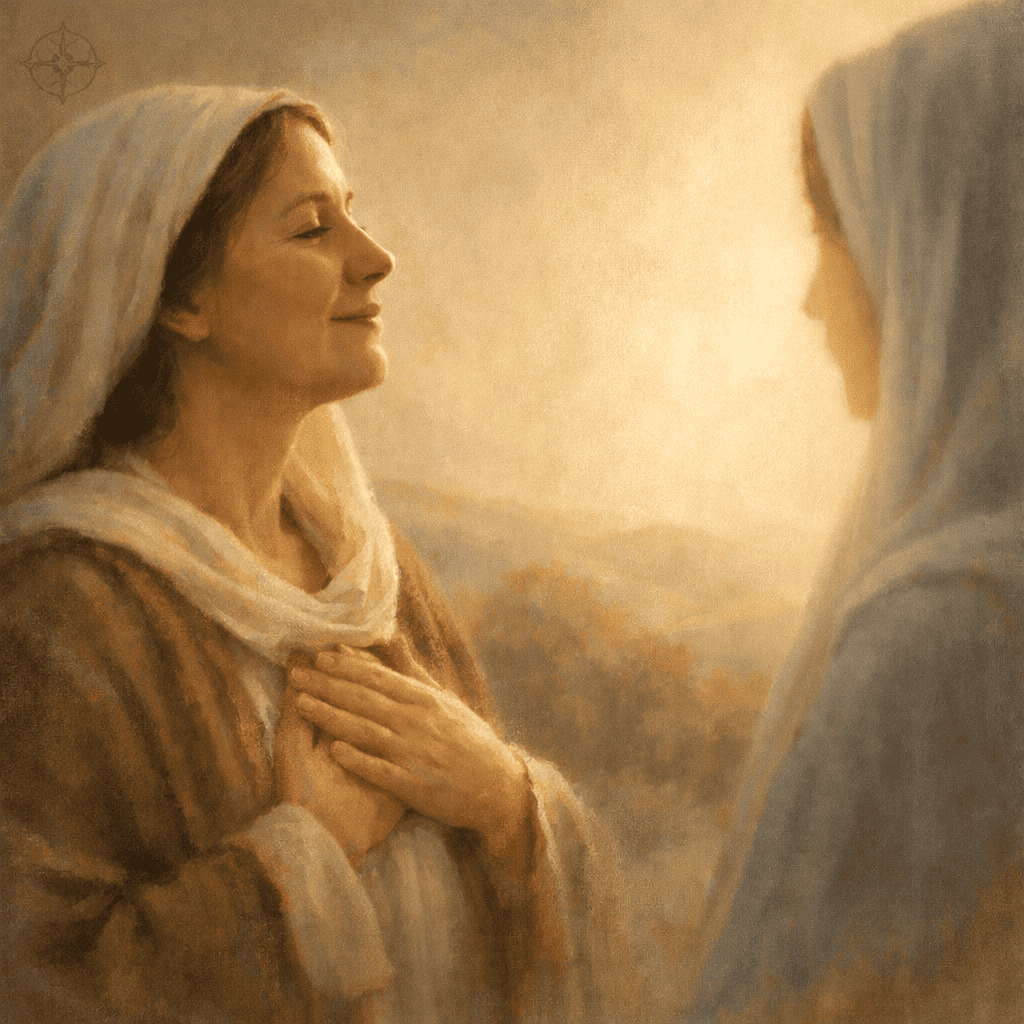
Hay momentos en la historia de la salvación que llegan silenciosamente, sin anuncios ni espectáculos, pero que tienen una trascendencia que lo cambia todo. La Visitación es uno de esos momentos.
El viaje de María a Isabel no es una visita social ni de cortesía. Es el primer encuentro entre la Antigua Alianza y la Nueva. Es el primer reconocimiento de Cristo en el mundo. Y ese reconocimiento no proviene de gobernantes, eruditos ni multitudes.
Proviene de un niño escondido y de una anciana cuyo corazón ha aprendido a escuchar.
La alegría de Elizabeth reconoce la gracia antes que el mundo.
Un viaje impulsado por el amor, no por la instrucción.
Después de que el ángel Gabriel se marcha de Nazaret, a María no se le dice qué hacer a continuación. Las Escrituras no ofrecen ningún mandato, ninguna instrucción, ninguna explicación. Y sin embargo se nos dice:
“María partió y viajó apresuradamente a la región montañosa, a una ciudad de Judá, donde entró en la casa de Zacarías y saludó a Isabel.”
(Lucas 1:39–40)
Esta prisa no es miedo. Es caridad.
María lleva en su seno al Verbo hecho carne, y el primer impulso de ese Verbo es hacia otro. La gracia no se repliega sobre sí misma. Se proyecta hacia afuera, con serenidad y decisión, hacia el amor.
Elizabeth vive alejada de la atención pública, en la región montañosa de Judá. Su vida ha estado marcada por la espera, la oración y largos años de esperanza sin respuesta. Y ahora, antes de que se dé una sola explicación, sucede algo sagrado.
El momento del reconocimiento
Lucas nos dice:
“Cuando Isabel oyó el saludo de María, el niño saltó en su vientre, e Isabel, llena del Espíritu Santo, clamó a gran voz…”
(Lucas 1:41–42)
Esta es la primera proclamación de Cristo en el Evangelio.
Antes de los sermones.
Antes de los milagros.
Antes de Belén.
Un niño salta, y una mujer lo entiende.
Juan no salta porque ve a Jesús. Salta porque la gracia ha entrado en su presencia. El Espíritu Santo actúa primero, y el cuerpo responde. No se trata de un reconocimiento aprendido. Es un reconocimiento espiritual.
Elizabeth no cuestiona. No analiza. No exige pruebas.
Ella lo reconoce.
“Bendita tú entre las mujeres”
Las palabras de Elizabeth no son un elogio cortés. Son una profecía:
“Bendita tú entre las mujeres, y bendito el fruto de tu vientre.”
(Lucas 1:42)
Isabel proclama la bienaventuranza de María antes que nadie en la tierra. Antes de que José haya hablado. Antes de que el pueblo se haya percatado. Antes de que el mundo tenga idea de lo que Dios ha hecho.
Y entonces pronuncia palabras que revelan la profundidad de su perspicacia:
“¿Y cómo es posible que la madre de mi Señor venga a verme?”
(Lucas 1:43)
Elizabeth llama a María la madre de mi Señor.
No se ha escrito ninguna doctrina.
No se ha formado ningún credo.
No se ha ofrecido ninguna explicación.
Sin embargo, Isabel, llena del Espíritu Santo, reconoce la presencia del Señor mismo.
Esto no es intelecto.
Esto es gracia.
La alegría que precede a la comprensión
Lucas nos lo repite, para que no nos lo perdamos:
“Porque en el instante en que el sonido de tu saludo llegó a mis oídos, el niño en mi vientre saltó de alegría.”
(Lucas 1:44)
La alegría llega antes que la comprensión.
La gracia precede a la explicación.
El reconocimiento precede a la comprensión.
Elizabeth aún no sabe cómo se desarrollará esta historia. No ve la cruz, la resurrección ni la Iglesia. Pero sabe... OMS está presente.
Las Escrituras honran este tipo de conocimiento.
No es dominio.
No control.
Pero la receptividad.
La fe no comienza con la certeza, sino con la acogida.
Dos mujeres, dos milagros ocultos
La Visitación es también el encuentro de dos milagros ocultos.
María lleva en su vientre al Hijo de Dios, invisible y desconocido, que crece silenciosamente dentro de ella.
Elizabeth lleva en su vientre un hijo prometido hace mucho tiempo, formado a través de años de oración y paciencia.
Ninguna de las dos mujeres está en el ojo público. Ninguna ostenta el poder tal como lo define el mundo. Y, sin embargo, en este hogar privado, la historia de la salvación da un giro.
Dios no inicia su obra pública en palacios ni cortes. La inicia en una conversación entre dos mujeres fieles que reconocen su presencia antes que el mundo.
Por qué importa la alegría de Elizabeth
La alegría de Isabel no es ostentosa ni egocéntrica. No habla de sí misma, sino de lo que Dios ha hecho en María.
La verdadera alegría no compite.
La verdadera alegría reconoce la gracia en los demás sin temor.
La alegría de Elizabeth es gratuita porque se basa en la gratitud, no en la comparación.
Y entonces pronuncia palabras que bendicen la fe misma:
“Bienaventurada la que creyó que se cumpliría lo que el Señor le había dicho.”
(Lucas 1:45)
Elizabeth afirma sus creencias antes de que existan pruebas.
Ella bendice la confianza antes de que haya una resolución.
Ella comprende algo profundamente humano y profundamente divino: las promesas de Dios se cumplen no a través del control, sino a través de la entrega.
El Adviento a través de los ojos de Elizabeth
Elizabeth nos enseña cómo vivir bien el Adviento.
Ella espera sin amargura.
Ella se regocija sin envidia.
Ella reconoce la gracia sin exigir explicaciones.
Ella recibe a Cristo no con preparación ni perfección, sino con apertura.
Si el Adviento te parece tranquilo…
Si la alegría llega antes que la claridad…
Si reconoces la gracia antes que los demás y te preguntas si estás equivocado…
La historia de Elizabeth nos tranquiliza.
La gracia suele llegar antes de que el mundo esté preparado para nombrarla.
La alegría suele surgir antes de que la comprensión la alcance.
Y Dios a menudo comienza su obra más grande en lugares que el mundo aún no ha aprendido a notar.
Una reflexión final y amable
Elizabeth no buscaba reconocimiento.
Ella no se apresuró a comprender.
Ella no forzó los tiempos de Dios.
Ella escuchó.
Ella recibió.
Ella se regocijó.
Y por ello, se convirtió en la primera voz humana en proclamar la presencia de Cristo.
Ojalá aprendamos a reconocer la gracia de la misma manera.
En silencio, con alegría y antes de que el mundo nos diga que es seguro creer.
Documentación
Referencias bíblicas
Lucas 1:39–45 — El viaje de María hacia Isabel; el salto de Juan en el vientre materno; Isabel llena del Espíritu Santo.
Lucas 1:41 — John salta de alegría al oír el saludo de Mary.
Lucas 1:42–43 — La bendición profética de Isabel a María como “la madre de mi Señor”
Lucas 1:44 — La alegría precede a la comprensión en el Juan no nacido
Lucas 1:45 — Bendición pronunciada sobre la fe antes de su cumplimiento
Lucas 1:24–25 — La alegría oculta de Elizabeth y el favor de Dios
Lucas 1:57–66 — El cumplimiento de la promesa en el nacimiento de Juan (contexto anticipatorio)
Isaías 61:10 — Gozo arraigado en la obra salvadora de Dios
Salmo 126:3 — La alegría como reconocimiento de la acción de Dios
Salmo 34:8 — “Probar y ver” como reconocimiento experiencial de la gracia
2 Samuel 6:14–16 — David saltando delante del Arca (eco tipológico de Juan saltando delante de Cristo)
Malaquías 3:1 — El precursor que prepara el camino del Señor
Contexto judío y bíblico
- La Visitación como la Primer reconocimiento del Mesías en la historia de la salvación
- El salto de Juan el Bautista como acción profética más que como conocimiento consciente.
- El reconocimiento de Elizabeth, lleno del Espíritu Santo, como algo divinamente revelado, no deducido intelectualmente.
- Tipología del Antiguo Testamento:
- David saltando delante del Arca → Juan saltando delante de Cristo
- El Arca de la Alianza → María como portadora de la presencia de Dios
- La hospitalidad y la visita como actos sagrados en la tradición judía.
Reflexión cristiana primitiva
- Isabel como la primera voz humana en proclamar la presencia de Cristo.
- El Espíritu Santo como verdadero agente de reconocimiento (no la razón ni el estatus).
- La alegría como señal de un encuentro auténtico con Dios.
- La Visitación como punto de encuentro entre el anhelo del Antiguo Pacto y el cumplimiento del Nuevo Pacto.
(Reflexiones patrísticas en los comentarios de Lucas de Ambrosio, Agustín y Orígenes)
Temas teológicos
- Alegría antes de la explicación
- Gracia reconocida antes de la afirmación pública
- El Espíritu Santo como iniciador de la fe y la comprensión.
- La fe como receptividad más que como dominio.
- Santidad oculta que da testimonio ante el mundo
Navegación de la Serie de Adviento:
- Jesús tiene un árbol genealógico con una historia.
- Una joven en el templo: Los primeros años de María
- José: Un hombre justo en un mundo complicado
- Compromiso, matrimonio y costumbres legales judías
- La Anunciación: Una conversación tranquila en Nazaret
- El sueño de José
- Zacarías: Silencio, Promesa y Preparación
- Elizabeth: La alegría que reconoce la gracia antes que el mundo.
- próximo – Juan el Bautista: La voz que reconoció a Cristo antes de hablar

Deja un comentario