


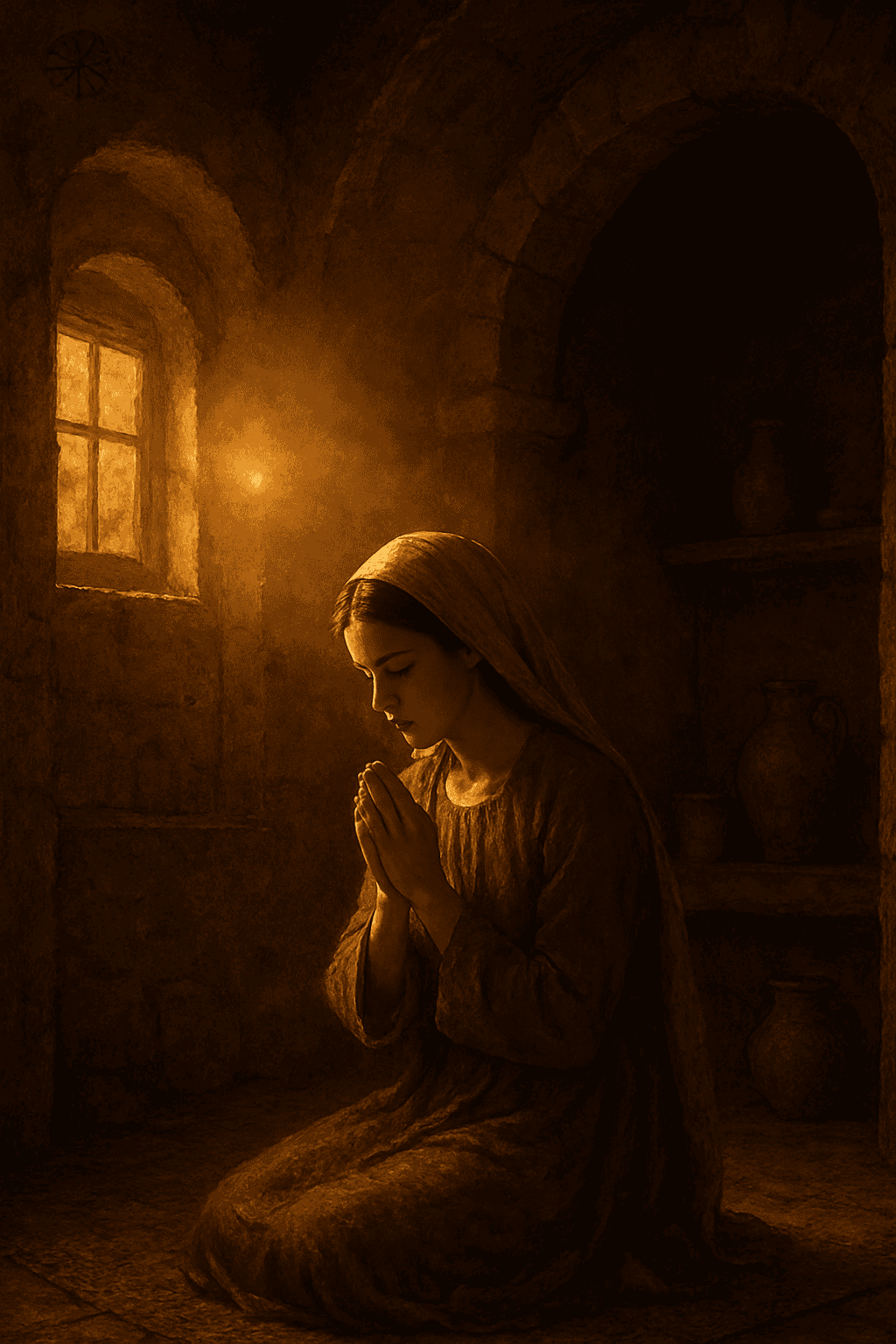
Antes de seguir a María en el misterio de la venida de Cristo, nos detenemos con ella en un momento que transforma la historia de la salvación. El ángel Gabriel entra discretamente en un pueblo cualquiera, en una casa común y corriente, y en la vida de una joven que ya se había entregado por completo a Dios.
Este encuentro no es ruidoso.
No es dramático.
No es presenciado por multitudes.
Sucede en silencio.
Porque Dios suele obrar con mayor claridad en la vida de aquellos que ya le han hecho un hueco.
El corazón atribulado de María: No el temor al mundo, sino el temor a fallarle a Dios.
Cuando Gabriel saluda a María, las Escrituras nos dicen:
“Pero le inquietó mucho esa expresión, y se puso a pensar qué clase de saludo podría ser aquel.”
— Lucas 1:29
Su temor no se basa en el peligro social, los chismes o la reputación.
La preocupación de María es mucho más profunda:
Teme malinterpretar la voluntad de Dios.
Teme romper su promesa.
Teme salirse del compromiso que ya ha demostrado consigo misma.
En la vida judía, los votos hechos al Señor tenían una importancia extraordinaria. Números 30 muestra la seriedad con la que Israel trataba los votos:
“Cuando una mujer hace un voto al Señor… no quebrantará su voto; cumplirá todo lo que ha salido de su boca.”
— Números 30:2
Este era un lenguaje de pacto: vinculante, sagrado y profundamente personal.
También fue No es algo inaudito para que hombres y mujeres devotos dediquen sus vidas íntimamente a Dios. Las Escrituras dan ejemplos:
- La promesa de Ana por Samuel (1 Samuel 1:11, 27–28)
- Naziratos como Sansón (Jueces 13:5)
- La profetisa Ana, que “no se apartó del templo” (Lucas 2:36–37)
María creció en este mundo. Sus primeros años forjaron un corazón que ya pertenecía por completo a Dios.
Entonces, cuando ella le pregunta a Gabriel:
“¿Cómo será esto, puesto que no conozco al hombre?”
— Lucas 1:34
Ella no duda de Dios, sino que está discerniendo cómo este nuevo llamado se alinea con el voto que tanto aprecia.
Dios honra su ofrenda
La respuesta de Gabriel no reemplaza la promesa de María.
Lo cumple.
“El Espíritu Santo vendrá sobre ti, y el poder del Altísimo te cubrirá con su sombra.”
— Lucas 1:35
Este lenguaje evoca la historia sagrada de Israel:
- La nube de gloria que ensombrece el Arca de la Alianza (Éxodo 40:34–35)
- La presencia de Dios llenando la Tienda del Encuentro
- La promesa de que Dios habitará entre su pueblo (Éxodo 25:8)
María se convierte en el Arca viviente, no por abandonar su consagración, sino porque Dios la eleva más allá de todo lo que ella podría haber imaginado.
Los Padres lo vieron claramente:
Así como el antiguo Arca contenía la Palabra en piedra, María sostendría la Palabra hecha carne (Juan 1:14).
Dios no anula su promesa.
Él lo recibe y lo transforma en el lugar donde Cristo entra al mundo.
El Fiat de María: El voto que abre la puerta de la salvación
Mary responde:
“He aquí la sierva del Señor; hágase en mí conforme a tu palabra.”
— Lucas 1:38
Estas no son palabras vacilantes.
Son las palabras maduras y meditadas de alguien que ya ha elegido a Dios con todo su ser.
Su sí es el florecimiento de su promesa.
Su obediencia se convierte en la puerta de entrada a través de la cual la salvación entra en la historia.
En María vemos que la consagración no es restrictiva.
Es expansivo: ensancha el corazón para que Dios mismo pueda habitar en él.
Una reflexión para nuestro propio camino.
María nos enseña la santa sabiduría del Adviento:
Escuchar antes de actuar.
Discernir antes de decidir.
Confiar antes de comprender.
Rendirse sin miedo.
Su vida fue una promesa.
Su pureza era una promesa.
Su sí fue el cumplimiento de una promesa.
Mientras continuamos este camino con ella y con José, que aprendamos la misma valentía serena: ofrecernos a Dios con sinceridad y confiar en que Él cumplirá lo que comienza.
Notas y fuentes
Sagrada Escritura
Lucas 1:26–38 — La Anunciación
Lucas 1:29 — La respuesta de María
Lucas 1:34–35 — La pregunta de María y la respuesta de Gabriel
Números 30:2 — El carácter vinculante de los votos
1 Samuel 1:11, 27–28 — El voto de Ana
Jueces 13:5 — Consagración nazarea
Lucas 2:36–37 — La devoción de Ana al Templo
Éxodo 25:8; 40:34–35 — Dios morando con su pueblo
Juan 1:14 — El Verbo hecho carne
Matrimonio y votos judíos
Mishná Kiddushin 1:1
Número 30 — Normativa relativa a los votos
Prácticas judías de consagración del Segundo Templo (naziritas, servicio en el Templo)
Padres de la Iglesia primitiva
San Ireneo, Contra las herejías — María como la Nueva Eva
San Efrén el Sirio — María como Arca de la Nueva Alianza
San Ambrosio, Exposición de Lucas — El voto y el discernimiento de María
Origen, Homilías sobre Lucas — La pureza de María y su apertura a Dios
Fuentes históricas/culturales
Brant Pitre, Jesús y las raíces judías de María
Joaquín Jeremias, Jerusalén en tiempos de Jesús
Stephen M. Wylen, Los judíos en tiempos de Jesús
Navegación de la Serie de Adviento:
- Jesús tiene un árbol genealógico con una historia.
- Una joven en el templo: Los primeros años de María
- José: Un hombre justo en un mundo complicado
- Compromiso, matrimonio y costumbres legales judías
- La Anunciación: Una conversación tranquila en Nazaret
- Próximamente – El sueño de José
Deja un comentario