


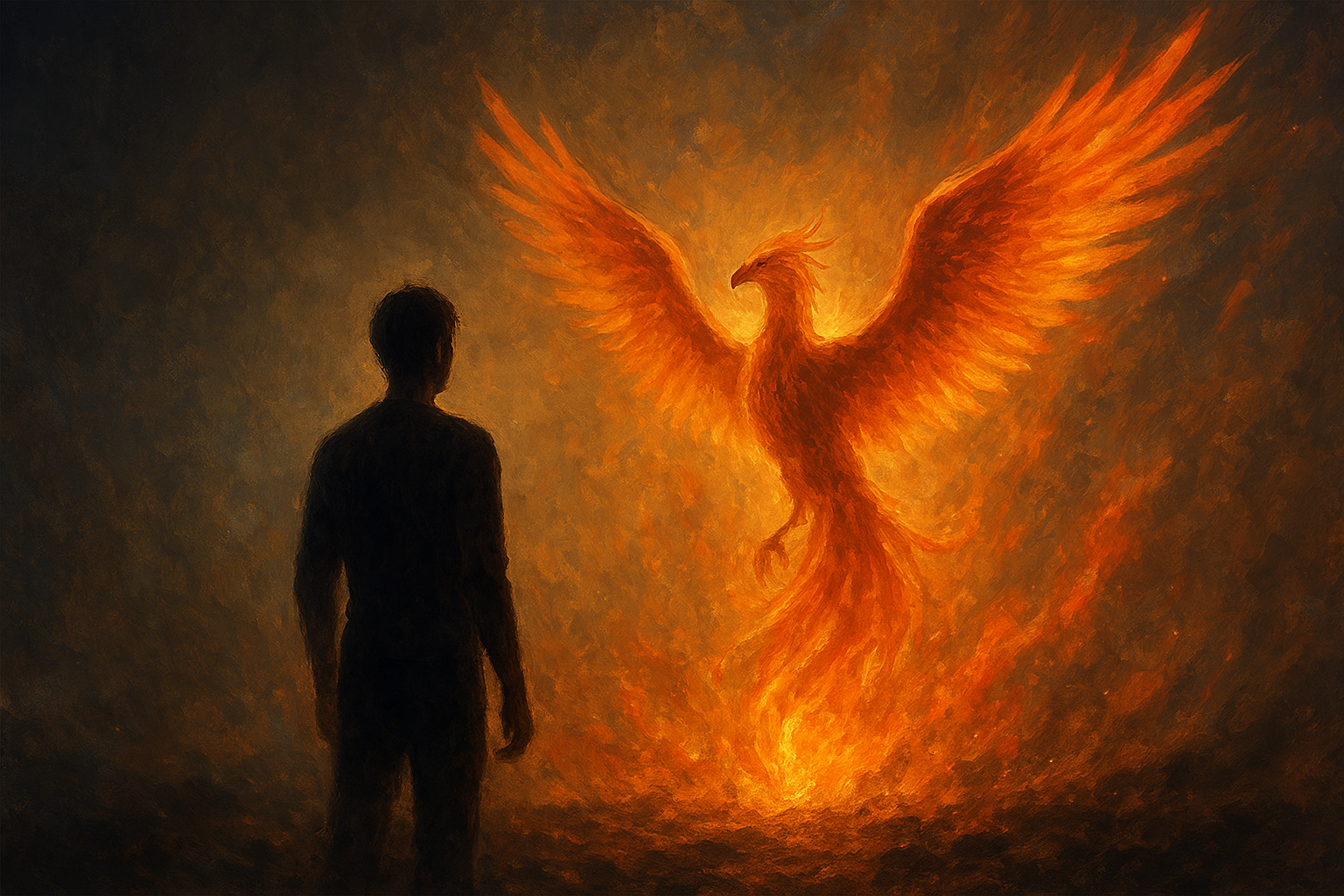
Una meditación sobre el silencio, la pérdida y la sagrada invitación a levantarse.
Bajo la tierra reseca por el sol del valle del río Salt, los antiguos Hohokam excavaron canales que transportaban vida a través del polvo. Durante más de mil años, transformaron tierras áridas en tierras fértiles. Y entonces, se desvanecieron. No en el fuego. No en la guerra. Sino en el silencio.
Algunos dicen que los Hohokam desaparecieron debido a la sequía, la migración o los cambios sociales. Pero tal vez fue algo más profundo. Tal vez perdieron el hilo que una vez los unió. Tal vez los rituales ya no llegaban al cielo. Tal vez la tierra ya no respondía. Tal vez permanecieron demasiado tiempo en un lugar que ya los había abandonado.¹
“El alma emprende el vuelo hacia el mundo invisible, pero al llegar allí tiene la certeza de la dicha.”
~ Platón
Ese silencio me resulta familiar. Es el silencio tras una ruptura, cuando las palabras cesan pero el dolor persiste. Es el silencio cuando la fe empieza a flaquear, cuando las oraciones se sienten vacías y Dios parece lejano. Es el silencio de la desconexión espiritual, cuando lo que antes se sentía sagrado ahora se siente inalcanzable.
A veces nos desvanecemos porque hemos perdido nuestras raíces. No solo culturales o relacionales, sino espirituales. Olvidamos quiénes somos. Olvidamos a qué estamos anclados. Perseguimos lo que brilla y perdemos lo que nos da estabilidad. Y, como los Hohokam, nos alejamos lentamente de aquello que una vez nos dio vida.
Pero desvanecerse no es el final. Es el instante previo al renacimiento. El fénix no resurge del ruido. Resurge de las cenizas. Del silencio. De la quietud donde todo se ha consumido excepto la verdad.
En la década de 1860, llegaron los pioneros. Entre ellos se encontraba Darrell Duppa, un erudito británico con alma poética. Al ver los restos de los canales Hohokam, no solo vio irrigación, sino también resurrección. Bautizó el nuevo asentamiento como Fénix: una ciudad que resurgiría de las cenizas de una civilización perdida.²
El mítico fénix muere en llamas y renace. La visión de Duppa no era solo histórica, sino espiritual. Bautizó la ciudad no por lo que era, sino por lo que podía llegar a ser. Phoenix era una promesa: que incluso lo perdido puede ser el comienzo de algo hermoso.
Y así fue. Desde casas de adobe y caminos polvorientos, Phoenix creció, alimentada por la presa Roosevelt, moldeada por el ferrocarril y refrescada por el aire acondicionado. Se convirtió en una ciudad de luz y movimiento, de flores del desierto y un horizonte resplandeciente. Hoy es la quinta ciudad más grande de Estados Unidos, una metáfora viva del renacimiento.³
Pero el fénix no es solo una ciudad. Es un espejo. Una metáfora para quienes han atravesado el fuego: el desamor, las dificultades y el dolor silencioso de lo que no pudo o no duró. Habla a aquellos marcados por la vida, que aún rebuscan entre las cenizas, sin saber si es posible resurgir.
Algunas relaciones terminan no con claridad, sino con confusión. Algunos sueños se desvanecen no por falta de amor, sino porque el tiempo se vuelve demasiado frágil para sostenerlo. Y algunas creencias —antes sagradas— comienzan a resquebrajarse bajo el peso de la experiencia vivida. Lo que antes se sentía sagrado ahora se siente vacío. Y ese dolor es real.
“Consideremos esa maravillosa señal que tiene lugar en tierras orientales… Hay un ave llamada fénix… que muere. Pero al descomponerse su carne… le salen plumas… y con ellas pasa de la tierra de Arabia a Egipto…” 1 Clemente, Capítulo 25
Levantarse no es borrar el pasado. Es honrarlo. Es decir: Esto me dolió, pero no me destruyó. Despojarse de lo que fue, no con amargura, sino con bendición. Convertirse no en lo que fuiste, sino en lo que ahora estás llamado a ser.
“Primero, pregúntate qué quieres ser; y luego haz lo que tengas que hacer.” Epicteto
Hay gracia en las cenizas. Hay sabiduría en la quema. Y hay belleza en el renacimiento. Sin prisas. Sin forzar. Sin fidelidad. Con alas que llevan el aroma de la sanación, y un corazón que recuerda lo que costó llegar hasta aquí.
Como la ciudad de Phoenix, te asientas sobre cimientos antiguos. Algunos visibles, otros enterrados. Pero todos forman parte de la historia. Te levantas no a pesar del pasado, sino gracias a él. Y tu transformación es un testimonio del Dios que renueva todas las cosas.
“No eres lo que te quemó. Eres lo que resurge.”. Que el fuego que te quebró se convierta en la luz que te guíe. Que las cenizas no hablen de ruina, sino de liberación. Que te eleves, no como eras, sino como te estás convirtiendo.”
Así que, si te encuentras entre las ruinas de algo que alguna vez fue sagrado —una vieja creencia, una relación rota, una versión de ti mismo que ya no te representa— no estás perdido. Estás escuchando. Estás discerniendo. Estás transformándote. El ave fénix resurgió de las ruinas. Tú también puedes.
¿Qué parte de tu historia aún se encuentra entre las cenizas? ¿Qué verdad espera salir a la luz?
🕊️ Notas al pie
¹ Entre las teorías sobre el declive de los Hohokam se incluyen el estrés ambiental, la fragmentación social y la migración. Pero la desconexión espiritual es una metáfora que resuena en muchos hoy en día, especialmente en aquellos que se sienten desarraigados de aquello que alguna vez les dio vida.
² Darrell Duppa bautizó a Phoenix en 1868, inspirado por la idea del renacimiento de ruinas antiguas. Su visión era poética y profética, vinculando el mito con el lugar.
³ El crecimiento de Phoenix se aceleró con la construcción de la presa Roosevelt (1911), el ferrocarril (1887) y la migración de la posguerra. Hoy en día, es una próspera metrópolis desértica, prueba de que lo que antes era estéril puede volver a florecer.
Deja un comentario