
A Pilgrimage of Love, Mercy, and Communion
We have learned that grace should be treasured and not taken lightly. We are born with sanctifying grace, but we grow deeper in it by choosing to follow Jesus—the Blessed Trinity. We receive actual grace when we choose to follow Him—when we choose to love Him. Yet grace can be lost through mortal sin, and recovered through confession, redemption, prayer, service to others, acting on the commandments, and receiving the sacraments.*
“For it is by grace you have been saved through faith, and this is not from you; it is the gift of God.” (Ephesians 2:8)
As we grow in grace, we grow deeper in love with Our Heavenly Father. Works are grace acted upon, with the Lord’s love binding the action together with Our Heavenly Father and ourselves. We become one in the act—one in the grace—one in each other. Works are completed out of our desire to express our love and give back to God all the goodness, mercy, and love that He gives us. Basically, we are giving Him back to Himself, through Him, and in unity with Him. It is an expression of grace.
“Faith without works is dead.” (James 2:26)
Since we are born with sanctifying grace, all actions (works) have the potential to be holy.** But if they are completed without intention or feeling, they fail in completion.
🕊️ What Does Sainthood Really Mean?
When viewed through the lenses of grace and works, sainthood is not perfection—it is participation. I don’t know how to separate grace from works. Both are empty without the other because they aren’t meant to exist in isolation. Their beauty is greater when they are together.
Can grace show love without works? No—and vice versa. One needs the other in order to grow and express our love to the fullest. But isn’t God expressing His love for us through our graces and works? Yes—because we are expressing our love, and God is love. Therefore, it can only be a movement of us together.
“We love because He first loved us.” (1 John 4:19)
The more we give of ourselves, the more we receive. My understanding of becoming holy in God’s eyes has changed through the realization that everything is interconnected and continuous. It is reciprocal—because once acted upon, grace cannot help but increase.
I have also learned that we are never without grace because God desires a relationship with us. The door is always open—even in mortal sin. Becoming holy or a saint is not about being perfect. It is about growing closer to God, admitting that we fail, and asking for His mercy. We need to give our love to the Father. It is a process.
“The Lord is near to the brokenhearted, and saves the crushed in spirit.” (Psalm 34:18)
Sainthood is a path of growth: we fall, we confess, we accept God’s mercy and love, and we proceed again acting on the grace received through the works we do for the love of God. He gives us grace even before we deserve His mercy. He reaches out to get our attention, to show His love. His love for us is there before we deserve it.
He loves us as in the parable of the man who sells all he has to purchase the pearl of immense value—we are the pearl. Or when we are undeserving, He gives us His love, waiting for our return—like the prodigal son. I believe all of Jesus’ parables are different expressions of His love for us. He is always extending His hand—as in the painting, The Creation of Adam, where God reaches toward man with love already offered.
“The kingdom of heaven is like a merchant looking for fine pearls. When he found one of great value, he went away and sold everything he had and bought it.” (Matthew 13:45–46)
✨ Grace That Strengthens and Sustains
We have both actual and sanctifying grace. God’s grace gives us strength—more than if we tried to do things on our own. It makes it easier for us and lightens the load of our difficulties. It enables us to be closer to Him, even when we feel distant. He is still close—even if we sever the relationship. We are never truly alone.
“My grace is sufficient for you, for power is made perfect in weakness.” (2 Corinthians 12:9)
But when we sever the relationship, to feel His love again, we need to confess our sins and act upon grace. What if we confess our sins and still do not feel forgiven? We are still forgiven. We still receive grace. The guilt of our sins is what holds us back from experiencing the fullness of God’s love.
“If we confess our sins, he is faithful and just to forgive us our sins and cleanse us from all unrighteousness.” (1 John 1:9)
We must forgive ourselves and others so that we feel forgiven. That guilt is our inability to absolve ourselves—or our unwillingness to accept God’s love, which is expressed through His grace. We must release this to fully receive God’s grace—His love.
🌊 Sacraments as Living Water
If I am understanding God correctly, He is never not there—because sanctifying grace is always present. He wants us to act upon this grace so that it can grow. He knows we are not perfect, because we have free will. Therefore, He has created a method for us to come back and grow with Him.
This participation in failing, getting up again, and growing enables us to participate in the divine life, even though we are not perfect. We remain in some grace, even when we fall short. It is when we get up again that grace grows—through confession.
“Repent, and be baptized every one of you in the name of Jesus Christ for the forgiveness of your sins. And you will receive the gift of the Holy Spirit.” (Acts 2:38)
Even when we fall short, we can still be on the path of sainthood through growth: confession, sacraments, prayer, silence, reading the Bible, adoration, and more. Sacramental grace grows because of God’s forgiveness, love, and mercy—though our understanding increases within us.***
I like to think of it as the saying: “You are what you eat.” We must apply this to Holy Communion. We become one with Him. Christ’s Body is consumed by us and becomes part of our being.**** Just as we eat food, consuming His flesh through the sacrament of Holy Communion makes us one with Christ. Applying this same concept across all sacraments means we become one with Him through them all.
“Whoever eats my flesh and drinks my blood remains in me, and I in them.” (John 6:56)
The sacraments are like water—they enable grace to grow.
“Unless one is born of water and the Spirit, he cannot enter the kingdom of God.” (John 3:5)
🌵 Dry Spells and Hidden Growth
How does one sustain themselves through dry spells, as Job did or as many saints have? I once heard it said: when we go through those dry spells, when we don’t feel His presence, that is when we should pray and commune with the Living Water made man—Jesus, Our Heavenly Father, and the Holy Spirit.
“As the deer longs for streams of water, so my soul longs for you, O God.” (Psalm 42:1)
We should not feel abandoned, distant, or alienated from God. We should focus on the gifts we do have. I would venture to say this is a suitable time to acknowledge every gift we’ve received. We should seek God in the sacraments, the Bible, the adoration chapel, and more.
By continuing to commune with God, we strengthen our grace. It grows stronger, just as we grow closer. We can look at it as Living Water—our link to the Blessed Trinity. No matter how distant, dry, unworthy, or lost we feel, it is during those periods that we grow the most.
“Blessed is the one who perseveres under trial because, having stood the test, that person will receive the crown of life.” (James 1:12)
It is just as with all things in life: ups and downs. Cherish those moments where we can find God in the smallest and most insignificant occurrences.
💞 The Duty to Act on Grace
Our duty when we receive grace is our duty to act upon grace. If we do not act upon grace, then we are unable to develop fully in Christ. Works are an expression of love. They are an expression of being truly contrite.
“Let your light shine before others, that they may see your good deeds and glorify your Father in heaven.” (Matthew 5:16)
Corporal and spiritual works of mercy help us grow in God’s love and in love with our fellow human beings. They help develop relationship—an understanding of Our Lord. They are all expressions of our love and sorrow.
Anyone can do good works. But without following God, we do not grow in love. Our acts will be like clanging cymbals without love being acted on through grace. But the acts will still be good because of actual grace. So, some good does derive from them.
“If I give away everything I have… but do not have love, I gain nothing.” (1 Corinthians 13:3)
Works are like items of infinite value because they are expressions of our love and contrition. The difference between doing good and doing holy good is that one has God centered in it—God’s love.
🔥 Grace and Works: A Radical Form of Love
We can stay humble if we know where the works come from and who is working through us—God. And we acknowledge that we are only the vessel which expresses God’s love for us and others. We need to focus on the purpose of the goodness we do as an extension of ourselves, which is an extension of God. We must realize that we can do nothing without God.
“I am the vine; you are the branches. Whoever remains in me and I in him will bear much fruit, because without me you can do nothing.” (John 15:5)
How do works and grace cooperate to form the pathway to sainthood? All works and grace are useless without the other. They move together like gears. One without the other is like two parts causing friction.
Actual grace is the beginning, but for actual grace to continue, it needs both sanctifying grace and works. They are like fertilizer and water for the plant—or like gears. Initially, sanctifying grace injects energy into the works and actual grace. When we separate each component to work on its own, they become ineffective. It’s like riding a bike without a chain.
If we have only grace, then we do not see the value and love of God completely. But if we have works but no grace, we are like a baboon beating his chest to gain attention.
The saints acted upon grace to perform their works—no matter how small. When they failed, they humbly came before Our Heavenly Father and expressed their sins in confession, using the priest as the vessel to act upon Our Heavenly Father’s wishes.
“Confess your sins to one another and pray for one another, that you may be healed.” (James 5:16)
Every act, no matter how small, is an expression of our love for God and His love for us. No matter how small it may be, as long as God is first, the act is full of grace and full of our love—no matter how little it may be.
Doing becomes loving when we give of ourselves completely. We can resist God’s grace by not accepting or acting upon it. It is our choice.
What does grace look like when we fully act upon it? My guess is—it is beautiful. It overflows with love. It is a force which cannot be stopped. There are no limits. It is infinite. Possibilities become realities. It is a radical form of love. It is the fullness of love.
Ordinary deeds become extraordinary when done out of love—through the grace, by the grace, in the grace of the Blessed Trinity.
🚶♀️ The Pilgrimage of Sainthood
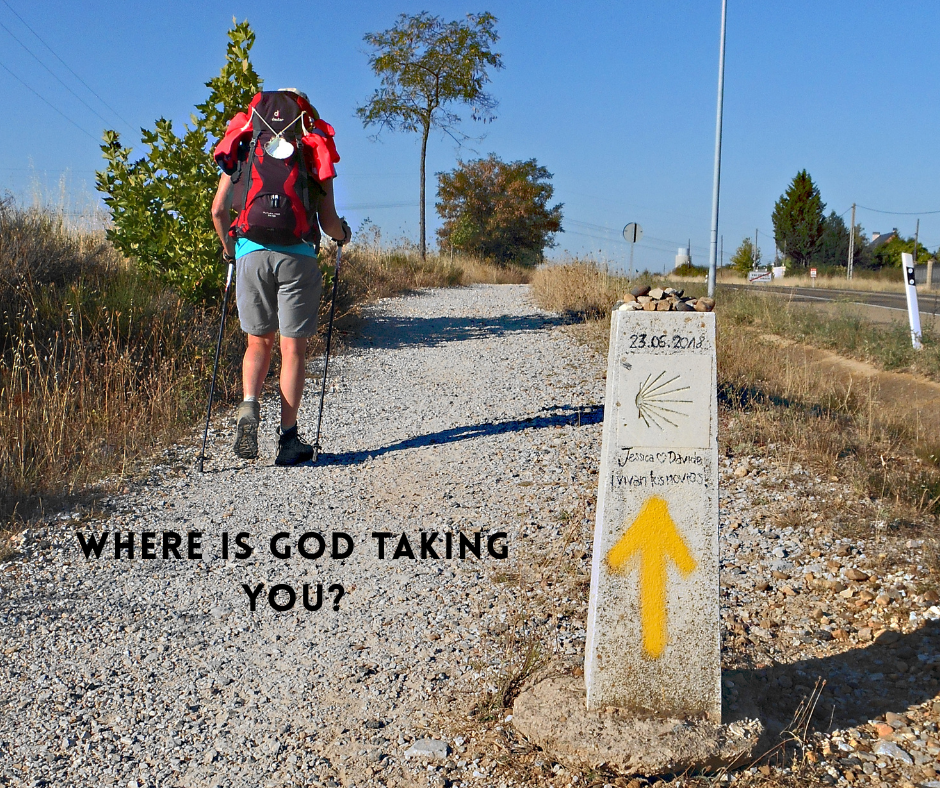
Our path to sainthood—or holiness—is a pilgrimage. I hadn’t considered that before, but now I see how true it is. Each of us walks a unique road, shaped by grace, works, suffering, and love. We are not all called to the same tasks, but we are all called to the same destination: union with God.
A pilgrimage is not a sprint. It’s a slow, deliberate journey. There are moments of rest, moments of struggle, and moments of revelation. We fall, we rise, we walk again. And through it all, God walks with us.
“Everyone is on their own path to sainthood or holiness.”
This truth brings comfort and challenge. It reminds us that we are never alone—and that we must not compare our journey to others. What matters is that we keep walking, keep responding to grace, and keep offering our love.
This pilgrimage has taught me that sainthood is not about perfection—it’s about direction. Saints are those who show us how to be holy. They walk ahead of us, beside us, and sometimes behind us, reminding us where we’re going and why. Their lives become signposts, not just stories. And in that way, sainthood becomes a lived compass—pointing always toward God.
🧭 From Pilgrimage to Compass
We’ve walked far in this reflection—through grace, works, sacrament, silence, and surrender. And now, we pause at a threshold. If sainthood is a pilgrimage, then holiness is the compass. Saints are not perfect, they are directional. They show us how to orient our lives toward God, how to walk with grace, how to fall and rise again.
As we move forward, we begin to ask not just what is grace, but where is it leading us? Not just how do we act, but how do we discern? The compass invites us to navigate holiness with intention—through virtue, prayer, and love.
“Whether you turn to the right or to the left, your ears will hear a voice behind you saying, ‘This is the way; walk in it.’” (Isaiah 30:21)
Part IV has been the journey. What comes next is the map.
We now begin to shift our gaze—from the path beneath our feet to the compass in our hands. Holiness is not just the destination; it is the way we choose to walk. The saints have shown us how to be holy by living with God at the center. They are our guides, our markers, our stars. And now, we begin to chart our own course—one step at a time, led by grace, drawn by love.

🧭 Call to Action: Listening for the Compass
As we close this chapter and prepare to step into the next, consider:
- What if grace is already at work in the small, unnoticed corners of our day?
- What if the greatest act of holiness isn’t doing more, but allowing God to love us more?
- What would it mean to see every work, no matter how hidden, as part of the divine symphony of grace?
- What would happen if we stopped trying to earn love, and simply began to live from it?
“Stand at the crossroads and look; ask for the ancient paths, ask where the good way is, and walk in it, and you will find rest for your souls.” (Jeremiah 6:16)
Let these questions guide your heart as we begin to chart the compass—one that doesn’t just point north, but points home.
🧵 Continue the Journey
- Becoming a Saint in God’s Eyes: Part 1
- Becoming a Saint in God’s Eyes, Part II: Grace in Motion
- Becoming a Saint, Part III: Works
Footnotes:
*In Catholic teaching, mortal sin is a grave offense that severs our relationship with God. Reconciliation through the sacrament of confession restores sanctifying grace and reopens the path to holiness.
** Sanctifying grace is the indwelling presence of God in the soul, received at baptism. Actual grace refers to God’s interventions that prompt us toward good actions and deeper relationship with Him.
***This growth in understanding is not required for grace to be effective, but it is a gift that often unfolds over time. As we receive the sacraments with faith and openness, our interior awareness deepens—helping us recognize the mystery we are participating in. Grace acts first; understanding follows.
**** The Eucharist is not symbolic alone—it is the real presence of Christ. In receiving His Body and Blood, we are united with Him in a profound and mysterious way, becoming what we consume: love incarnate.


Responder a myallaboutyouCancelar respuesta