


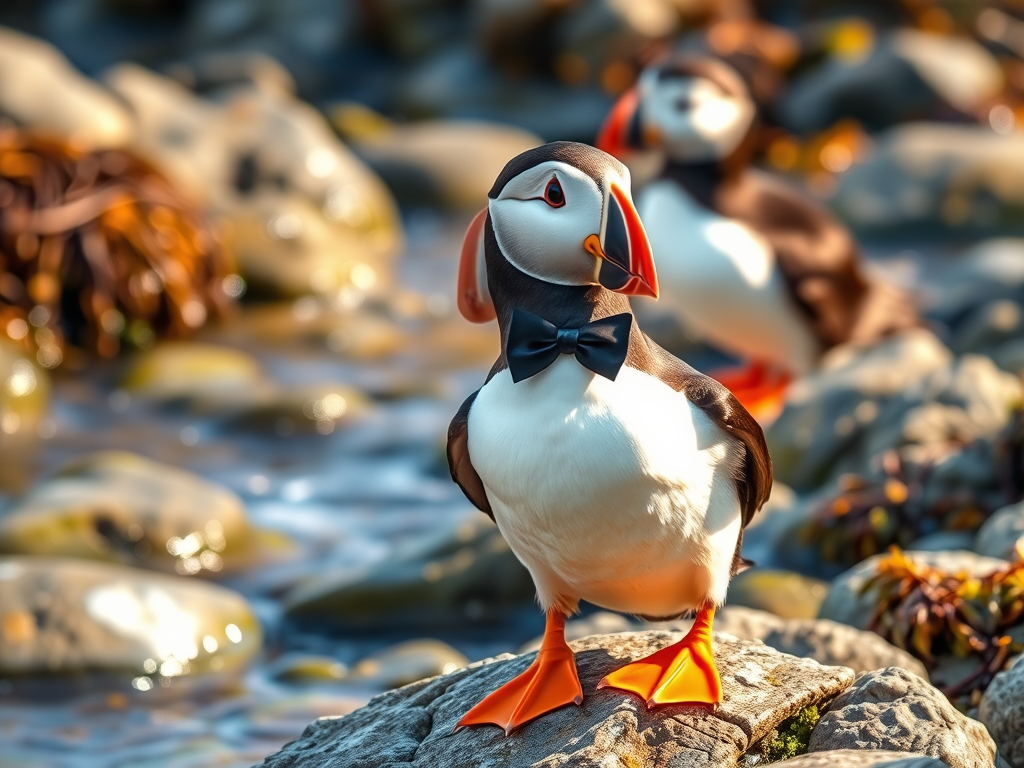
Ah, los frailecillos: el misterio más encantador de la naturaleza. Recuerdo vívidamente la primera vez que supe de ellos. Fue en tercer grado, entre las páginas de un libro que capturó mi imaginación y me presentó a estas aves marinas tan peculiares. Con sus plumas que parecían un esmoquin, sus enormes patas naranjas y sus picos de colores vibrantes, los frailecillos parecían sacados de un cuento infantil. Desde ese momento, siempre les he tenido cariño. Hay algo innegablemente entrañable en su peculiar encanto, en su capacidad de encarnar la elegancia y la alegría a partes iguales.
Estas entrañables criaturas, a menudo llamadas "loros marinos" o "payasos del océano", son mucho más que su encantadora apariencia. Son hábiles aviadores, expertos buceadores y seres sociables, dueños tanto del cielo como del mar. Su combinación de practicidad y fantasía los hace fascinantes para los amantes de las aves y para cualquiera que tenga la fortuna de avistarlos.
Un detalle importante: ¡los frailecillos no son pingüinos! Aunque comparten algunas similitudes visuales, los frailecillos son maravillas únicas del mundo aviar, que combinan adorables travesuras con asombrosas habilidades. Estos pequeños animales siempre causan una gran impresión, ya sea en tierra, en el aire o en alta mar. Su encantadora presencia perdura en la memoria, y con razón.
Durante la mayor parte del año, los frailecillos viven una vida aventurera, meciéndose sobre las olas del océano lejos de la costa. Son auténticos vagabundos marinos, que pasan meses navegando a la deriva y cazando peces en las frías aguas del Atlántico Norte. Pero cuando llega la primavera, regresan a sus zonas de cría costeras rocosas, formando bulliciosas colonias donde comienza la verdadera acción. Estas metrópolis de frailecillos son de todo menos aburridas: están llenas de travesuras curiosas, desde disputas territoriales hasta elaboradas muestras de afecto entre parejas.
Hablando de romance, los frailecillos son los enamorados del mar, literalmente. Forman parejas monógamas y suelen permanecer con la misma pareja toda la vida. Cuando se reencuentran tras largos meses separados, se frotan los picos, un adorable ritual en el que se dicen: “Te he echado de menos”. Los frailecillos anidan en madrigueras que excavan con sus picos y patas, creando acogedores hogares para su único huevo. Es como un auténtico proyecto de bricolaje, con vistas al mar incluidas.
Y no olvidemos sus trucos de pesca. Los frailecillos son pescadores expertos con una habilidad asombrosa: pueden transportar varios peces a la vez en sus picos, ¡a veces hasta 62! Ver a un frailecillo abalanzarse con el pico lleno de pececillos plateados es como ver a alguien hacer malabares con la compra mientras sostiene un café con leche: es puro talento. Debajo de su adorable y torpe apariencia se esconde una criatura perfectamente adaptada para la supervivencia.
Sus habilidades no se limitan a la pesca. Los frailecillos son buceadores increíbles, capaces de sumergirse hasta 60 metros bajo el agua en busca de sus presas. Sus alas, que también funcionan como aletas, se mueven rápidamente mientras "vuelan" por el agua con sorprendente velocidad. Pero cuando alzan el vuelo, los frailecillos tampoco se quedan atrás: pueden alcanzar velocidades de hasta 88 kilómetros por hora. Puede que parezcan algo robustos en tierra, pero una vez en el aire son prácticamente coches de carreras.
A pesar de sus impresionantes habilidades, los frailecillos se enfrentan hoy a desafíos, especialmente la pérdida de hábitat y el cambio en las condiciones oceánicas. Los esfuerzos de conservación buscan proteger a estas pequeñas maravillas, asegurando que sus colonias sigan prosperando durante generaciones. Su alegre presencia en acantilados escarpados y costas rocosas nos recuerda la belleza y la resiliencia del mundo natural.
Los frailecillos son mucho más que simples aves; son embajadores de la alegría y el asombro. Sus coloridos picos y su carácter juguetón los hacen inolvidables, pero es su profunda humanidad y su adaptabilidad lo que realmente nos cautiva. Los frailecillos nos recuerdan que las criaturas más pequeñas suelen tener el mayor impacto, tanto en el ecosistema como en nuestros corazones. ¿Quién no adoraría a estos pequeños y valientes piratas del mar?


Deja un comentario