


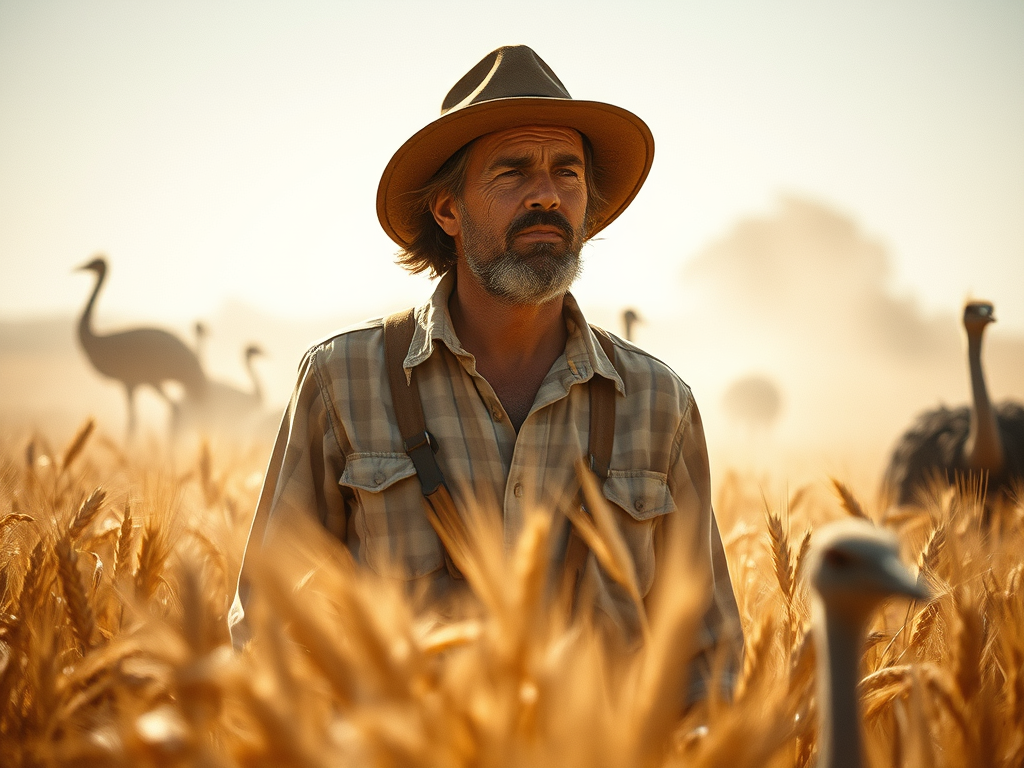


En 1932, tras la Primera Guerra Mundial, Ralph trabajó incansablemente en sus extensos campos de trigo y cebada en Australia Occidental, soportando el abrasador sol del verano. Ese verano en particular resultó especialmente difícil, ya que una intensa sequía había obligado a los emúes a adentrarse más en el interior en busca de vegetación exuberante y preciadas fuentes de agua. Estas grandes aves no voladoras desarrollaron un voraz apetito por los cultivos que Ralph y sus compañeros agricultores habían cultivado con tanto esmero; les gustaban especialmente el trigo dorado, la cebada madura, las tiernas verduras de hoja verde y las sabrosas frutas, así como los frutos secos y las semillas.
Ralph y muchos otros agricultores estaban desbordados por la plaga de emúes. Si las aves seguían devastando sus cultivos, no les quedaría nada a sus familias y sus campos serían solo un recuerdo. Desesperados, no podían proteger sus tierras, a pesar de sus esfuerzos. Nada parecía solucionar el problema. Ante la grave situación provocada por los emúes, todos los agricultores se reunieron para compartir sus frustraciones y buscar soluciones. Decidieron pedir ayuda al gobierno australiano, con la esperanza de encontrar una solución para esos astutos emúes.
El gobierno australiano decidió enviar al ejército a combatir a los emús. El batallón aún estaba listo para el combate, ya que acababan de regresar de la guerra. El gobierno sabía que resolverían el problema rápidamente. Confiaban en su capacidad. Cada soldado preparó su arma, limpiando y revisando meticulosamente cada pieza antes de ser enviado a la batalla contra los emús. ¿Quién ganaría? Seguramente serían los soldados, que estaban mejor entrenados y conocían mejor el plan. Sería un ataque sorpresa. Los emús no se darían cuenta de lo que estaba pasando hasta que fuera demasiado tarde. Muchos apostaron por los soldados.
En los campos, los emús y los soldados se enfrentaron. Pero los emús eran más escurridizos (se dividían en grupos más pequeños) y ágiles que incluso los soldados mejor preparados. Se escabullían entre la maleza, impidiendo que los soldados los siguieran. Los soldados lucharon durante aproximadamente un mes, pero solo lograron matar a unos pocos emús debido a su gran número. Al ver que los soldados eran incapaces de ganar, los altos mandos militares ordenaron su regreso a la base. Así, los emús ganaron y los agricultores tuvieron que buscar otras maneras de controlarlos.

*****La Guerra del Emú es un hecho real. La historia es mi interpretación de los acontecimientos.

Deja un comentario