


I believe languages are a method of communication. They tell people who you are and how you think. And if we take the time to really listen to the other person, we understand each other a little better. Let me tell you how I learned that.
As a young child, I remember my aunt flying in from Chile. What I noticed first was how she spent time with us. She wasn’t just visiting. She was there.
Each time she came, she brought stories about life in Chile. Then she’d open her suitcase and show us things made by the people there. She was exposing us to their culture.
The lamp base was my favorite. We all loved it. But it never got a lampshade or any of the parts it needed, because nothing we could find was perfect enough to go with it. We treated it like a precious stone, because she gave it to us.
Because I loved my aunt so much, I wrote her letters. And I started to fall in love with what she loved.
So when I got to high school, I chose Spanish. My teacher, Miss Miley, was an American, and I honestly don’t know what her background in languages was. She taught us certain phrases. Little did I know, some of them weren’t quite right. I didn’t find out until college.
By then my love of languages had only grown. I was taking Latin and Greek too, because they’re the foundation of so many English words, and I had friends from all over the Spanish-speaking world.
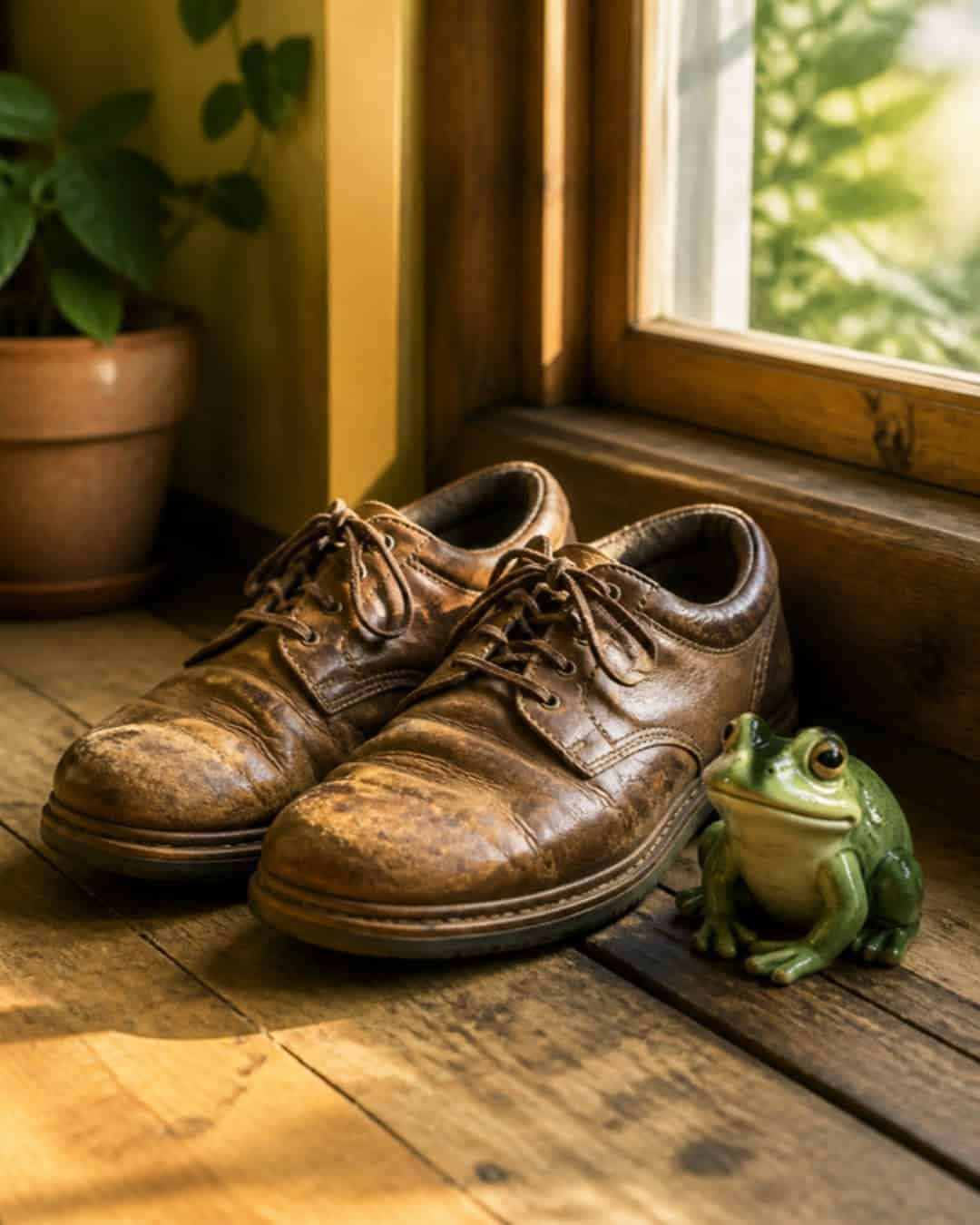
One afternoon I was sitting in the record room on campus. They played records back then. My feet were hurting, so I said, “Me aprietan mucho los sapitos.” My friends burst out laughing. I said, “What? Why are you laughing?” They said, “You should hear what you’re actually saying.” I asked what it was. “You’re saying the little frogs are squeezing your feet.”
We all laughed. It was so funny. And then I asked them how to say it correctly.
Because of that, I learned to pay attention to how I say things. A simple phrase you think is unimportant can mean something completely different to someone else. Even in English, someone who learned it in Great Britain might say “blackboard,” and we say “chalkboard.” Same thing, different word. And in Greek, I learned there are five words for love. English has one.
If we take the time to really listen, we understand each other a little better.
That’s why I love languages. I planned to major in linguistics and become a foreign service officer. But a friend told me that if the person I was translating for cursed someone out, I’d have to curse right along with them. I decided there was a better way to say things. Still, I never lost my fascination. There are whole families of languages, and I love looking at how they’re related and how they’ve borrowed from each other. English is a good place to start, because it has some surprises.
Leave a Reply