


Francesco Petrarch was born on this day in 1304, in a small Tuscan town called Arezzo. Most people who remember him at all remember him as a poet — he wrote hundreds of sonnets to a woman named Laura, and those poems basically invented the template every love poem since has borrowed from.
But the story I want to tell you today isn’t about Laura. It’s about a mountain.
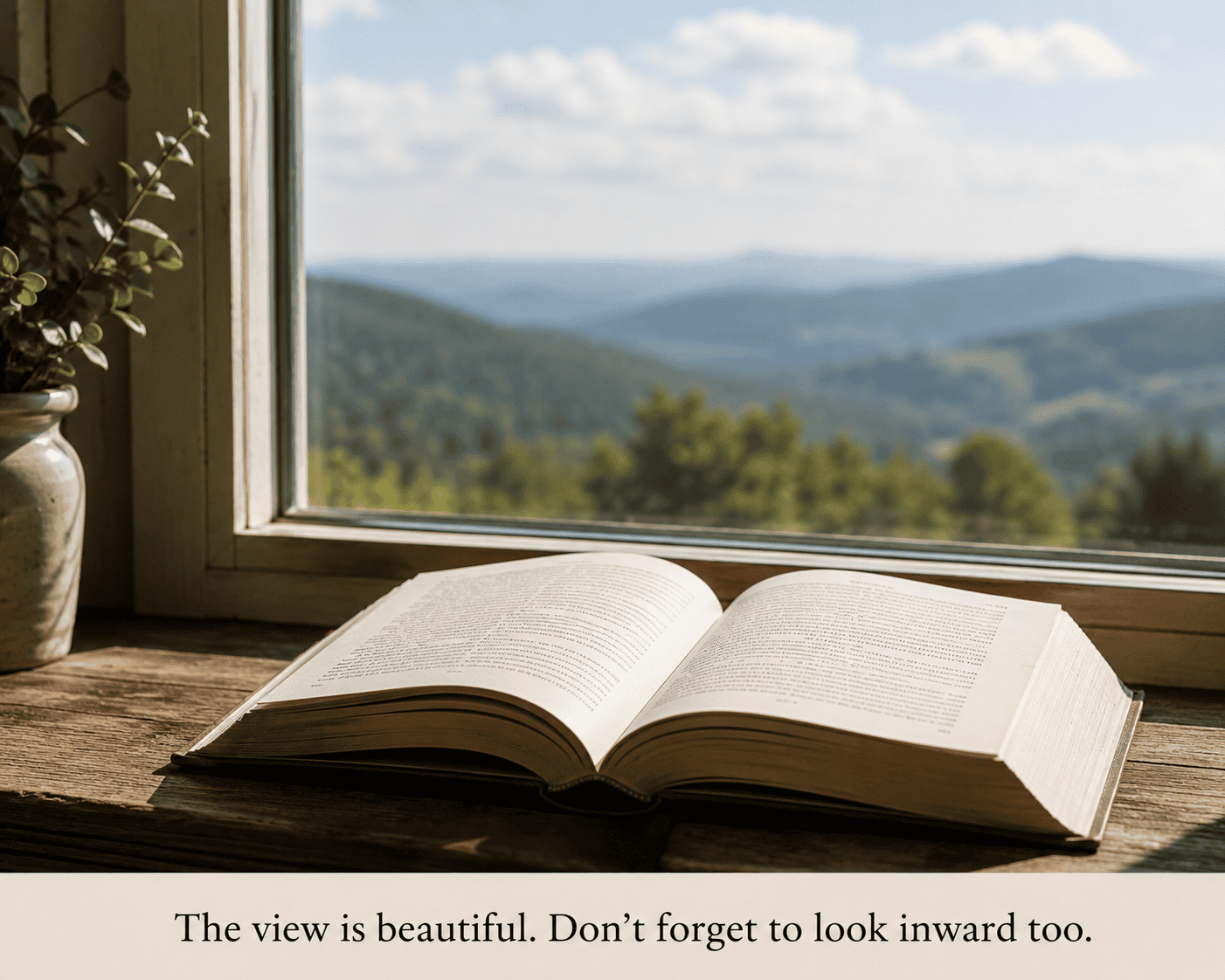
In 1336, Petrarch decided to climb Mont Ventoux, a tall, bare peak in the south of France, just to see the view from the top. This wasn’t normal for his time. People climbed mountains for war or for sheep. Nobody climbed one just to look. Petrarch did it anyway, with his brother, and he wrote a long letter about it afterward to a friend.
He describes standing at the summit, looking out at clouds below him, mountains folding into the distance, the sea somewhere far off and shining. It’s a beautiful passage. Any of us would want a view like that.
And then, almost as an afterthought, he tells us what he did next. He pulled a small book out of his pocket. It was Saint Augustine’s Confessions, a gift from a friend, and he opened it at random, the way people sometimes still do with Scripture when they need a word. His eyes landed on this line, from Book Ten: people go out to admire the height of mountains, the huge waves of the sea, the broad flow of rivers, the vastness of the ocean, the wheeling of the stars — and they walk right past themselves without a second thought.
Petrarch closed the book. He said he was almost angry at himself. He’d traveled all that way, climbed all that height, to admire something outside himself, when the only thing actually worth that kind of attention had been sitting in his own chest the whole time, unexamined.
He turned around and walked back down the mountain in near silence.
I think about that story every time I catch myself scrolling for the next beautiful view, the next impressive thing, the next place or person or achievement that seems like it might finally be enough to look at. There’s nothing wrong with mountains. There’s nothing wrong with wanting to see something grand. But Petrarch’s letter is nearly seven hundred years old, and it still catches us doing the same thing he caught himself doing — reaching outward for wonder, while the actual work of paying attention to our own soul waits, quietly, mostly ignored.
It’s Monday. The week is about to fill up with outward things — errands, emails, other people’s needs, maybe even a very literal view out the window if you get five minutes outside today. None of that is bad. Petrarch didn’t say don’t climb mountains. He said don’t forget to also look at the one place you can actually do something about.
The psalmist got there first, long before either of them: “Search me, O God, and know my heart! Try me and know my thoughts! And see if there be any wicked way in me, and lead me in the way everlasting!” (Psalm 139:23–24, RSV-2CE). That’s not a scary prayer, even though it sounds like it should be. It’s an invitation to be looked at closely by Someone who already loves what He finds — mess and all — and who wants to lead you somewhere better from there.
So here’s a small thing to carry into your Monday: before you go looking for the next view worth admiring, take thirty seconds and look inward instead. Not to judge what you find. Just to notice it. Petrarch had to climb an entire mountain to remember to do that. You don’t.
(A footnote for the curious: today also marks the anniversary of the 1969 Apollo 11 moon landing — sometimes called Moon Day. Another story about looking up and out. Maybe it’s worth remembering both directions matter, as long as neither one replaces the other.)
SOURCES
- Petrarch — Wikipedia
- OLL’s July Birthday: Francesco Petrarch
- What Happened on July 20 — HISTORY (Apollo 11 landing)
Leave a Reply