


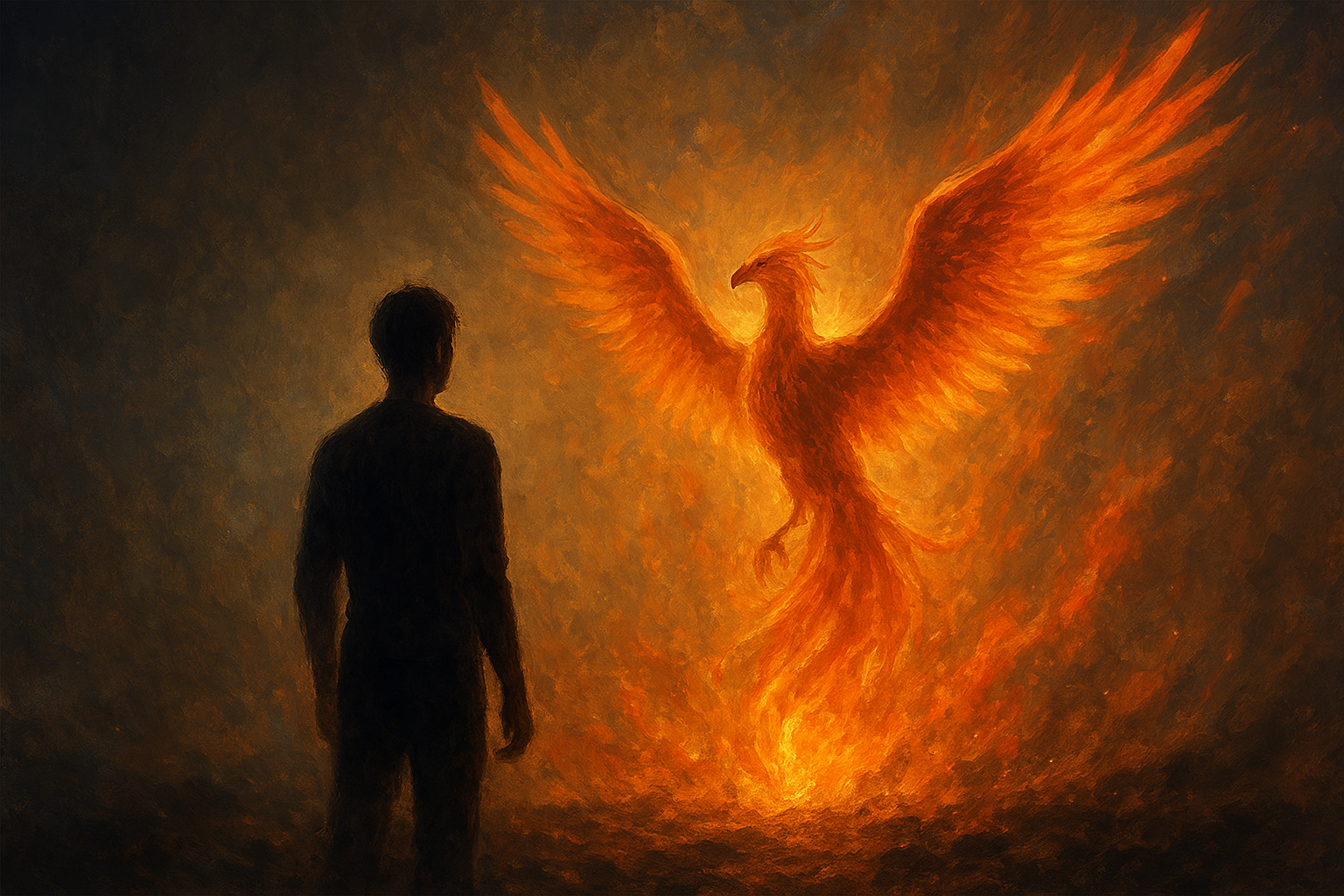
A meditation on silence, loss, and the sacred invitation to rise
Beneath the sunbaked soil of the Salt River Valley, the ancient Hohokam carved canals that carried life through the dust. For over a thousand years, they turned arid land into abundance. And then—they faded. Not in fire. Not in war. But in silence.
Some say the Hohokam disappeared because of drought, migration, or social change. But maybe it was something deeper. Maybe they lost the thread of what once held them together. Maybe the rituals no longer reached heaven. Maybe the land no longer answered. Maybe they stayed too long in a place that had already let go of them.¹
“The soul takes flight to the world that is invisible but there arriving she is sure of bliss.”
~ Plato
That silence is familiar. It’s the silence after a breakup, when the words stop but the ache remains. It’s the silence after faith begins to crack, when prayers feel hollow and God feels far. It’s the silence of spiritual disconnection—when what once felt holy now feels unreachable.
Sometimes we fade because we’ve lost our roots. Not just cultural or relational, but spiritual. We forget who we are. We forget what we’re anchored to. We chase what glitters and lose what grounds us. And like the Hohokam, we slowly drift from what once gave life.
But fading isn’t the end. It’s the moment before the rising. The phoenix doesn’t rise from noise. It rises from ashes. From silence. From the stillness where everything has burned away except what’s true.
In the 1860s, pioneers arrived. Among them was Darrell Duppa, a British scholar with a poetic soul. When he saw the remnants of the Hohokam canals, he didn’t just see irrigation—he saw resurrection. He named the new settlement Phoenix: a city rising from the ashes of a lost civilization.²
The mythical phoenix dies in flame and rises anew. Duppa’s vision wasn’t just historical—it was spiritual. He named the city not for what it was, but for what it could become. Phoenix was a promise: that even what’s lost can be the beginning of something beautiful.
And rise it did. From adobe homes and dusty roads, Phoenix grew—fed by the Roosevelt Dam, shaped by the railroad, cooled by air conditioning. It became a city of light and motion, of desert bloom and skyline shimmer. Today, it’s the fifth-largest city in the U.S.—a living metaphor for rebirth.³
But the phoenix isn’t just a city. It’s a mirror. A metaphor for those who’ve walked through fire—through heartbreak, hardship, and the quiet ache of things that couldn’t or didn’t last. It speaks to those scorched by life, still sifting through ashes, unsure if rising is possible.
Some relationships end not with clarity, but with confusion. Some dreams dissolve not from lack of love, but from timing too fragile to hold. And some beliefs—once sacred—begin to crack under the weight of lived experience. What once felt holy now feels hollow. And that ache is real.
“Let us consider that wonderful sign which takes place in eastern lands… There is a certain bird which is called a phoenix… and dies. But as the flesh decays… it brings forth feathers… and bearing these, it passes from the land of Arabia into Egypt…” — 1 Clement, Chapter 25
To rise is not to erase the past. It is to honor it. To say: this burned me, but it did not break me. To shed the skin of what was, not in bitterness, but in blessing. To become not what you were, but what you are now called to be.
“First say to yourself what you would be; and then do what you have to do.” — Epictetus
There is grace in the ashes. There is wisdom in the burn. And there is beauty in the rising. Not rushed. Not forced. But faithful. With wings that carry the scent of healing, and a heart that remembers what it took to get here.
Like the city of Phoenix, you are built on ancient foundations. Some visible, some buried. But all part of the story. You rise not in spite of the past, but because of it. And your becoming is a testimony to the God who makes all things new.
“You are not what burned you. You are what rises. May the fire that broke you become the light that guides you. May the ashes speak not of ruin, but of release. May you rise—not as you were, but as you are becoming.”
So if you’re standing in the ruins of something that once felt holy—an old belief, a broken relationship, a version of yourself that no longer fits—you’re not lost. You’re listening. You’re discerning. You’re becoming. Phoenix rose from ruins. So can you.
What part of your story is still sifting through ashes? What truth is waiting to rise?
🕊️ Footnotes
¹ Theories about the Hohokam’s decline include environmental stress, social fragmentation, and migration. But spiritual disconnection is a metaphor that speaks to many today—especially those feeling unmoored from what once gave life.
² Darrell Duppa named Phoenix in 1868, inspired by the idea of rebirth from ancient ruins. His vision was poetic and prophetic, linking myth to place.
³ Phoenix’s growth accelerated with the Roosevelt Dam (1911), the railroad (1887), and postwar migration. Today, it’s a thriving desert metropolis—proof that what was once barren can bloom again.
Leave a Reply