


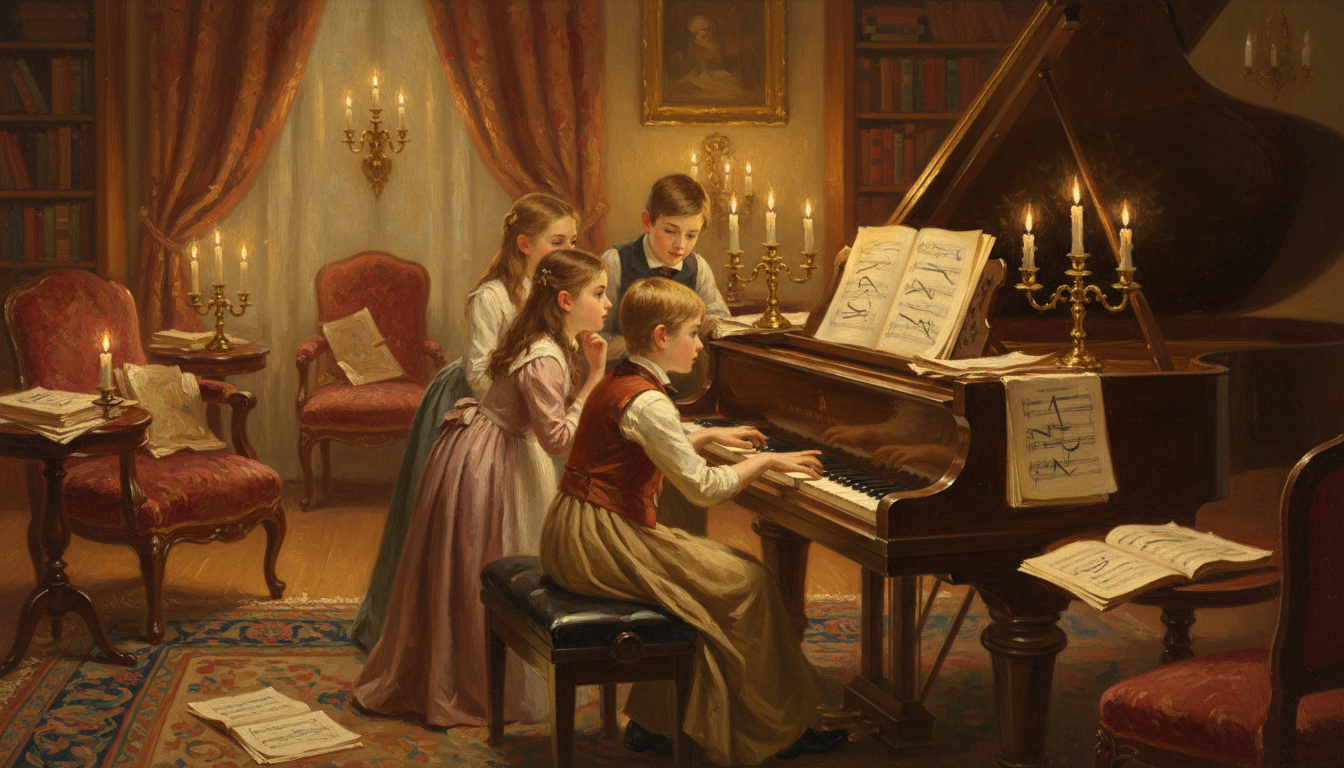
Franz Liszt was born on this day in 1811, in a small village in Hungary called Raiding.
His father played the cello and taught him the piano. The boy took to it fast.
By six, people knew he was special. By eight, he was writing music. By nine, he was playing in concerts.
In Vienna, the famous composer Antonio Salieri offered to teach him for free. Liszt was a wonder.
Then he turned twelve and tried to join the music school in Paris. They said no.
The reason? He was a foreigner.
Think about that for a moment. A boy who could play like that, turned away at the door.
Here is what I love. He did not turn bitter. He did not hoard what he had.
When the Danube flooded Pest in 1837, he gave a very large gift to help the families. When the Great Fire of Hamburg left thousands homeless in 1842, he played concerts to raise money for them.
In 1847, he gave his last paid concert. After that, he settled down to write music and to teach.
In the German town of Weimar, young pianists came to him from all over. He gave them his time, his guidance, and his encouragement. He did not charge them for it.
Later in life, his faith grew quieter and deeper. He became a Franciscan tertiary. That means a lay person who tries to live by the simple way of St. Francis, right out in ordinary life.
In 1865, he received minor orders in the Catholic Church. After that, people called him the Abbé Liszt. He was never ordained a priest, but the title stuck.
It all sounds a lot like a line from the Gospel of Matthew. Jesus tells his friends:
“You received without paying, give without pay.” (Matthew 10:8, RSV-2CE)
Liszt could have kept his gift locked up and charged a fortune for every drop of it. Plenty of people would have understood.
Instead, he handed it on. Student by student. Concert by concert.
So here is a small question for your Thursday.
What were you handed?
Maybe it is a recipe from your grandmother. Maybe it is a good ear for listening. A steady hand with a needle. A way with a nervous child.
You probably did not earn it all by yourself. Someone showed you. Someone was patient.
Who could you show today?
It does not have to be a concert hall. It can be a kitchen table. Ten quiet minutes. A “here, let me show you.”
That is how gifts stay alive. They get given away.

Leave a Reply