


There is a moment in the Christian year that does not announce itself loudly.
No trumpets. No crowd. No command to pay attention.
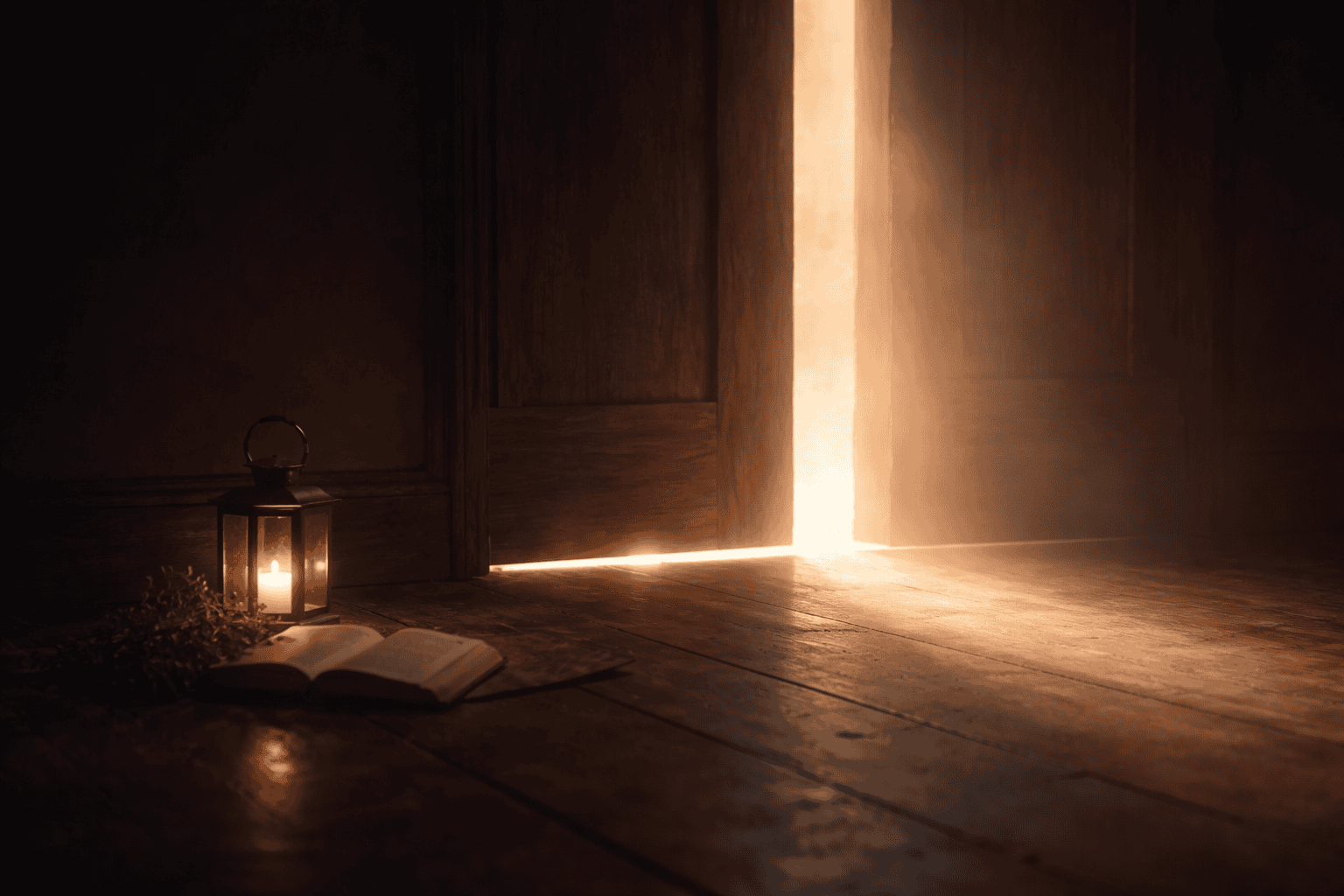
Epiphany arrives quietly, like light slipping under a door before you realize morning has come.
The Gospel tells us simply: “We saw His star at its rising and have come to do Him homage.”
That single sentence carries an entire theology of how God works in the world.
Epiphany is not about spectacle. It is about recognition.
Seeing the Light
The Magi are often romanticized, but the Gospel gives us something more restrained and more unsettling. These are not kings from a fairy tale. They are scholars, observers of the heavens, men trained to watch patterns and wait patiently for meaning to emerge.
They notice something new in the sky. A light that does not belong to habit or routine. And instead of dismissing it, they ask the harder question: What if this matters?
That question alone sets them apart.
They do not have the Scriptures. They do not have a covenant history like Israel’s. They do not receive an angelic announcement. They receive a sign, and that sign is enough to move them.
Epiphany reminds us that God does not reveal Himself only in ways we expect. Sometimes revelation comes through the created world itself. It can occur through a disruption in the ordinary. Revelation also happens through something that doesn’t quite fit the usual explanations.
The Magi see the light. And then they do something rare.
They act.
Movement Matters
Matthew’s Gospel never praises the Magi for their knowledge. It emphasizes their response.
They set out. They travel. They risk misunderstanding, ridicule, and danger. They leave what is familiar and move toward what they do not yet understand.
At the same time, Jerusalem stands still.
This contrast is uncomfortable, and it is meant to be. Those closest to the Scriptures know where the Messiah is to be born, yet they do not go. Those farthest away move first.
Epiphany gently exposes a truth that still applies: proximity to sacred knowledge does not guarantee openness to revelation. Familiarity can dull attentiveness. Comfort can replace wonder.
The Magi do not know everything. They know enough to take the next step.
And that is often how God works with us as well.
The Child Who Is Revealed
When the Magi finally arrive, the scene does not match the grandeur one might expect. There is no palace. No ceremony. No proof of power.
There is a child.
This, too, is part of Epiphany’s message. God reveals Himself without force. Christ is not imposed on the world; He is offered to it.
The gifts the Magi bring speak when words are unnecessary. Gold for a king. Frankincense for God. Myrrh for one who will suffer and die. In a single act of homage, the whole arc of Christ’s life is acknowledged, even if not fully understood.
Epiphany is not just about who Jesus is. It is about how He chooses to be known.
Quietly. Humbly. Truthfully.
A Pattern, Not a One-Time Event
It would be easy to treat Epiphany as a historical scene we revisit once a year, admire briefly, and then move on from. But the Church has never seen it that way.
Epiphany establishes a pattern.
God reveals.
Humanity responds.
Life is changed.
That pattern does not end with the Magi. It continues through Christ’s baptism, His public ministry, His Resurrection, and ultimately His return in glory. What begins as a star seen by a few will one day be a reality seen by all.
In this sense, Epiphany quietly points forward. The same Christ revealed to the nations in humility will be revealed again in fullness. The difference is not in who He is, but in how clearly He is seen.
For those who have learned to recognize His light, that future revelation is not a threat. It is a completion.
What Epiphany Asks of Us
Epiphany does not demand grand gestures. It asks for attentiveness.
Where is light appearing in your life right now, even faintly?
What truth has been quietly revealed that you have noticed but not yet acted upon?
The Magi did not understand the full significance of what they were doing when they began their journey. They understood enough to begin. Their faith was not perfect. It was responsive.
Epiphany reminds us that faith often looks like movement without full clarity. It looks like taking the next faithful step, trusting that understanding will deepen along the way.
And when the Magi leave, they do not return the same way they came.
That line is not decorative. It is diagnostic.
Encounter with Christ reorders a life. It does not always make it louder or easier, but it makes it truer. Once light has been seen, old routes no longer suffice.
Living as People of Epiphany
Epiphany teaches us how to live in the world without anxiety.
It tells us that God reveals Himself on purpose. That history is not wandering aimlessly. That truth is not hidden to punish seekers, but revealed to invite them.
It also teaches humility. We do not generate the light. We do not control revelation. We learn to recognize it and respond faithfully.
To live as a person of Epiphany is to become quietly luminous. Not drawing attention to oneself, but pointing beyond. Reflecting light rather than producing it.
That kind of life steadies the soul.
Returning Home by Another Way
The Magi return home changed, though the Gospel says nothing about speeches, miracles, or visible transformations. Change is often like that. It is real without being dramatic.
Epiphany does not ask us to explain everything. It asks us to remain open, to keep watch, and to move when light appears.
And in doing so, we learn what the Magi learned:
God is faithful in revealing Himself.
The world is not as closed as it sometimes feels.
And those who follow the light are never quite the same again.
That is Epiphany.
Not an interruption of Christmas, but its fulfillment.
Not an argument, but an invitation.
Not a flash of light, but the beginning of sight.
Sources & References
Sacred Scripture
- The Gospel According to Matthew 2:1–12
The visit of the Magi and the manifestation of Christ to the nations. - Isaiah 60:1–6
Prophecy of light rising over Jerusalem and the nations bringing gifts. - Psalm 72 (71)
Kings and nations offering homage to the Messianic King. - John 1:1–14
The Word made flesh, light shining in the darkness. - Psalm 19
Creation bearing witness to the glory of God.
(All Scripture quotations may be taken from the Ignatius Bible or another approved Catholic translation.)
Early Church Fathers
- Justin Martyr (c. AD 100–165)
Dialogue with Trypho, especially chapters 52–54.
Justin explicitly connects Old Testament prophecy, the Magi, and the revelation of Christ to the Gentiles. - Irenaeus of Lyons (c. AD 130–202)
Against Heresies, Book III.
Develops the doctrine of recapitulation, presenting Christ as the one who gathers all humanity into Himself. - Origen of Alexandria (c. AD 185–253)
Against Celsus; Homilies on Genesis
Interprets the star of Epiphany as creation responding to its Creator. - Athanasius of Alexandria (c. AD 296–373)
On the Incarnation
Affirms that the manifestation of Christ reveals His true divinity, grounding both Incarnation and Resurrection. - Gregory of Nazianzus (c. AD 329–390)
Oration 38 (On the Theophany)
Preaches Epiphany as the manifestation of Christ and the revelation of the Trinity. - Augustine of Hippo (c. AD 354–430)
Sermons 199–202 (On the Epiphany)
Connects Epiphany to salvation history, resurrection, and the hope of final fulfillment.
Mothers of the Church & Early Christian Witnesses
- Macrina the Younger (c. AD 327–379)
Presented by Gregory of Nyssa in On the Soul and the Resurrection.
Her teaching profoundly shaped early Christian understanding of resurrection and eternal life. - Perpetua (d. AD 203)
The Passion of Saints Perpetua and Felicity.
One of the earliest preserved Christian witness texts, testifying to hope beyond death and the glory to come.
Liturgical Tradition
- Roman Rite – Solemnity of the Epiphany
Collects consist of readings and antiphons. These are drawn primarily from Isaiah 60, Psalm 72, and Matthew 2. - Early Jerusalem and Eastern Christian Liturgical Practice.
As documented by Egeria (late 4th century), Epiphany was celebrated as a feast of manifestation. It encompassed Christ’s birth, revelation, and baptism.
Readings
- Epiphany: The Light Is Revealed
- Coming: Promised Light
Leave a Reply