
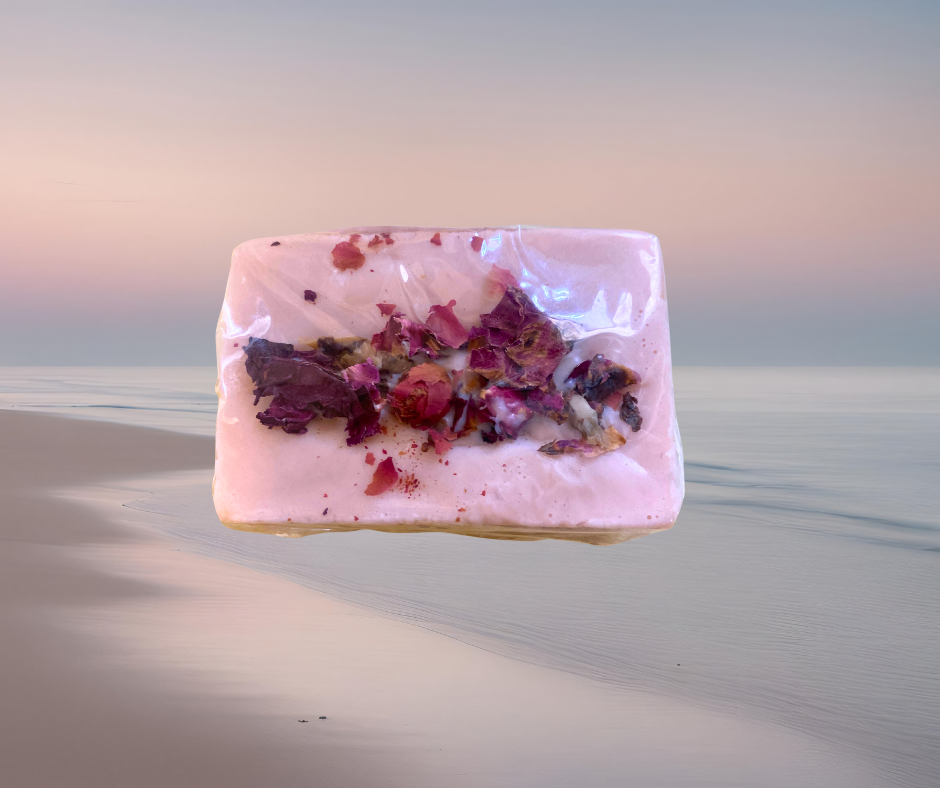
Let’s take a moment to pause and reflect on the contrasting differences between handcrafted and mass-produced soaps. Beneath their lather lies a story – one of intention, intimacy, and impact. Whether shaped by hand or machine, each bar invites us to consider not just what we cleanse with, but why.
Handcrafted Soaps: Made with Meaning
Handcrafted soaps often come with a higher price tag, but that cost reflects quality ingredients, small-batch care, and artisan creativity. These bars may vary in shape, texture—and even weight. I’ve found it difficult to get the exact same weight with each pour, no matter how carefully I measure. They come close but hardly ever are they the exact same weight. But perhaps that’s part of their charm: each one is unique, like a thumbprint of the maker’s heart.

Longevity depends on the method:
- Cold process soaps are made from scratch using lye and oils, then cured for 4–6 weeks. This slow cure creates a hard, long-lasting bar with rich lather and natural glycerin[^1].
- Hot process soaps are cooked during production, which speeds up curing and creates a slightly more rustic, durable bar.
- Melt and pour soaps, while easy to customize, can be softer and dissolve more quickly unless formulated with hard oils like coconut or palm[^2].
Expiration is another consideration. Without synthetic preservatives, handcrafted bars may have a shorter shelf life—especially those with fresh botanicals or milk. Proper storage (cool, dry, and well-ventilated) helps extend their use.
Mass-Produced Soaps: Efficiency with Trade-Offs
Mass-produced soaps are consistent in shape, widely available, and budget-friendly. But their ingredients often include synthetic detergents like Sodium Lauryl Sulfate (SLS) and Sodium Laureth Sulfate (SLES)—foaming agents that can strip natural oils and irritate sensitive skin[^2]. Artificial fragrances may contain phthalates, linked to hormonal disruption and allergic reactions[^3].
These bars are shelf-stable and long-lasting, but often lack the nourishing glycerin removed during processing.
Choosing a Soap Bar: What Matters Most?
When deciding on a soap bar, consider:
- Skin Sensitivity: Look for unscented or naturally scented bars if prone to irritation.
- Purpose: Is it for daily cleansing, exfoliation, or a gentle ritual?
- Ingredients: Seek transparency—plant-based oils, clays, and essential oils offer both function and meaning.
- Environmental Impact: Handcrafted soaps often use biodegradable packaging and ethically sourced materials.
Making Each Bar
To get the most out of your soap:
- Use a draining soap dish to prevent sogginess.
- Cut larger bars in half to rotate use and reduce waste.
- Let bars cure longer before first use—especially cold process soaps.
- Store extras in a cool, dry place, away from humidity.
A Final Reflection: Choosing with Care
We’ve explored the contrasts between handcrafted and mass-produced soaps—how cost, shape, shelf life, and ingredients shape not just the bar, but the experience. We’ve considered how synthetic detergents and fragrances may irritate the skin, and how different soapmaking methods affect longevity. We’ve even touched on how to make each bar last longer, honoring both practicality and presence.
But what if the story doesn’t end with the soap? What if the way we prepare our skin to receive care is just as important?
Within the next week or so, I’ll be sharing a short reflection on body brushing – a gentle practice that exfoliates, awakens, and blesses the skin before cleansing. Could brushing be the missing rhythm in your daily care? And what might it reveal about the way we tend to ourselves, spiritually and physically?
Updated Footnotes
[^1]: Cold process soaps retain natural glycerin and cure slowly, resulting in a harder, longer-lasting bar.
[^2]: Melt and pour bases vary in hardness depending on formulation and additives.


Leave a Reply to myallaboutyouCancel reply