


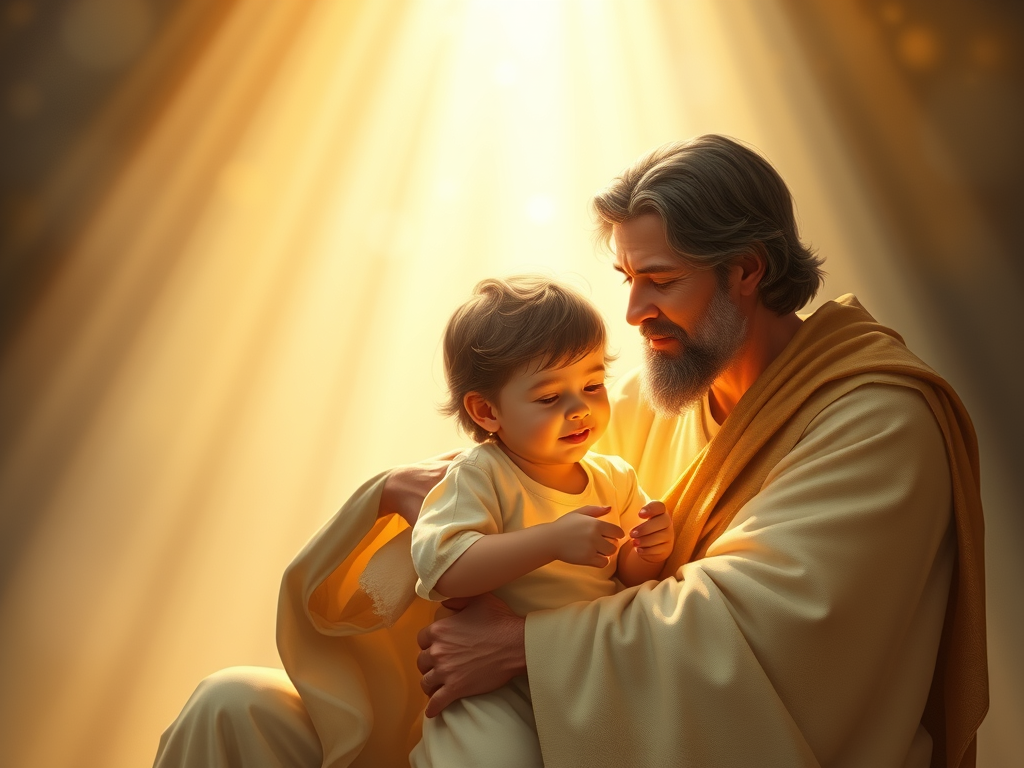
On this Father’s Day, we gather to honor dads with deep gratitude, seeing their love reflected in the Feast of the Blessed Trinity and the devotion to St. Joseph. The Blessed Trinity—one God in three Persons, Father, Son, and Holy Spirit, united in one divine substance—shows us the boundless love of God the Father through His Son, Jesus, who is fully God, one with Him . St. Joseph, Jesus’ foster father, mirrors this love through his tender care for the Son of God. Father’s Day celebrates the dads who pour out this divine love in their families, day after day. Rooted in the Bible and the wisdom of the early Church Fathers, this article weaves together these beautiful celebrations, revealing fatherhood as a sacred gift that warms our hearts. For deeper insight into the Trinity’s profound mystery, consider exploring St. Augustine’s On the Trinity or the Catechism of the Catholic Church (232-267).
The Blessed Trinity: God’s Love as a Family
The Blessed Trinity is one God, not three, shining as three Persons—Father, Son, and Holy Spirit—who share one divine substance, or ousia. St. Augustine beautifully writes, “The Father is God, the Son is God, and the Holy Spirit is God, and yet there are not three Gods but one God” .
Like a perfect family, the Trinity shows dads how to love with open hearts, building homes where everyone feels cherished and united. The Bible calls us to baptize “in the name of the Father, and of the Son, and of the Holy Spirit” , revealing God’s transformative love that dads can share with their families.
St. Joseph: A Loving Foster Father
St. Joseph, chosen as the foster father of Jesus, the only-begotten Son, who is fully God and consubstantial with the Father, shows us how to live God’s love. St. Ignatius of Antioch calls Jesus “our God” . His quiet strength and faithful care reflect the Father’s love for His Son and for us.
The Church Fathers see a connection to the Eucharist, where bread’s substance transforms into Christ’s Body, as St. Irenaeus writes, “He confessed it to be His body” . Just as the Eucharist makes Jesus’ divine presence real, Joseph’s loving care for Jesus made God’s love shine in the world. Dads can look to Joseph’s gentle devotion, protecting and nurturing their families with faith.
Father’s Day: Cherishing Dads in God’s Light
Father’s Day is a moment to wrap our arms around dads, thanking them for their endless love—whether they’re teaching a child to ride a bike, praying at bedtime, or working tirelessly to provide. The Blessed Trinity shows God the Father’s love through His Son, Jesus, one with Him in divine substance . Father’s Day celebrates dads as bearers of God’s love, filling our hearts with gratitude.
How They Connect
The Blessed Trinity, St. Joseph, and Father’s Day weave together to reveal fatherhood as a divine calling, brimming with love. God the Father pours out His love through His Son, Jesus, who is consubstantial with Him , a transformative love that parallels how dads bring God’s love to life in their families with every hug and sacrifice.
Why This Matters
On this Father’s Day, the Blessed Trinity and St. Joseph remind us that dads are a precious gift, sharing God’s love as the Father loves us through His Son, Jesus, who is fully God, consubstantial with Him. The Eucharist, as the Church Fathers teach, transforms bread into Christ’s Body, making His love real, just as dads make God’s love real with their care. The Trinity’s mystery is deep, so resources like St. Augustine’s On the Trinity or the Catechism of the Catholic Church (232-267) can offer more clarity. Today, let’s embrace our dads with love, thanking them for their faithful hearts and praying they grow closer to God, inspired by the Trinity’s unity and Joseph’s tender devotion.
Happy Father’s Day!
What special ways do the dads in your life show God’s love or St. Joseph’s care? Share your stories below!
References
- Catholic Encyclopedia. (n.d.). The Blessed Trinity. Retrieved from https://www.newadvent.org/cathen/15047a.htm
- Catholic Answers. (n.d.). What the Early Church Believed: The Trinity. Retrieved from https://www.catholic.com/tract/the-trinity
- St. Augustine. (n.d.). On the Trinity. Retrieved from https://www.newadvent.org/fathers/130101.htm
- St. Ignatius of Antioch. (n.d.). Letter to the Ephesians. Retrieved from https://www.newadvent.org/fathers/0104.htm
- St. Justin Martyr. (n.d.). First Apology. Retrieved from https://www.newadvent.org/fathers/0126.htm
- St. Irenaeus. (n.d.). Against Heresies. Retrieved from https://www.newadvent.org/fathers/0103.htm
- St. Athanasius. (n.d.). Discourses Against the Arians. Retrieved from https://www.newadvent.org/fathers/28161.htm
- New American Bible, Revised Edition. (n.d.). John 10:30
- New American Bible, Revised Edition. (n.d.). Matthew 28:19
- New American Bible, Revised Edition. (n.d.). Romans 5:5
- New American Bible, Revised Edition. (n.d.). Matthew 2:13-15
- New American Bible, Revised Edition. (n.d.). Matthew 1:18-25
- New American Bible, Revised Edition. (n.d.). John 3:16
***This article was created with the assistance of digital tools to ensure clarity and depth in its exploration of Father’s Day, the Blessed Trinity, and St. Joseph.
Leave a Reply