

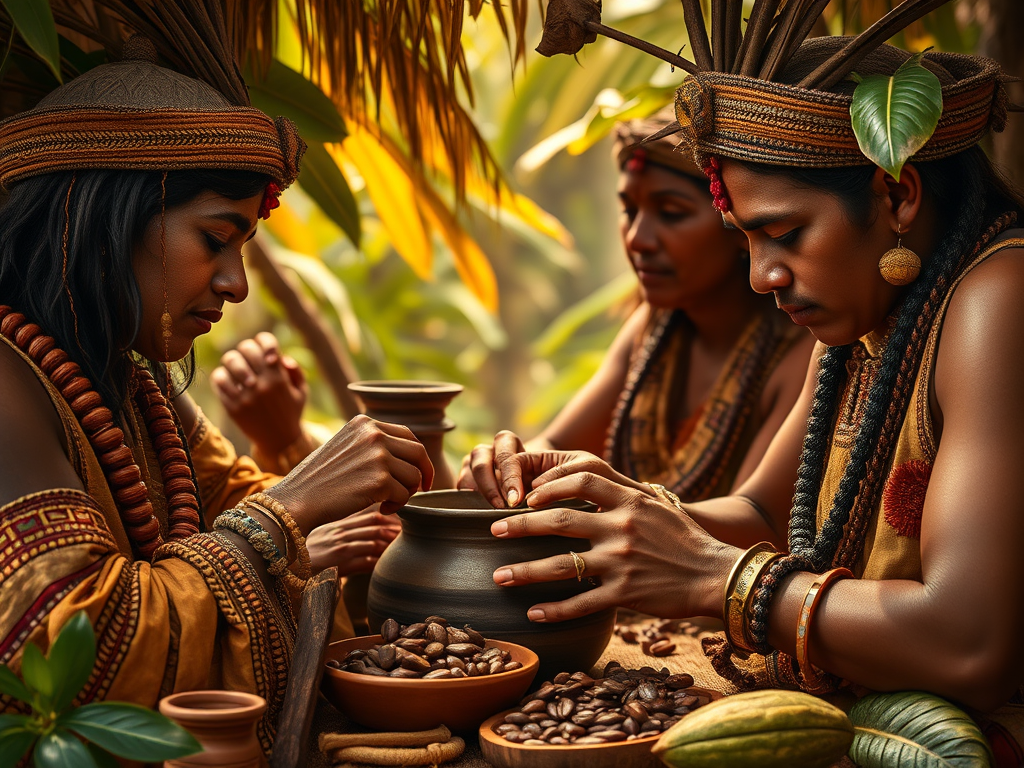
Chocolate’s story is as rich and complex as its flavor—a journey that begins thousands of years ago in the lush, tropical landscapes of Mesoamerica. The ancient Mayans and Aztecs, the earliest civilizations to cultivate cacao, revered it not merely as a food but as something deeply spiritual and cultural. They saw cacao as a “gift from the gods,” a sacred treasure imbued with power and mystery. To them, cacao was far more than a delicacy—it was a bridge to the divine.
In Mayan culture, cacao was central to daily life and special rituals. The Mayans prepared cacao as a bitter drink, often mixing it with spices like chili or maize. This concoction, known as “xocolatl,” was believed to energize the body and nourish the soul. Cacao was present in everything from marriage ceremonies to religious offerings, underscoring its importance as a symbol of life, fertility, and connection to the spiritual realm. Imagine sipping this earthy, spiced beverage in a ceremonial setting—it’s a far cry from the sweet treats we know today, yet it set the foundation for modern chocolate as we experience it.
The Aztecs, too, held cacao in the highest regard. For them, it wasn’t just a drink for royalty and warriors—it was currency. Yes, cacao beans were literally money, exchanged for goods like food, clothing, and even labor. One cacao bean could buy a tamale, while a handful might purchase a day’s wages for a laborer. The Aztec Emperor Montezuma II was said to drink gallons of cacao daily from golden goblets, considering it an elixir of power. Picture this—the world’s most indulgent treat today was once the currency of kingdoms.
The transformation of cacao into the chocolate we know began with the arrival of Spanish explorers in the early 1500s. Intrigued by this exotic “food of the gods,” the Spaniards brought cacao back to Europe, but not before sweetening it with sugar and cinnamon to better suit European tastes. Over time, chocolate evolved from a luxurious drink for aristocrats to a universal delight, spurred on by innovations like the chocolate press in the 19th century. This process made solid chocolate more accessible and gave rise to the countless forms of chocolate we love today.
As we reflect on chocolate’s fascinating journey, we honor its origins and the civilizations that first unlocked its potential. The Mayans and Aztecs may not have imagined chocolate bars or truffles, but their reverence for cacao laid the foundation for a timeless obsession. Chocolate isn’t just a treat—it’s history, culture, and artistry wrapped into one.
Let’s celebrate Chocolate Week by appreciating the sacred, storied roots of this “gift from the gods.” Who knew that with every bite, we’re savoring centuries of tradition and transformation? Tomorrow, we’ll continue our journey with a deep dive into the various types of chocolate. Until then, enjoy this sweet connection to the past!
Chocolate Mousse
Ingredients:
- 1 ½ cups (350 ml) heavy whipping cream
- 1 cup (175 g) dark or milk chocolate, chopped (or chocolate chips)
- 1 teaspoon vanilla extract (optional, for added flavor)
Instructions:
- Melt the Chocolate: In a microwave-safe bowl, melt the chocolate in 20-second increments, stirring in between, until smooth. Let it cool slightly.
- Whip the Cream: In a separate bowl, whip the heavy cream until soft peaks form. If you’re using vanilla extract, add it to the cream before whipping.
- Combine: Gently fold about ⅓ of the whipped cream into the melted chocolate to lighten it. Once combined, fold in the remaining whipped cream carefully to keep the mixture airy.
- Chill: Spoon the mousse into serving glasses or bowls and refrigerate for at least 2 hours to set.
- Serve: Top with whipped cream, grated chocolate, or fresh berries for a little extra flair.

Leave a Reply