
If I had the chance to do things differently, I would begin by considering the things I make. Do they have value? Not only in price, but in meaning, in care, in the quiet human presence behind them.
We live in a world shaped by mass production and digital convenience. Products move quickly, websites are polished and nearly identical, and the goal is often speed, scale, and constant replacement. Entire systems are built to encourage buying, discarding, and buying again. Efficiency becomes the highest virtue, and anything that slows the process is treated as unnecessary.
Even our online spaces reflect this. Corporate websites are carefully designed for conversion, not conversation. Algorithms decide what is seen, what is promoted, and what quietly disappears. A kind of sameness settles over everything, as if individuality itself has become inefficient.
Handcrafted work stands in contrast to all of this.
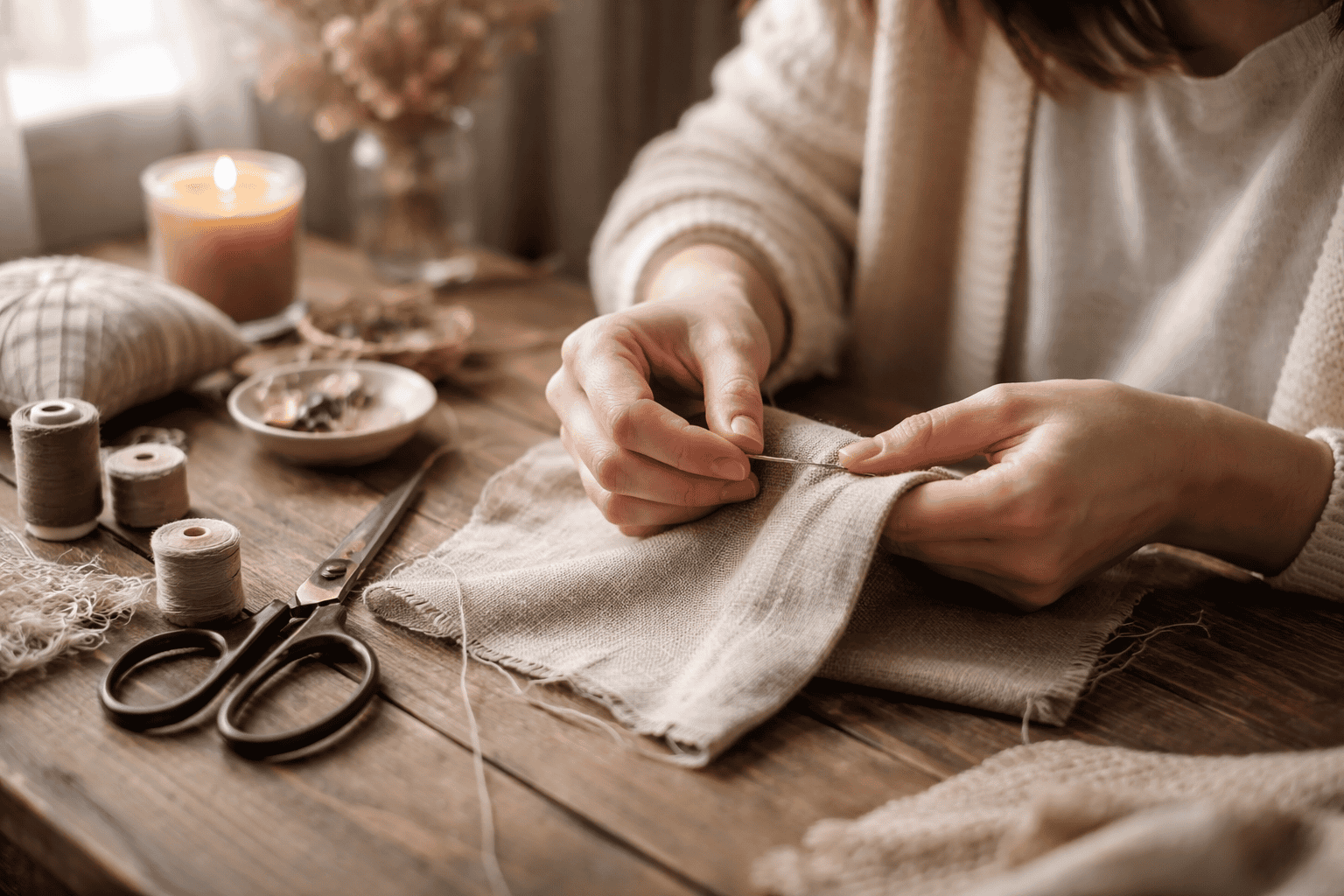
It begins slowly. Materials are chosen, not optimized. Mistakes happen. Adjustments are made. Time is spent not only producing, but paying attention. The maker cannot disappear from the process, because their hands are part of the story of the object itself. Even when two items are meant to be the same, they never quite are, and that difference is not a flaw. It is evidence of presence.
When I make something myself, it becomes an extension of me. You know it is not mass produced, not replicated endlessly, not detached from the person who created it. It carries intention, and in that way it has meaning, just like my website and my writing. Both are crafted with the person involved, shaped by real hands and real thought, not built by systems that remove the human from the process.
That difference is not always visible at first glance, but it is felt over time. A handmade object does not exist only to be consumed. A personal website does not exist only to convert visitors into customers. Both are meant to be lived with, returned to, and experienced as part of someone’s everyday rhythm.
There is something quietly radical about that in our current culture.
Handmade items do not pretend to be perfect. They carry small variations, slight irregularities, the subtle signs of being shaped by a person rather than stamped by a machine. They remind us that usefulness and beauty can coexist, and that function does not require uniformity.
More than that, they remind us that work itself has dignity.
When something is made by hand, the labor is not hidden behind distant factories or automated systems. It is visible, even if only faintly, in the finished piece. Someone measured, cut, stitched, poured, carved, assembled. Someone chose to spend time creating rather than merely processing.
That choice matters, even if the world does not reward it the way it rewards speed and scale.
This is not an argument against technology or convenience. Modern tools can be helpful, even necessary. But there is a difference between using tools and allowing systems to replace the human entirely. When production becomes disconnected from people, it becomes easier to forget that people still matter in the equation.
Handmade work quietly resists that forgetting.
It says that time has worth. That attention is not wasteful. That care cannot be automated. And that not everything valuable can be optimized.
For the person who buys something handmade, the exchange is also different. It is not just a transaction, but a kind of participation in another person’s effort. Even when the buyer never meets the maker, there is still a trace of relationship there. A small acknowledgment that someone else gave part of their time and skill to create this thing, and now it will be part of another person’s daily life.
In that sense, handmade objects carry stories, even if they are never told out loud.
A candle that was poured slowly, a sewn item that was cut and stitched one piece at a time, a card that was designed with intention. These are not merely products. They are quiet companions in ordinary moments. They sit on kitchen counters, bedside tables, shelves, and desks. They witness small parts of daily life, often without ceremony.
And perhaps that is part of what makes them meaningful. They are not grand statements. They are small, steady presences.
There is also a spiritual dimension to this, whether one names it that way or not.
To make something carefully is to practice a form of stewardship. It is to recognize that materials, skills, and time are not limitless resources to be consumed, but gifts to be used thoughtfully. It is to accept responsibility for what is created and how it is offered to others.
In a culture that often celebrates volume and visibility, handmade work remains humble. It does not chase scale. It cannot flood markets or dominate trends. It grows quietly, piece by piece, shaped by the limits of human energy and attention.
Those limits are not weaknesses. They are part of what keeps the work human.
The same contrast appears in how we present ourselves online. Corporate websites are designed to be efficient, branded, and optimized for engagement metrics. They are built to capture attention and guide behavior. Personal websites, small shops, and creative spaces often feel different. They carry quirks, slower updates, and a sense that a real person is tending the space, imperfectly but sincerely.
That difference matters too.
When a website reflects an individual rather than a marketing department, it becomes less about performance and more about presence. It invites readers not only to consume content, but to pause, reflect, and connect. It becomes less transactional and more relational, even in subtle ways.
I would want to do things differently if given the chance. I would lean further into that way of living and creating. I would want to keep asking whether what I make carries intention, care, and respect for both the materials and the people who will receive it.
Not everything needs to be fast. Not everything needs to be scalable. Not everything needs to be disposable.
Some things deserve to be made slowly, held carefully, and kept longer than the next trend cycle.
In a world that constantly urges us to replace, upgrade, and move on, handmade work quietly suggests another rhythm. A rhythm of keeping, repairing, cherishing, and using what we already have. A rhythm that values continuity over novelty and relationship over efficiency.
Perhaps that is why handmade still matters. Not because it is nostalgic or quaint, but because it preserves something essential about how humans were always meant to work, create, and live.
If I could do something differently, I would slow down. I would take time to ask better questions about what we make and what we buy. We must consider what kind of world those choices quietly build. Not everything that is efficient is meaningful, and not everything that is small is insignificant.
Sometimes the smallest, most ordinary things carry the deepest reminders that human presence still matters.


Leave a Reply to Jen JardinCancel reply