
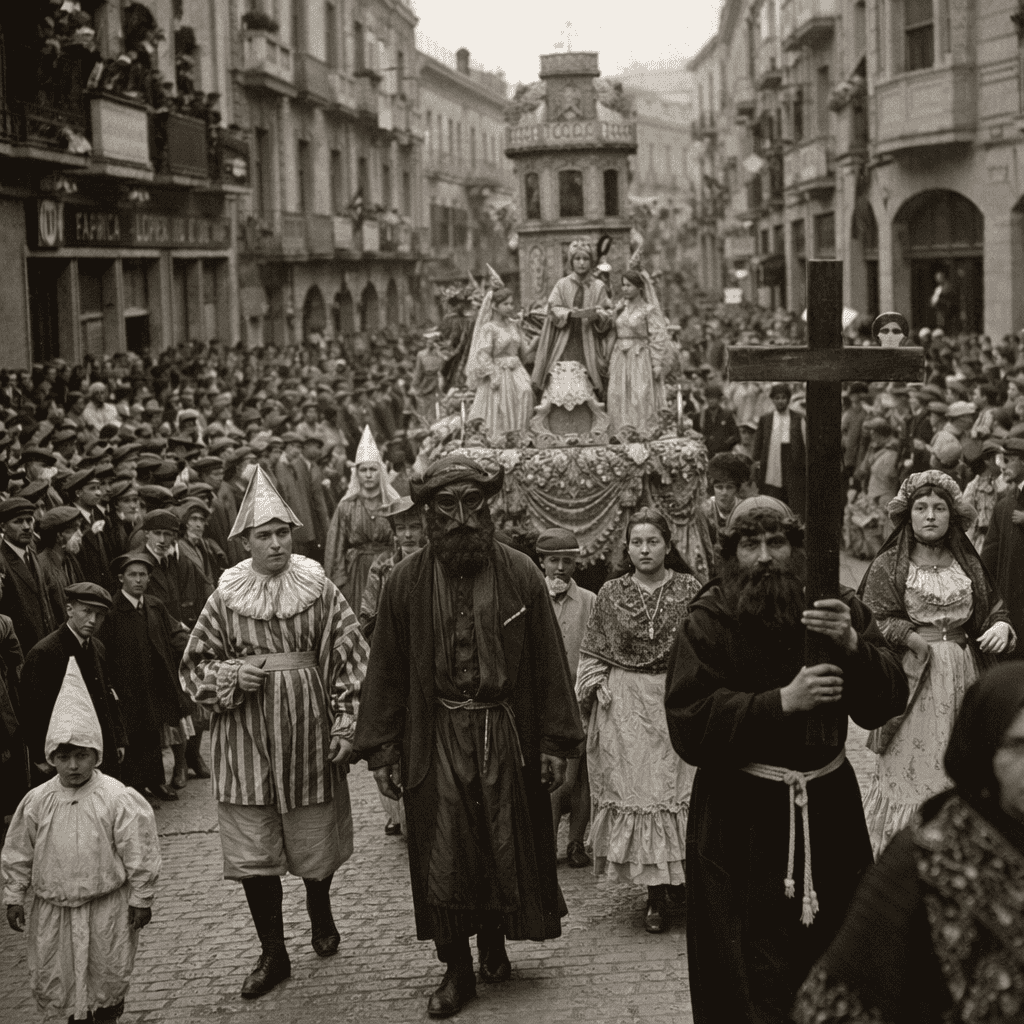
What Is Mardi Gras Also Called?
Mardi Gras is known by several traditional names depending on language and region:
- Shrove Tuesday (English-speaking countries)
- Fat Tuesday (literal translation of the French “Mardi Gras”)
- Carnival Tuesday
- Pancake Day (in parts of England and Ireland)
- Martes de Carnaval (Spanish-speaking countries)
- Martes Gordo (a Spanish equivalent of “Fat Tuesday”)
- Entrudo (historical Portuguese pre-Lenten celebration)
In Spanish-speaking Catholic regions, the day is typically referred to as Martes de Carnaval, meaning “Carnival Tuesday,” as it concludes the Carnival season before Ash Wednesday.
The English term Shrove Tuesday comes from the old English word shrive, meaning to confess. Historically, Christians were encouraged to receive confession before the beginning of Lent. The day therefore carried both a festive and penitential meaning.
Across languages, the structure is the same:
It is the final day before Lent begins.
How Was Lent Observed Before Vatican II?
Before 1966, Lenten discipline in the Roman Catholic Church was significantly stricter than it is today.
Catholics were required to:
- Fast on most weekdays of Lent.
- Abstain from meat throughout Lent.
- Observe additional fasting days such as Ember Days and certain vigils.
- Follow a fasting rule that typically meant one full meal per day, often supplemented by two smaller portions.
In many traditionally Catholic countries—including Spain and much of Latin America—this discipline shaped daily life.
Fasting was sustained, visible, and communal.
What Did Shrove Tuesday / Mardi Gras Mean in This Context?
Whether called Shrove Tuesday, Fat Tuesday, Mardi Gras, Martes de Carnaval, or Martes Gordo, the day marked a clear threshold.
It was the final day for:
- Meat
- Rich foods
- Festive meals
- Public celebration
At midnight, the tone changed.
Ash Wednesday brought ashes, fasting, and simplicity.
The feast had weight because the fast was real.
How Did Communities Experience the Transition?
In Catholic regions of Europe and Latin America:
- Weddings were often avoided during Lent.
- Public entertainments diminished.
- Meals became simpler.
- Churches emphasized repentance and reflection.
- Liturgical color shifted to violet.
The calendar governed behavior.
Carnival in places like Portugal, Spain, Brazil, and Latin America could be lively and noisy. But everyone understood what followed.
Ash Wednesday reset the rhythm.
What Changed in 1966?
In 1966, Pope Paul VI issued Paenitemini, revising penitential discipline in the Latin Church.
Mandatory fasting was reduced to:
- Ash Wednesday
- Good Friday
Friday abstinence remained, though episcopal conferences were given flexibility.
The theology of Lent did not change.
But the extended bodily fast did.
The long sequence of weekday fasting disappeared.
The shared physical intensity softened.
How Did This Affect Mardi Gras?
The shift unfolded gradually.
As fasting requirements became lighter:
- The sense of “last day before deprivation” diminished.
- Participation in Lent became more personal.
- Public life became less structured around the liturgical calendar.
- The feast increasingly stood on its own.
The celebration did not suddenly transform.
Its framework evolved.
Understanding the Evolution
Before Vatican II:
- Lent required sustained discipline.
- The fast was widely observed across Catholic cultures.
- Shrove Tuesday stood before forty days of restraint.
After reform:
- Lent remained spiritually meaningful.
- The fast shortened.
- The feast became more culturally autonomous.
The change was structural, not abrupt.
The names differ by language.
The pattern remains the same.
Pre-Lenten Prayer
Lord, as we remember a time when Lent was marked by visible restraint and shared discipline, teach us not to romanticize the past but to recover its sincerity. Where fasting once shaped entire communities, help us rediscover interior seriousness. As Shrove Tuesday gives way to Ash Wednesday, draw us beyond nostalgia into intention. May the rhythm of feast and fast steady our hearts again, and may this coming Lent be received not as obligation, but as invitation — to humility, to honesty, and to deeper communion with You. Amen.
Leave a Reply